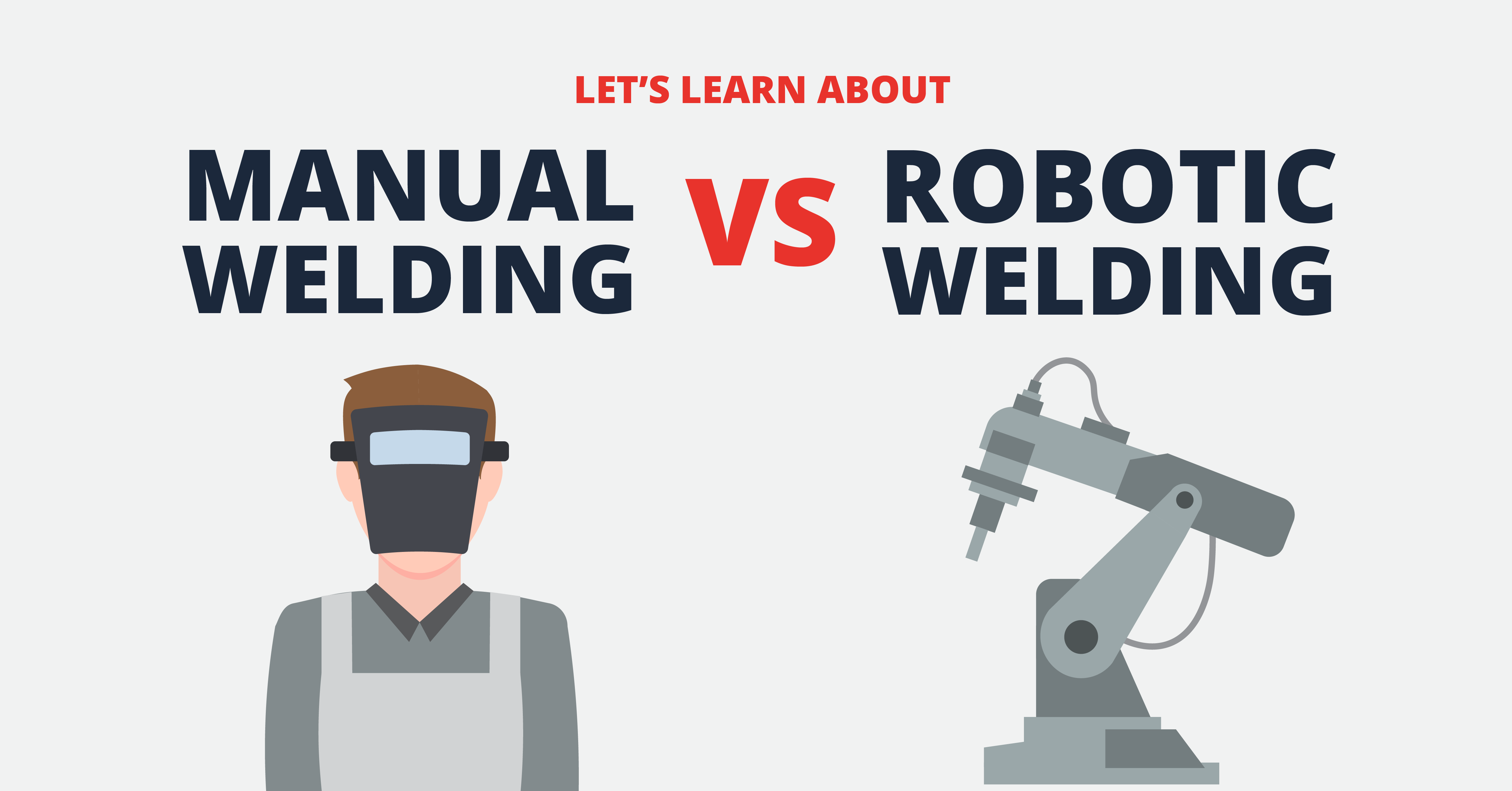
The manufacturing landscape is undergoing a monumental shift. As industries strive for higher throughput and uncompromising quality, the debate between Robotic Welding vs Manual Welding has moved from the fringes of high-tech facilities to the core strategy of small and medium-sized enterprises.
Choosing the right welding approach is no longer just about joining two pieces of metal; it is about optimizing your supply chain, managing labor shortages, and ensuring long-term scalability. In this comprehensive analysis, we explore the technical nuances, cost implications, and performance metrics of Hand Welding vs. Robotic Welding to help you determine which path leads to the highest competitive advantage.
I. Understanding the Fundamentals of Manual Welding and Robotic Welding
1) What is Manual Welding?
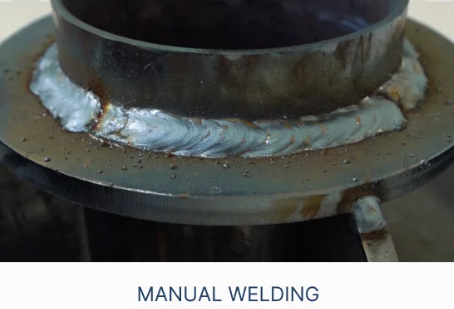
Manual welding, often referred to as hand welding, relies entirely on the skill, dexterity, and visual feedback of a human operator. The welder controls the torch or electrode, manages the arc length, and dictates the travel speed and angle to create a weld bead.
Common manual processes include:
SMAW (Shielded Metal Arc Welding): Often called "stick" welding, used for heavy-duty construction.
GTAW (Gas Tungsten Arc Welding): Known as TIG welding, prized for precision and aesthetic finishes.
GMAW (Gas Metal Arc Welding): Known as MIG welding, popular for its speed and ease of use.
2) What is Robotic Welding?
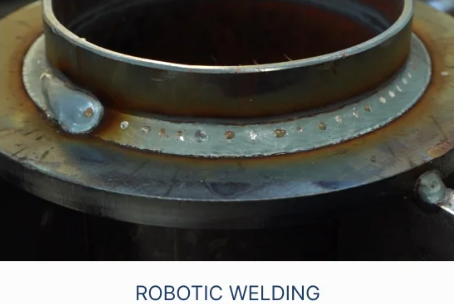
Robotic welding is an automated process that utilizes programmable mechanical tools (industrial robots) to perform welding and handle parts. A robotic system typically consists of a six-axis robotic arm, a power source, a wire feeder, and a specialized welding torch. These systems are governed by a controller that executes precise movements based on pre-programmed software.
II. Robotic Welding vs Manual Welding: A Comparative Performance Analysis
When evaluating Manual Welding Vs Robot Welding, manufacturers must look beyond the initial arc and consider the entire production cycle.
1) Precision and Repeatability
One of the most significant advantages of automation is consistency. A robot can move along the exact same path with a tolerance of less than 0.1mm, time after time.
Robotic Welding: Once a program is optimized, the robot produces identical welds for every part. This eliminates the "human factor"—fatigue, loss of concentration, or slight tremors—that can lead to inconsistencies.
Hand Welding: While a highly skilled welder can produce a "perfect" weld, maintaining that level of perfection across an eight-hour shift is physically impossible. Minor variations in travel speed or torch angle can lead to fluctuations in penetration and bead appearance.
2) Speed and Throughput
In the realm of efficiency, Hand Welding vs. Robotic Welding is often a lopsided contest regarding pure output.
Cycle Times: Robots do not need breaks, shift changes, or "active recovery" time. They can operate at significantly higher travel speeds without sacrificing quality.
Arc-On Time: In a manual environment, "arc-on time" (the time actually spent welding) typically hovers around 20–30% of a workday due to part positioning and preparation. Robotic cells, especially those with dual-station positioners, can achieve arc-on times exceeding 70–80%.
3) Waste Reduction and Consumables
Automation allows for precise control over the welding parameters, which directly impacts the bottom line.
Filler Metal & Gas: A robot uses the exact amount of wire and shielding gas required for the joint. In manual welding, operators often over-weld (creating a bead larger than necessary) to "be safe," which leads to significant waste over thousands of parts.
Post-Weld Cleanup: Because robotic welding minimizes spatter and ensures consistent bead profiles, the need for secondary processes like grinding or polishing is drastically reduced.
III. Cost Analysis: Initial Investment vs. Long-Term ROI
The financial comparison of Manual Welding Vs Robot Welding is the most common hurdle for decision-makers. It requires shifting the perspective from "cost per hour" to "cost per part."
1) The Costs of Manual Welding (OPEX Intensive)
Manual welding has low barrier-to-entry costs (the price of a welding machine and safety gear). However, the operational expenses (OPEX) are high:
Labor Costs: Skilled welders are increasingly expensive and difficult to find.
Training & Retention: The cost of training a new welder to reach professional proficiency can take months.
Insurance & Liability: Human welders are susceptible to injuries, repetitive strain, and health issues related to fume exposure.
2) The Costs of Robotic Welding (CAPEX Intensive)
Robotic systems require a significant capital expenditure (CAPEX) upfront, including the robot, safety fencing, programming, and integration.
Initial Setup: High initial investment.
Maintenance: Specialized maintenance is required for the mechanical arm and software updates.
Programming: Requires a technician to program or "teach" the robot the paths.
3) The Turning Point
The Return on Investment (ROI) for robotic welding typically occurs when the volume of parts is high enough that the labor savings and increased throughput outweigh the initial system cost. For many modern manufacturers, the ROI period is now between 12 and 24 months.
IV. Quality Control and Metallurgy
In high-stakes industries like automotive, aerospace, or heavy machinery, the metallurgical integrity of a weld is non-negotiable.
1) Heat Management
Manual welding involves variable heat input. If a welder moves too slowly, they may inject too much heat, leading to warping, distortion, or a weakened Heat-Affected Zone (HAZ). Robots maintain a constant travel speed and voltage, ensuring uniform heat distribution. This is particularly critical when working with thin materials or heat-sensitive alloys like aluminum and stainless steel.
2) Defect Rates
Common defects such as porosity, undercut, and lack of fusion are often caused by inconsistent torch manipulation. Because a robot is programmed with the optimal angle and distance, these defects are minimized. Furthermore, many robotic systems are now equipped with "Through-Arc Seam Tracking" or "Laser Vision Systems" that can adjust the robot’s path in real-time if a part is slightly misaligned.
V. Safety and Environmental Impact
The "3Ds" of welding—Dirty, Dull, and Dangerous—make it a prime candidate for automation.
1) Protecting the Workforce
Hand Welding vs. Robotic Welding involves different safety profiles.
Manual: Welders are exposed to intense UV radiation, heat, sparks, and toxic welding fumes (such as hexavalent chromium).
Robotic: The welding process takes place inside a screened enclosure. The human operator stays outside the "danger zone," typically only interacting with the machine to load and unload parts from a safe distance.
2) Ergonomics
Welding often requires staying in awkward positions for long periods. Robotic systems eliminate the ergonomic strain on human workers, allowing them to move into higher-value roles like quality inspection, programming, or floor management.
VI. When to Choose Manual Welding?
Despite the rise of automation, manual welding remains indispensable in several scenarios:
Low Volume/High Variety: If you only make five units of a specific part per year, the time required to program a robot would exceed the time to weld it by hand.
Complex Geometry/Limited Access: Some joints are tucked away in corners that a bulky robotic torch cannot reach.
On-Site Repairs: You cannot easily take a robotic cell to a bridge construction site or an offshore oil rig.
Intricate Custom Work: High-end artistic or custom-fit components often require the "feel" and adaptability of a master artisan.
VII. When to Choose Robotic Welding?
Automation is the clear winner when:
Mass Production: High-volume runs of the same part.
Labor Scarcity: When you cannot find enough qualified welders to meet production demands.
Stringent Quality Requirements: When every weld must be documented and verified for safety compliance.
Long, Straight Welds: Tasks that are monotonous for humans but perfect for a machine.
VIII. The Hybrid Future: Collaborative Robots (Cobots)
A new middle ground is emerging in the Robotic Welding vs Manual Welding debate: the Collaborative Robot, or "Cobot."
Cobots are designed to work alongside humans without the need for massive safety cages. They are much easier to program—often using "lead-through" teaching where the welder physically moves the arm to the desired points. This allows small shops to gain the precision of a robot with the flexibility and lower cost of a manual setup.
IX. Summary Table: Robotic Welding vs. Manual Welding
| Feature | Manual Welding | Robotic Welding |
| Initial Cost | Low | High |
| Consistency | Variable (Human dependent) | Excellent (Programmable) |
| Production Speed | Slower | Extremely Fast |
| Flexibility | High (Immediate changes) | Medium (Requires re-programming) |
| Labor Requirement | High (Skilled welders) | Low (Operators/Technicians) |
| Safety Risk | High (Fumes, UV, Burns) | Low (Contained environment) |
| Space Required | Small | Moderate to Large |
Conclusion
The decision between Manual Welding Vs Robot Welding is rarely an "either/or" scenario. Most successful manufacturing facilities utilize a tiered approach: employing robots for the heavy lifting and high-volume throughput, while reserving their most skilled manual welders for complex, low-volume, and high-value custom work.
As you look toward 2026 and beyond, the integration of AI and advanced sensors is making robotic welding more accessible than ever. By reducing waste, increasing safety, and ensuring that every bead is a perfect bead, robotic automation is not just a trend—it is the standard for the modern industrial era.
Whether you are looking to scale your production or solve a critical labor shortage, understanding the strengths of Hand Welding vs. Robotic Welding is the first step toward a more efficient, profitable floor.
Related articles:
1. Quick Pulse: A Welding Technology More Suitable for Manual Welding
2. CO2 Gas Shielded Welding VS. Manual Welding VS. TIG Welding
3. Manual Metal Arc Welding: Why Every Weld Matters Much?
4. 10 MMA Welding Processes Flaws And Megmeet’s Solutions
5. How To Weld Stainless Steel – MIG, TIG and MMA Welding