In the foundational world of metal fabrication and heavy infrastructure, few techniques possess the enduring legacy and critical importance of manual metal arc welding. Often referred to as MMA, stick welding, or Shielded Metal Arc Welding (SMAW), this process is the backbone of global construction. From the depths of the ocean floor to the skeletons of skyscrapers, manual metal arc welding is the silent force holding our modern world together.
But in an era of increasing automation, why does this manual technique remain so vital? More importantly, why does every single weld produced by an MMA operator matter so much? This comprehensive guide explores the technical intricacies of the MMA process, the equipment that makes it possible, and the philosophy of quality that drives the industry.

Manual Metal Arc Welding
I. What is Manual Metal Arc Welding?
Manual metal arc welding is a fusion welding process that utilizes a consumable, flux-coated electrode to create an electric arc between the electrode and the workpiece. The heat of this arc—which can exceed 6,000°C—melts both the tip of the electrode and the surface of the base metal to create a molten weld pool.
As the electrode melts, its chemical flux coating disintegrates, performing two critical tasks: it releases a protective shielding gas to keep out atmospheric contaminants (like oxygen and nitrogen) and forms a layer of slag that protects the cooling weld bead.
The Synonyms of Strength
Depending on where you are in the world, manual metal arc welding may go by different names:
MMA / MMAW: Common in Europe and the UK.
Stick Welding: The colloquial term used by tradespeople globally.
SMAW (Shielded Metal Arc Welding): The standard terminology used by the American Welding Society (AWS).
Regardless of the name, the principle remains the same: a versatile, portable, and robust method of joining metals.
II. The Science of the Arc: How MMA Works
To appreciate why manual metal arc welding is a master-level skill, one must understand the physics happening at the tip of the electrode.
1) The Electrical Circuit
The process begins with a welding power source (either AC or DC). One lead is connected to the electrode holder, and the other is clamped to the workpiece. When the welder "strikes" the electrode against the metal and pulls back slightly, the air gap ionizes, creating a plasma arc.
2) The Role of the Flux Coating
The flux is not just a covering; it is a complex chemical package. It contains stabilizers to keep the arc steady, deoxidizers to clean the weld pool, and alloying elements to improve the mechanical properties of the finished joint. Without high-quality flux, the weld would be porous and brittle—a primary reason why every weld matters during the preparation stage.
3) Slag Formation
As the weld cools, the liquid flux solidifies into "slag." This layer acts as a thermal blanket, slowing the cooling rate of the metal. This slow cooling is essential for preventing "quench cracking" and ensuring the metal grain structure is strong and ductile.
III. Why Every Weld Matters: The Philosophy of Integrity
The phrase "why every weld matters" isn't just a motivational slogan; it is an engineering reality. In manual metal arc welding, the quality of the joint is almost entirely dependent on the skill and focus of the human operator.
1) Structural Safety and Human Life
In industries like bridge building, offshore oil rig construction, and high-pressure piping, a single failure in a weld can lead to catastrophic consequences. A "minor" defect like a slag inclusion or an undercut can act as a stress concentrator, leading to a crack that eventually causes a total structural collapse.
2) Economic Impact
Repairing a faulty weld is significantly more expensive than doing it right the first time. In large-scale engineering projects, "re-work" costs can reach millions of dollars. By ensuring that every weld is performed to the highest standard, companies protect their bottom line and project timelines.
3) Environmental Responsibility
Leaking pipelines or failed industrial tanks can cause irreparable environmental damage. Because manual metal arc welding is often used for these critical infrastructures, the integrity of the weld is the first line of defense against ecological disasters.
IV. Essential Equipment for Manual Metal Arc Welding
One of the greatest advantages of MMA is its simplicity. Unlike MIG (GMAW) or TIG (GTAW) welding, MMA does not require external shielding gas cylinders or complex wire-feeding mechanisms.
1) The Power Source
Modern MMA welding utilizes Inverter Technology. These machines are lightweight and use electronic circuits to convert utility power into a stable, high-amperage welding current.
Direct Current (DC): Offers the most stable arc and is preferred for most steels.
Alternating Current (AC): Often used when "arc blow" (magnetic interference) is a problem or for specific types of electrodes.
2) The Electrode Holder and Earth Clamp
The electrode holder (the "stinger") must be well-insulated to protect the welder from electric shock, while the earth clamp must provide a solid, low-resistance connection to the workpiece to prevent power fluctuations.
3) The Consumable Electrode
The choice of electrode is where the science of manual metal arc welding meets practical application. Electrodes are classified by their coating:
Rutile (6013): Excellent for general fabrication and easy to strike.
Cellulosic (6010/6011): Provides deep penetration, ideal for pipe welding and dirty/rusty metal.
Basic / Low Hydrogen (7018): The standard for structural steel. It produces welds with high impact resistance and very low risk of cracking.
V. The Manual Process: A Test of Skill
Unlike semi-automatic processes where a machine controls the wire speed, the MMA welder must manually manage four critical variables simultaneously:
Arc Length: The distance between the electrode tip and the weld pool. If it’s too long, the arc becomes unstable; too short, and the electrode sticks.
Travel Speed: Moving too fast creates a thin, weak bead; moving too slow causes excessive heat buildup and potential "burn-through."
Electrode Angle: The "drag" or "push" angle determines the penetration depth and the shape of the weld bead.
Amperage Settings: The welder must tune the machine based on the thickness of the material and the diameter of the electrode.
VI. Key Advantages of Manual Metal Arc Welding
Despite being one of the oldest welding methods, MMA remains dominant for several reasons:
1) Unmatched Portability
Because there are no gas bottles or heavy wire feeders, an MMA welder can carry their equipment into tight spaces, up onto scaffolding, or into remote wilderness areas.
2) All-Weather Capability
Gas-shielded welding (MIG/TIG) is nearly impossible to perform outdoors because the wind blows away the shielding gas. Because MMA generates its own gas right at the arc, it can be used in wind, rain, and snow.
3) Material Versatility
Manual metal arc welding can be used on a wide range of metals, including:
VII. Common Defects and How to Avoid Them
To ensure that "every weld matters," a welder must be vigilant against common defects that can compromise a joint.
1) Porosity
Tiny holes in the weld bead caused by trapped gas. This is often the result of moisture in the electrode flux.
2) Undercut
A groove melted into the base metal at the "toe" of the weld that isn't filled by the weld metal.
3) Slag Inclusion
Non-metallic pieces of flux trapped inside the weld metal.
VIII. Safety: Protecting the Operator
Manual metal arc welding involves extreme heat, UV radiation, and toxic fumes. Safety is non-negotiable.
Auto-Darkening Helmets: Protect the eyes from "Arc Eye" (UV burns to the cornea).
Leather PPE: Gloves, aprons, and jackets protect against sparks and molten "spatter."
Fume Extraction: Welder’s must work in well-ventilated areas to avoid inhaling the smoke produced by the burning flux.
Conclusion
Manual metal arc welding is far from obsolete. While robotics and automation are perfect for the factory floor, the world still needs the human welder for the unpredictable, the rugged, and the critical.
Every weld matters because every weld is a testament to human skill and a guarantee of structural safety. By mastering the variables of the arc and understanding the chemistry of the electrode, welders continue to build a world that is strong, safe, and built to last. Whether you are a student just starting or a seasoned engineer, respecting the complexity and importance of manual metal arc welding is the first step toward excellence in the field of engineering.
Related articles:
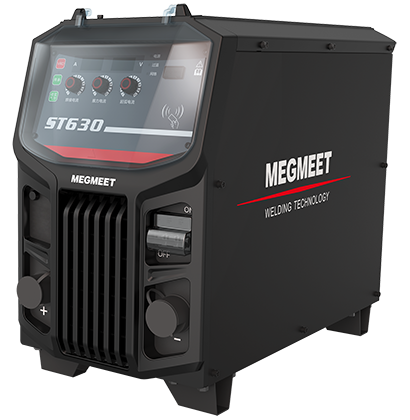
1. Stick Welding Machines and SMAW Welders - ST400/500/630
2. Choosing the Right Welding Process: MIG vs TIG vs Stick vs Flux Core Welding
3. Mastering Stick Welding: Answers to Your Most Frequently Asked Questions
4. How to Stick Weld Different Thickness Metals?
5. MMA "Stick" Welding: What is Open Circuit Voltage (OCV)?