In the high-stakes world of industrial automation, the robot is the brain, but the robot welding torch is the hand that performs the work. Often overlooked in favor of the robot arm's speed or the power source's complexity, the torch is the critical link where energy, shielding gas, and filler wire meet the workpiece.
Whether you are designing a high-volume automotive assembly line or a flexible fabrication cell for a small shop, understanding the nuances of the robotic welding torch is essential for achieving consistent weld quality and minimizing downtime. This guide explores the engineering behind these sophisticated tools, from core components to advanced sensing technologies.
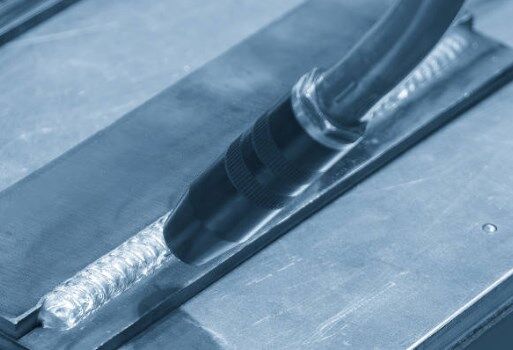
welding torches for automated welding
I. What is a Robot Welding Torch?
A robot welding torch (also known as a robotic welding gun) is an end-of-arm tool (EOAT) designed specifically for automated welding processes like MIG/MAG (GMAW), TIG (GTAW), or Plasma welding. Unlike manual torches, which are designed for ergonomics and human handling, robotic torches are engineered for:
100% Duty Cycles: Capable of running continuously without overheating.
Precision Repeatability: Ensuring the Tool Center Point (TCP) remains consistent within fractions of a millimeter.
Integration: Communicating with the robot controller to handle crash detection and wire sensing.
Durability: Withstanding the high-speed movements and rapid accelerations of modern 6-axis industrial robots.
II. Core Components of a Robotic Welding Torch System
A robotic torch is more than just a metal tube. It is a complex assembly of precision-engineered parts designed to work in harmony.
1. The Torch Neck (Swan Neck)
The "neck" is the curved section that holds the consumables. In robotics, neck geometry is critical for part accessibility. Necks are available in various angles—typically 22°, 45°, or 180°—to reach into tight joints or around fixtures. Most modern systems feature "quick-change" necks that allow an operator to swap a damaged neck in seconds without losing the TCP.
2. Cable Assemblies and Power Cables
The cable assembly carries power, shielding gas, and the welding wire from the feeder to the torch. There are two primary routing methods:
Hollow Wrist (Through-the-Arm): The cable runs through the center of the robot’s wrist. This protects the cable from snagging and allows for greater rotation.
Over-the-Arm: The cable is strapped to the exterior of the robot arm. This is common for older robots or specific heavy-duty applications.
3. Consumables: The "Business End"
These parts are designed to wear out and be replaced. High-quality consumables are the difference between a clean weld and a day spent grinding out defects.
Contact Tip: Transfers the electrical current to the wire. For robotics, tips made from copper-chrome-zirconium (CuCrZr) are preferred for their heat resistance and conductivity.
Gas Nozzle: Directs the shielding gas. Ceramic or chrome-plated nozzles are often used to resist spatter buildup.
Diffuser: Ensures a smooth, laminar flow of gas to prevent porosity.
4. Wire Liners
The liner is the "highway" for the welding wire. For steel, steel-spring liners are standard. However, for aluminum or stainless steel, specialized plastic or Teflon liners are required to prevent friction and wire shaving, which can cause "bird-nesting" at the feeder.
III. Types of Robotic Welding Torches
Not all welding processes are created equal. The choice of torch depends on the material, thickness, and required finish of the part.
1. Robotic MIG/MAG Torches
By far the most common in automation, these torches are designed for high-speed deposition. They are robust and capable of handling various wire diameters, from fine automotive wire to thick structural wire.
2. Robotic TIG Torches
Used for high-precision applications like aerospace or medical equipment. Robotic TIG torches often include cold wire feeders or hot wire capabilities to increase productivity while maintaining the aesthetic and structural perfection of the TIG process.
3. Plasma and Laser Welding Heads
For extreme penetration or high-speed thin-gauge welding, plasma and laser heads are used. These systems often require specialized water-cooling and high-precision optics that must be protected from the harsh welding environment.
IV. Cooling Systems: Air-Cooled vs. Liquid-Cooled
One of the most important decisions in selecting a robot welding torch is how to manage heat.
| Feature | Air-Cooled Torches | Liquid-Cooled (Water-Cooled) Torches |
| Amperage Range | Up to ~300A | 300A to 600A+ |
| Duty Cycle | Intermittent (e.g., 60%) | Continuous (100%) |
| Complexity | Simple, low maintenance | Requires chiller and plumbing |
| Size/Weight | Larger, bulkier neck | Slimmer, more agile neck |
| Best For | Thin materials, cobots | Heavy manufacturing, thick steel |
The Science of Heat Dissipation
In air-cooled torches, heat is dissipated through the ambient air and the shielding gas itself. In liquid-cooled systems, a radiator and pump circulate coolant through internal channels in the torch. This allows the torch to maintain a 100% duty cycle, meaning the robot can weld for hours without needing a "cool-down" period.
V. Key Features for High-Performance Automation
Modern robotic welding has moved beyond simple "point-to-point" movement. The torch now acts as a sensor and a safety device.
1. Crash Protection and Safety Mounts
In the event of a collision (e.g., a misplaced part or a programming error), a crash box or safety mount detects the impact and sends an "E-Stop" signal to the robot. High-end crash boxes offer multi-directional triggering and "spring-back" capabilities that return the torch to its exact position after the collision is cleared, preserving the TCP.
2. Wire Sensing and Seam Tracking
Many robotic torches are equipped with sensing technology to compensate for part variations:
Touch Sensing: The robot uses the welding wire to touch the part and find its location before welding.
Arc Sensing (Through-Arc): The controller monitors changes in amperage and voltage to adjust the torch path in real-time as it tracks a seam.
Laser Tracking: A laser sensor mounted ahead of the torch "sees" the joint and guides the robot accordingly.
3. Tool Center Point (TCP) Repeatability
In robotics, the TCP is the mathematical point at the end of the welding wire where the arc occurs. If a torch neck is bent or a contact tip is replaced, the TCP must remain identical. Advanced torches are built with high-precision tolerances (often within ±0.5mm) to ensure that the robot doesn't start welding off-seam after a maintenance cycle.
VI. Maintenance and the Role of Cleaning Stations
Even the best robot welding torch will fail if not maintained. Because robots don't have eyes, they can't see when spatter is clogging the nozzle.
1. Automatic Torch Cleaning Stations (Reamers)
To keep the line running, most robotic cells include an automatic cleaning station. At set intervals, the robot moves to the station, where:
A Reamer clears out spatter from inside the nozzle.
A Wire Cutter trims the wire to a consistent length for perfect arc starts.
An Anti-Spatter Sprayer applies a fine mist of liquid to prevent future buildup.
2. Preventive Maintenance Schedule
To maximize uptime, follow a tiered maintenance approach:
Every Shift: Inspect consumables, check for gas leaks, and verify the cleaning station fluid levels.
Weekly: Check the cable assembly for wear or "kinking" and perform a TCP verification test.
Monthly: Deep-clean the wire feeder and replace the internal liner to prevent feeding issues.
VII. How to Choose the Right Robot Welding Torch?
When selecting a torch, consider the following technical variables:
Amperage and Duty Cycle: Determine your maximum welding current. If you are welding heavy plate at 450A, a liquid-cooled torch is non-negotiable.
Physical Reach: Use 3D simulation software to ensure the torch neck can reach all joints without hitting the fixture.
Material Type: Aluminum requires specialized liners and often "push-pull" feeders to ensure the soft wire doesn't deform.
Robot Compatibility: Ensure the mounting flange and cable routing (hollow wrist vs. over-arm) match your specific robot model.
Conclusion
The robot welding torch is the critical interface between digital programming and physical metal. By investing in a high-quality torch system—one with superior cooling, repeatable TCP, and robust crash protection—manufacturers can significantly reduce scrap rates and increase throughput.
In the world of automation, every second of "arc-off" time is lost profit. Choosing the right torch and maintaining it with precision ensures that your robot remains a productive asset rather than a maintenance liability. Whether you are welding stainless steel exhaust systems or massive structural beams, the right torch makes all the difference.
Related articles:
1. Collaborative Robotic Welding: Enhanced Precision and Efficiency
2. Best 5 Arc Welding Robot Brands in the World (2024)
3. A Comprehensive Guide to Robotic Welding in Modern Manufacturing
4. Robotic Laser Welding: The Future of High-Speed Manufacturing
5. Robots & Cobots Revolutionizing Welding Automation