For anyone entering the world of metal fabrication—from garage hobbyists to seasoned industrial professionals—the question isn't if you should weld, but how. The three main contenders that dominate the industry are MIG (GMAW), TIG (GTAW), and Stick (MMA/SMAW) welding.
Each process operates on the same core principle—using electricity to generate intense heat and melt metals together—but they differ dramatically in speed, complexity, quality, and versatility. Choosing the wrong method for your material or environment can lead to poor results, wasted time, and frustration.
This comprehensive guide will break down the nuances of each method, detailing the ideal applications and helping you select the perfect process for your next project.
I. MIG Welding: The Speed and Simplicity Champion (GMAW)
MIG (Metal Inert Gas) welding, technically known as Gas Metal Arc Welding (GMAW), is often the first process learned and the most widely used in high-volume manufacturing. It is a semi-automatic process where a continuously fed wire electrode melts and acts as the filler material.
1) How MIG Works?
 welding - how it works.png "MIG (Metal Inert Gas) welding - how it works.png")
The core components are a power source, a wire feeder, and a welding gun.
Wire Feed: A consumable wire electrode is continuously fed from a spool through the gun.
Arc Generation: As the wire touches the workpiece, an arc is established, melting the wire and the base metal.
Shielding: An externally supplied shielding gas (usually Argon or an Argon/CO2 mix) flows out of the nozzle to protect the molten weld pool from atmospheric contaminants like oxygen and nitrogen.
2) Pros of MIG Welding
High Speed and Productivity: The continuous wire feed means no need to stop and change electrodes, making it the fastest method for long runs.
Ease of Use: It has the shortest learning curve, often described as a "hot glue gun for metal."
Versatility: Excellent for welding thinner materials and is effective on carbon steel, stainless steel, and aluminum (though aluminum requires specialized equipment like spool guns or push-pull systems).
Low Waste: Minimal cleanup (no slag).
3) Cons of MIG Welding
Portability/Outdoor Use: The reliance on an external shielding gas tank makes the equipment bulky and highly susceptible to wind, which can blow the gas away and cause severe porosity.
Equipment Cost: The initial investment for a high-quality MIG machine, wire feeder, and gas setup is higher than a simple Stick welder.
Quality on Thick Material: On very thick plate, achieving deep fusion can be challenging compared to Stick or TIG.
4) Ideal Applications
Automotive Repair and Bodywork
Manufacturing and Fabrication (e.g., trailer building, structural steel)
Home Projects and Maintenance
Welding Thin Materials (e.g., sheet metal down to 24 gauge)
II. TIG Welding: The Precision and Purity Master (GTAW)
TIG (Tungsten Inert Gas) welding, officially Gas Tungsten Arc Welding (GTAW), is the most demanding process but yields the cleanest, highest-quality welds. It is a non-consumable process where the electrode only generates the arc.
1) How TIG Works?

Non-Consumable Electrode: The arc is generated by a Tungsten electrode, which is not consumed in the process (it does not melt into the weld).
Shielding: An inert shielding gas (usually 100% Argon) protects the tungsten and the weld pool.
Manual Filler: The operator must manually feed a separate, non-electrified filler rod into the weld puddle with their free hand—requiring exceptional coordination.
2) Pros of TIG Welding
Highest Quality and Purity: Creates welds with superior strength, ductility, and no spatter or slag. Essential for critical applications like aerospace.
Precision Control: Separate control over current (via foot pedal), heat, and filler allows for incredible precision, especially on exotic materials.
Aesthetics: Produces beautiful, recognizable, "stacked dime" weld beads.
Material Versatility: Can weld virtually any metal, including highly challenging ones like aluminum, titanium, nickel alloys, and thin stainless steel.
3) Cons of TIG Welding
Low Speed/Productivity: It is the slowest process because it requires manual feeding and careful manipulation of the arc.
Steep Learning Curve: Mastering the hand-eye coordination (the "three-limb dance") takes significant practice.
Cleanliness Requirements: Weld joints must be absolutely spotless, or contaminants will quickly ruin the tungsten electrode and the weld puddle.
4) Ideal Applications
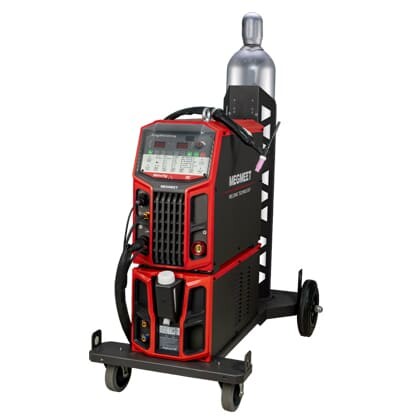
Aerospace and Medical Devices (where weld integrity is paramount)
Piping and Pressure Vessels (requiring 100% X-ray quality welds)
Exotic Materials (Titanium, Inconel)
Sheet Metal (where minimal distortion is critical)
Aluminum (for superior control over the oxide layer)
III. Stick Welding: The Toughness and Versatility Workhorse (MMA/SMAW)
Stick welding, also known as Manual Metal Arc (MMA) or Shielded Metal Arc Welding (SMAW), is the oldest and simplest process in terms of equipment. It is characterized by the use of flux-coated electrodes.
1) How Stick Works?
 or Shielded Metal Arc Welding (SMAW) - how it works.png "Stick welding, also known as Manual Metal Arc (MMA) or Shielded Metal Arc Welding (SMAW) - how it works.png")
Consumable Electrode: A stick electrode (filler metal core surrounded by a chemical flux coating) is clamped in a holder.
Arc Generation: When the electrode touches the workpiece, the arc melts the metal core and the flux.
Self-Shielding: The melting flux coating creates a gas cloud for shielding and forms a layer of slag over the cooling weld pool. This slag protects the bead until it solidifies.
2) Pros of Stick Welding
Ultimate Portability and Durability: Requires only a power source, cables, and an electrode holder. No need for gas tanks or complex feeders. It is robust and tolerant of rough handling.
Outdoor and Dirty Conditions: Because the flux creates the shielding, it is highly tolerant of wind, rust, paint, and general contamination, making it the undisputed champion for fieldwork and construction.
Low Initial Cost: The simplest and most affordable equipment setup.
Deep Penetration: Excellent for welding thick, structural steel.
3) Cons of Stick Welding
Quality and Appearance: Produces more spatter and requires chipping away the slag afterward, leading to less appealing welds and more post-weld cleanup.
Low Deposition Rate: The operator must frequently stop to change out the consumed electrode stub, slowing productivity compared to MIG.
Material Limitations: Not suitable for thin materials (burn-through is common) or non-ferrous metals like aluminum (specialized electrodes exist, but TIG or MIG is almost always preferred).
4) Ideal Applications
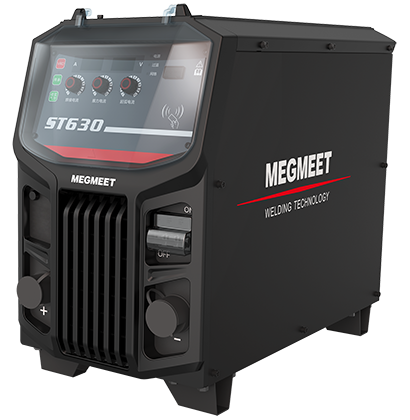
Heavy Construction and Structural Steel
Outdoor Fieldwork and Pipeline Welding
Maintenance and Repair (especially on rusty or dirty metal)
Thick Plate Welding
IV. Flux-Cored Arc Welding (FCAW): The Outdoor MIG Alternative
Often grouped with MIG due to the similar gun and wire feed setup, Flux-Cored Arc Welding (FCAW) deserves its own mention as a powerful bridge between Stick and MIG.
1) How FCAW Works?
The wire itself is hollow and filled with a flux compound.
Self-Shielded (FCAW-S): The flux provides all the necessary shielding, making it excellent for outdoor use, just like Stick.
Gas-Shielded (FCAW-G): The flux provides deoxidizers and slag, while an external gas (often CO2) is also used for added protection and higher deposition rates.
2) Pros & Cons
Pros: High deposition rates (faster than Stick), excellent penetration on thick metal, and great for dirty surfaces or windy environments.
Cons: Produces smoke and slag, and the wire is more expensive than solid MIG wire.
3) Ideal Applications
V. Process Comparison Table: MIG vs. TIG vs. Stick
| Feature | MIG (GMAW) | TIG (GTAW) | Stick (MMA/SMAW) |
| Electrode | Consumable wire | Non-consumable Tungsten | Consumable rod (flux-coated) |
| Shielding | External Gas (Argon/CO2) | External Gas (Pure Argon) | Flux Coating (Self-Shielding) |
| Quality/Aesthetics | Good (No slag, minimal cleanup) | Excellent (Cleanest, most precise) | Fair (Slag, spatter, heavy cleanup) |
| Welding Speed | Fastest (Continuous feed) | Slowest (Manual feed) | Slow (Frequent rod changes) |
| Material Thickness | Thin to Medium | Very Thin to Medium | Medium to Thick |
| Best Environment | Indoors, well-ventilated shop | Indoors, pristine shop | Outdoors, windy, dirty conditions |
| Learning Curve | Easiest | Steepest (Requires coordination) | Moderate (Arc starting can be tricky) |
| Cost of Consumables | Moderate (Wire, Gas, Tips) | Low (Tungsten, Rod, Gas) | Low (Rods only) |
VI. Making the Choice: Matching the Process to the Project
Selecting the best welding process is a straightforward decision once you prioritize the requirements of your job:
1) Priority 1: Speed and Cost-Effectiveness?
Choose MIG: For production lines, building trailers, or any project where you need to lay a lot of weld quickly and affordably. Modern multi-process machines, like the Megmeet Artsen and DEX series, offer advanced synergistic controls that allow operators to dial in the perfect MIG settings rapidly, further boosting productivity.
2) Priority 2: Quality, Purity, and Aesthetics?
Choose TIG: For visible welds, critical repairs on high-value parts (like racing components or engine heads), or any material that cannot tolerate contamination (aluminum, titanium). If the material is thin (under 1/8"), TIG is often the only method offering the necessary control.
3) Priority 3: Outdoor Use and Heavy, Dirty Metal?
Choose Stick (MMA): For working outside on a construction site, fixing machinery on a farm, or joining heavy, rusty structural steel. When portability and tolerance for dirty base metal are paramount, Stick cannot be beaten.
Final Considerations
Remember that many modern inverter machines are Multi-Process Welders. These units are capable of switching between MIG, TIG, and Stick with simple setup changes, providing the best of all worlds in a single, compact machine. For the serious fabricator, a multi-process unit is often the most economical and versatile choice.
FAQs of MIG vs. TIG vs. Stick Welding
Q1: Which process is best for aluminum?
Q2: Is it okay to use Stick welding electrodes that have been exposed to moisture?
A: No, especially for low-hydrogen electrodes (like E7018). Moisture absorbed by the flux coating introduces hydrogen into the weld pool, which can lead to a severe defect called hydrogen cracking in the base metal. Low-hydrogen rods must be stored in a dry, heated oven to maintain weld quality.
Q3: Why do I need 100% Argon for TIG welding?
A: TIG welding relies on an inert (non-reactive) gas to protect the tungsten electrode and the weld puddle. Argon is dense and inert, providing superior coverage. Adding reactive gases like CO2 (common in MIG) would contaminate the tungsten electrode, causing it to degrade and the arc to become unstable.
Q4: What is the main benefit of Pulse MIG welding?
Megmeet Welding Technology stands as a leader in providing advanced welding solutions tailored to meet your specific needs. Whether you're working on industrial machinery, automotive components, or high-precision aerospace parts, Megmeet's high-quality equipment ensures superior results. Visit our News Center or follow our LinkedIn page for the latest insights, tips, and product updates to enhance your welding expertise.
Related articles:
1. Spot Welding vs. TIG Welding vs. MIG Welding: Differences & How to Choose?
2. Welding Aluminum vs. Welding Steel: Key Differences
3. Arc Welding vs. Laser Welding: The Key Differences
4. Pulsed vs. CW Laser Welding: Key Differences | Expert Insights
5. Pros and Cons of Stick Welding and MIG Welding