Welding is widely used in manufacturing, construction, automotive production, shipbuilding, and metal fabrication. Different welding processes use different heat sources, filler materials, and methods of protecting the weld pool. Choosing the right process is important, but selecting a suitable welding machine is equally essential for achieving consistent weld quality and production efficiency.
A welding machine provides the energy and process control required for a particular welding method. Depending on the application, the equipment may be a portable manual welder, an industrial welding power source with a separate wire feeder, a mechanized welding system, or an integrated robotic solution.
This guide explains the major welding processes, the welding machines associated with them, and the factors to consider when selecting equipment for a specific application.
I. What Is a Welding Machine?
A welding machine is equipment designed to supply and control the energy required to join materials using a specified welding process. In industrial arc welding, it commonly includes a welding power source and may also require a welding torch or electrode holder, cables, a wire feeder, shielding gas equipment, and other accessories.
A welding power source is the component that supplies and regulates electrical output for an arc welding process. Its output characteristics, current range, control functions, and duty cycle must match the welding process and application. In some systems, the power source is integrated into a single machine; in others, it operates alongside separate feeding, cooling, or automation equipment.
A welding process describes how the joint is formed. For example, Gas Metal Arc Welding (GMAW), Gas Tungsten Arc Welding (GTAW), Shielded Metal Arc Welding (SMAW), and Submerged Arc Welding (SAW) use different electrode arrangements, shielding methods, and operating principles. MIG/MAG, TIG, and MMA are commonly used names associated with these processes, although terminology varies by region and application.
The distinction matters when choosing equipment: the machine must support the required process, material, joint configuration, and production conditions. A machine designed for one process should not be assumed to support another unless the manufacturer explicitly specifies that capability.
II. Major Welding Processes and Their Corresponding Machines
The following table provides a practical overview of common welding processes and the equipment typically used with them. Actual suitability depends on the material, joint design, welding position, quality requirements, and production conditions.
| Welding process | Typical machine or equipment | Common materials and applications | Main advantages | Main limitations |
|---|
| SMAW / MMA (Stick) | Manual arc welding machine | Carbon steel, structural steel, field repairs and maintenance | Relatively simple setup; suitable for many outdoor and field applications | Electrode replacement and slag removal interrupt the workflow |
| GMAW / MIG-MAG | Wire-feed welding machine and compatible torch | Carbon steel, stainless steel, aluminum; fabrication and manufacturing | Continuous wire feeding supports productive welding | Requires appropriate wire, setup, and shielding arrangements |
| FCAW (Flux-Cored Arc Welding) | Flux-cored wire welding system | Structural steel, shipbuilding, heavy fabrication | Productive deposition; self-shielded variants can suit outdoor work | Fume, slag, and spatter management may be required |
| GTAW / TIG | TIG welding power source and torch | Stainless steel, aluminum and other suitable alloys; precision work | Precise heat control and high-quality weld appearance | Generally slower and more dependent on operator skill |
| SAW | Submerged arc welding power source and mechanized system | Heavy plate, pressure vessels, long seams and structural fabrication | High productivity for suitable mechanized applications | Less flexible for complex geometries and many welding positions |
| Resistance welding | Resistance welding equipment with electrodes and force control | Sheet-metal assemblies and high-volume production | Fast, repeatable cycles for suitable joint designs | Requires appropriate joint access, tooling, and process setup |
| Laser beam welding | Laser welding machine or integrated robotic laser system | Suitable metal assemblies, precision fabrication and automated production | Concentrated energy input and potential for high precision | Requires application-specific process validation and laser safety controls |
These are typical equipment pairings, not universal rules. For example, a wire-feed system may be configured for different supported processes, while laser welding equipment is fundamentally different from conventional arc welding equipment.
1. Shielded Metal Arc Welding (SMAW / MMA)
SMAW uses a flux-coated consumable electrode to establish an arc and form the weld. The electrode coating contributes shielding and produces slag that protects the weld during solidification.
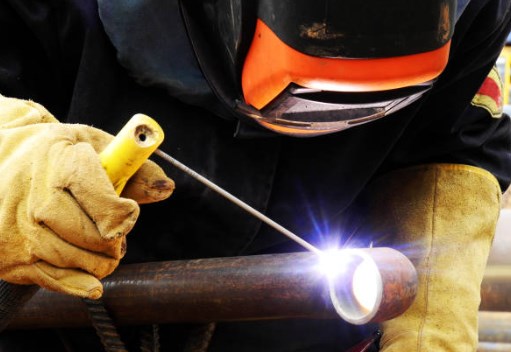
SMAW equipment is often selected for construction, maintenance, structural steelwork, and field welding where portability and a relatively simple setup are important. The process can be used in different welding positions when the electrode, joint, and procedure are suitable.
Its limitations include frequent electrode changes, slag removal, and productivity considerations compared with some continuous wire-feed processes.
For industrial manual arc applications, explore MMA/SMAW welding machines to understand the equipment category.
2. Gas Metal Arc Welding (GMAW / MIG-MAG)
GMAW uses a continuously fed consumable wire electrode and shielding gas. MIG and MAG are commonly distinguished by the type and function of the shielding gas: MIG uses inert gas, while MAG uses active gas or gas mixtures.
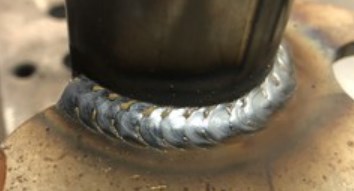
MIG/MAG equipment is widely used in fabrication, automotive manufacturing, machinery production, and other applications where continuous wire feeding and repeatable process control are valuable.
When selecting a machine, check compatibility with the required wire material and diameter, wire-feeding system, shielding gas, welding current range, and any pulse or waveform-control functions required by the application.
See MIG/MAG welding machines for the relevant equipment category.
3. Flux-Cored Arc Welding (FCAW)
FCAW uses a tubular wire containing flux. Depending on the wire type, shielding may come primarily from the flux or may require an external shielding gas.
.jpg "Flux-Cored Arc Welding (FCAW)")
The process is used in structural fabrication, shipbuilding, heavy manufacturing, and repair work. Self-shielded FCAW can be useful where external shielding gas is impractical, although wind, consumable selection, and welding procedure still affect performance.
Equipment selection should account for the wire type, feeder capability, power-source characteristics, fume extraction, and slag-removal requirements.
4. Gas Tungsten Arc Welding (GTAW / TIG)
GTAW uses a non-consumable tungsten electrode to establish the arc. Filler metal may be added separately when required, and shielding gas protects the weld zone.
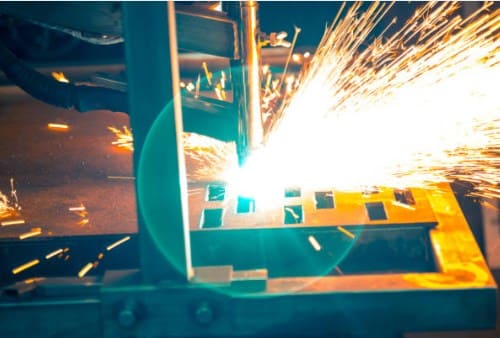
TIG is commonly chosen for precision work, controlled heat input, and applications where weld appearance or material requirements demand close process control. It is used for suitable stainless steel, aluminum, and other alloy applications.
The equipment must match the material and current type required. Aluminum welding, for example, may require an AC-capable TIG power source, depending on the application and procedure.
Explore TIG/GTAW welding machines for the corresponding equipment category.
5. Submerged Arc Welding (SAW)
SAW creates an arc beneath a layer of granular flux. It is commonly used in mechanized or automated operations involving long weld seams and suitable heavy sections.
.jpg "Submerged Arc Welding (SAW)")
Typical applications include pressure vessels, large structural components, and heavy fabrication. The process can support high deposition rates and consistent weld production when the equipment, joint preparation, and procedure are properly matched.
SAW systems generally require more installation space and material-handling arrangements than portable manual welding machines.
For these applications, see SAW welding machines.
6. Resistance Welding
Resistance welding generates heat through electrical resistance while applying force to the workpieces. Spot and projection welding are common examples.
.jpg "Resistance Welding")
The process is particularly useful for suitable sheet-metal joints and repeatable, high-volume production, including applications in automotive and appliance manufacturing.
Machine selection depends on material combinations, sheet thickness, electrode access, force requirements, electrical capacity, and production-cycle requirements.
7. Laser Beam Welding
Laser beam welding uses a concentrated laser beam as the heat source. Depending on the system and application, the equipment may be handheld or integrated into a robotic or automated production line.
.jpg "Laser Beam Welding")
Laser welding can support precision joining and controlled heat input for suitable applications. However, results depend on material properties, joint fit-up, laser configuration, process parameters, and the required weld quality.
Unlike conventional arc welding, laser equipment requires specific laser protection measures, controlled operating procedures, and appropriate safeguards.
For relevant equipment options, explore laser welding machines.
III. Factors to Consider When Choosing a Welding Process
The most suitable process depends on the material, joint design, required weld quality, production volume, welding position, working environment, and available resources.
Material type: Carbon steel, stainless steel, aluminum, and other alloys may require different processes, filler materials, shielding arrangements, or power-source capabilities.
Material thickness and joint design: Consider the joint geometry, required penetration, fit-up, access, and heat-input constraints. Thickness alone does not determine the correct process.
Production requirements: Continuous wire-feed, mechanized, and automated processes may be appropriate for repetitive production, while manual processes can offer greater flexibility for varied jobs.
Welding position and access: Some processes are more suitable than others for vertical, overhead, confined, or difficult-to-access joints.
Quality requirements: Evaluate the required mechanical properties, weld appearance, inspection criteria, and applicable welding procedure.
Total operating cost: Consider equipment, consumables, shielding gas, labor, maintenance, rework, and production downtime rather than purchase price alone.
IV. Choosing a Welding Machine
Once the welding process has been selected, the next step is to confirm that the machine matches the application.
1. Input power and electrical supply
Check the available supply voltage, phase, frequency, circuit capacity, and installation requirements against the machine's nameplate and technical documentation. Do not assume that a machine can operate from a particular electrical supply without verifying its rated input specifications.
2. Output current range
The required current depends on the welding process, material, electrode or wire, joint configuration, and welding procedure. Confirm that the machine's specified output range covers the intended operating conditions.
A higher maximum current does not automatically mean better performance. The useful operating range and output stability matter just as much.
3. Duty cycle
Duty cycle describes the proportion of a defined test period during which a machine can weld at a specified output under stated conditions. The rating must be interpreted together with the output current, test period, and ambient conditions specified by the manufacturer.
For production work, compare duty-cycle ratings at the output levels you expect to use, rather than comparing percentages without their associated current ratings.
4. Supported welding processes
Determine whether a single-process machine is sufficient or whether a multi-process unit is needed. Multi-process machines can reduce equipment duplication when several supported processes are used, but their available functions and performance should be checked individually.
For example, a multi-process machine may support selected combinations of MIG/MAG, TIG, and MMA. Do not assume that every multi-process machine supports all three or provides the same capabilities in each mode.
5. Wire feeding and shielding gas
For MIG/MAG and gas-shielded FCAW, evaluate wire compatibility, feeder performance, torch configuration, gas supply, and the consumables required by the procedure.
For self-shielded FCAW, verify that the machine and wire are compatible with the intended process. TIG requires suitable torch and shielding-gas arrangements, while SAW requires equipment for flux handling and the selected mechanized setup.
6. Installation environment and portability
Consider whether the machine will operate in a workshop, on a construction site, in a production line, or as part of a robotic cell.
Relevant factors include equipment dimensions, weight, cable length, cooling requirements, enclosure protection, ambient conditions, transport frequency, and access for maintenance. For automated applications, also check communication interfaces and compatibility with the robot or control system.
7. A practical selection workflow
Before comparing specific models, document:
The material, joint design, and required weld quality.
The selected welding process and operating position.
The expected current range and production duty.
The available electrical supply and installation conditions.
The required wire feeder, torch, gas system, or automation equipment.
The applicable welding procedure, inspection criteria, and safety controls.
Then compare manufacturer specifications against those requirements. Final settings and suitability should be confirmed through the relevant welding procedure and application testing.
V. Welding Safety and Quality Assurance
Welding safety and quality depend on both equipment and working practices. Operators should use suitable eye and face protection, protective clothing, and appropriate ventilation or fume extraction. Electrical connections, cables, grounding arrangements, gas systems, and other equipment should be inspected and maintained according to the applicable instructions.
Fire prevention, protection of nearby workers, and additional controls for specialized processes such as laser welding are also essential. The required measures depend on the process, materials, work environment, and applicable local regulations.
For process terminology and classification, consult ISO 4063:2023 — Welding, brazing, soldering and cutting: Nomenclature of processes and reference numbers. For applicable workplace requirements in the United States, refer to the relevant OSHA welding, cutting, and heating regulations.
For production applications, follow the approved welding procedure, applicable acceptance criteria, and inspection plan. Depending on the application, quality assurance may include visual inspection, dimensional checks, or appropriate nondestructive testing.
VI. Frequently Asked Questions
Q1: What is a welding machine?
A welding machine supplies and controls the energy needed for a welding process. Depending on its design, it may include an integrated power source or operate with separate components such as a wire feeder, torch, cooling system, and automation equipment.
Q2: What is the difference between a welding machine and a welding power source?
A welding machine generally refers to the complete equipment or system used for welding. A welding power source is the component that supplies and regulates the electrical output for an arc welding process. The terms are sometimes used interchangeably in product descriptions, so the manufacturer's equipment configuration should be checked.
Q3: What is the difference between MIG, TIG, and Stick welding machines?
MIG/MAG machines use a continuously fed wire electrode and shielding gas. TIG machines use a non-consumable tungsten electrode and typically require shielding gas. Stick, also known as MMA or SMAW, uses flux-coated consumable electrodes.
The appropriate machine depends on the material, joint, welding position, production requirements, and the operator's working conditions.
Q4: How do I choose a welding machine for different materials and thicknesses?
Start by identifying the material, joint design, required weld quality, and applicable welding procedure. Then determine the suitable process and check the machine's output range, duty cycle, input power, consumable compatibility, and accessories. Material thickness is an important factor, but it should not be used alone to select a machine.
Q5: Is a multi-process welding machine better than a single-process machine?
Not necessarily. A multi-process machine can be useful when the same workplace needs several supported processes. A dedicated machine may be preferable when the application requires particular process capabilities, sustained production performance, or specialized integration. Compare the actual specifications and intended operating conditions before deciding.
Q6: What does welding machine duty cycle mean?
Duty cycle indicates how much of a defined test period a machine can weld at a specified output under stated test conditions. The rating must be read together with its current value and the manufacturer's test conditions. A duty-cycle percentage without its associated output rating is not sufficient for a meaningful comparison.
Q7: Can welding machines be used in automated production?
Yes. Suitable welding power sources can be integrated into mechanized or robotic systems. Successful integration depends on process compatibility, wire-feeding or torch configuration, communication interfaces, process control, fixture design, and the required quality standards.
Q8: What safety requirements should I check before using a welding machine?
Review the manufacturer's operating instructions, electrical and grounding requirements, protective equipment, ventilation needs, fire precautions, and process-specific safeguards. Laser welding requires dedicated laser safety controls. Applicable regulations and workplace procedures should be verified for the installation and application.
VII. Conclusion
Selecting welding equipment requires more than comparing maximum current or purchase price. The right choice begins with understanding the welding process and matching the machine to the material, joint design, production requirements, electrical supply, and working environment.
By evaluating output range, duty cycle, supported processes, feeding and shielding systems, and safety requirements, users can make a more informed equipment decision. For industrial applications, the final selection should be verified against manufacturer specifications and the relevant welding procedure.
Related articles:
1. 10 MMA Welding Processes Flaws And Megmeet’s Solutions
2. GMAW vs. CO2 Welding: A Comparison of Two Metal Arc Welding Processes
3. How to Weld Vertical: Tips and Techniques for Various Processes
4. Gas-shielded arc welding processes (TIG/MIG/MAG)
5. Welding Quality Assurance & Quality Control Processes