TIG welding, or tungsten inert gas welding is best known for precision, clean welds, and excellent control, which is why it is widely used in industries that cannot afford rough finishes or excess heat input. It is especially valuable for thin metals, nonferrous materials, sanitary fabrication, and critical components where appearance and weld quality matter as much as strength.
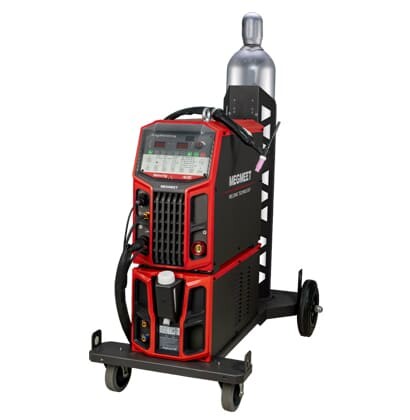
I. What TIG Welding Is?
TIG welding, also called gas tungsten arc welding, uses a non-consumable tungsten electrode to create the arc while shielding the weld area with inert gas. Because the operator has fine control over heat, filler metal, and arc placement, the process is ideal for detailed work and high-spec fabrication.
This control comes with a tradeoff: TIG is usually slower and more skill-intensive than processes like MIG or stick welding. For that reason, it is chosen less for speed and more for quality, precision, and finish.
II. Why TIG Welding Is Chosen?
TIG welding is chosen because it gives the welder exceptional control over heat, arc stability, and weld quality. It is especially valued for thin materials, precision work, clean finishes, and applications where strength, appearance, and low distortion all matter.
Precise heat control. TIG lets the operator fine-tune amperage during welding, which helps prevent burn-through and distortion on thin or sensitive metals.
Clean, high-quality welds. The process uses a non-consumable tungsten electrode and inert shielding gas, which helps reduce contamination, spatter, and defects.
Works on many metals. TIG is widely used on aluminum, stainless steel, steel, nickel alloys, titanium, copper, and more.
Excellent for thin material. Its controlled arc makes it a strong choice when you need precision without warping the base metal.
Strong aesthetic results. TIG is often selected when the weld will be visible and needs a smooth, professional finish.
III. Advantages And Limits of TIG Welding
TIG welding offers several clear advantages, but it also has real limits that make it unsuitable for every job. Its biggest strengths are precision, clean welds, and excellent control; its biggest drawbacks are slower speed, higher skill demand, and lower productivity on thick or high-volume work.
1) Advantages of TIG Welding
High precision and control over heat input, which helps prevent burn-through and distortion on thin metal.
Clean weld appearance with very low spatter and minimal contamination.
Strong results on thin materials and detailed joints.
Versatility across many metals, including aluminum, stainless steel, steel, nickel alloys, and more.
Good visibility of the weld pool because the process uses inert shielding gas and no flux slag.
2) Limits of TIG Welding
Slower than MIG or stick welding, so it is less efficient for large production runs.
Requires a higher skill level because the welder must control the torch, filler, arc length, and heat very carefully.
More expensive setup and operating costs, especially for gas, equipment, and training.
Lower deposition rate, which makes it less suitable for heavy, thick, or high-volume welding.
Needs very clean material and proper gas coverage to avoid contamination and weak welds.
IV. Common TIG Welding Applications
1) Aerospace and aviation
Aerospace work is one of the most demanding TIG welding applications because lightweight alloys must be joined with high precision and excellent structural reliability. TIG is used on components such as frames, engine parts, fuel lines, and other parts where clean fusion and controlled heat input are essential.
It is particularly valuable for aluminum, titanium, stainless steel, and nickel alloys, which are common in aircraft structures and systems. The process helps reduce distortion and supports the tight quality requirements of the aerospace industry.
2) Automotive manufacturing and repair
In automotive work, TIG welding is often used for exhaust systems, chassis components, body panels, fuel tanks, and custom fabrication. Its precision makes it a strong choice for thin-gauge metal and for parts where a neat weld bead is important.
It is also popular in performance and restoration work because it can create clean joints on aluminum and stainless steel while maintaining a professional finish. For repair work, that level of control can make the difference between a functional fix and a visible compromise.
3) Food and beverage equipment
Food-grade fabrication relies heavily on clean welds that are easy to inspect and easy to sanitize. TIG is widely used for tanks, piping, processing equipment, kitchen equipment, and sanitary fittings because it can produce smooth, contamination-resistant joints.
This matters because rough welds, spatter, and trapped debris can create hygiene problems in food and beverage systems. TIG’s clean bead profile helps support both product safety and long-term corrosion resistance.
4) Chemical and petrochemical plants
Chemical and petrochemical facilities often use TIG welding for pipelines, pressure systems, storage tanks, and process equipment made from corrosion-resistant alloys. These environments require leak-tight joints and materials that can handle aggressive chemicals, heat, and pressure cycling.
TIG is especially useful with stainless steel, duplex stainless, nickel alloys, and other demanding materials where heat control and weld quality are critical. In these applications, a small defect can have large operational or safety consequences.
5) Power generation and energy
Power plants, nuclear systems, and other energy applications use TIG welding where quality and reliability are essential. The process is often selected for critical seals, piping, turbine-related work, and components exposed to high stress or corrosive conditions.
Because TIG can produce strong, precise joints with excellent control over penetration, it is well suited to projects where failure is costly or dangerous. That makes it a standard option in both traditional and advanced energy sectors.
6) Pipe and tube fabrication
TIG is a common choice for smaller-diameter tubing, root passes, and high-quality piping systems. Its precise arc control helps weld tight joints in difficult-access areas and supports strong root fusion, which is especially important in pressure-bearing systems.
This is one reason TIG is valued in process piping, instrumentation lines, and tubing assemblies used across industries. Where fit-up is exacting and weld quality must be consistent, TIG often becomes the preferred method.
7) Tool, die, and repair work
TIG welding is widely used in repair work for tools, dies, fixtures, and precision parts. Its control makes it possible to add small amounts of filler metal accurately, which is useful when restoring expensive or complex components.
Because TIG can handle many different alloys and thin sections, it is often chosen for work that demands localized repair without overheating nearby material. This is especially helpful in maintenance shops and custom fabrication environments.
8) Bicycle, motorcycle, and custom fabrication
TIG is popular in the bicycle and custom fabrication markets because it handles thin-wall tubing well and produces attractive welds. The process is useful for frames, handlebars, brackets, and other parts where appearance and weight matter.
For custom builders, TIG offers the flexibility to weld stainless steel, aluminum, and other metals with a refined finish. That makes it a favorite for projects where craftsmanship is part of the product value.
V. Materials Best Suited To TIG Welding
| Material | Why TIG Works Well |
| Stainless steel | Clean, corrosion-resistant welds with good appearance. |
| Aluminum | Precise heat control helps manage distortion and oxide challenges. |
| Titanium | High-quality joints are important in aerospace and critical service. |
| Nickel and nickel alloys | TIG supports demanding corrosion and heat-resistant applications. |
| Copper and other nonferrous metals | Fine control helps with thin or specialized components. |
TIG is especially effective on thin materials, but it can also be used on heavier sections when quality is the priority. The process is often selected when a weld must look good, stay clean, and perform reliably over time.
VI. Choosing TIG For A Project
TIG welding makes the most sense when the job requires precision, cleanliness, and careful heat control. If the metal is thin, the joint is visible, the material is specialized, or the service conditions are demanding, TIG is often the right answer.
It is less attractive when speed is the top priority or when the material is thick and appearance is secondary. In those cases, faster processes may be more efficient, but they usually cannot match TIG’s finish or control.
VII. FAQs of TIG Welding Applications
Q1: What is TIG welding mainly used for?
TIG welding is mainly used for high-precision metal joining where weld quality, appearance, and control matter most. Common examples include aerospace, automotive, food equipment, piping, and custom fabrication.
Q2: Is TIG welding good for thin metal?
Q3: Can TIG weld aluminum and stainless steel?
Yes. TIG is widely used for both aluminum and stainless steel, along with titanium, nickel alloys, and other nonferrous materials.
Q4: Why is TIG preferred in sanitary applications?
TIG creates smooth, clean welds with minimal spatter and no slag, which makes cleaning and inspection easier. That is important in food, beverage, and pharmaceutical-type environments.
Q5: Is TIG better than MIG?
Neither is universally better. TIG is better for precision, appearance, and thin materials, while MIG is usually faster and more productive for many general fabrication jobs.
Conclusion
TIG welding applications span aerospace, automotive, food processing, chemical plants, energy systems, pipe fabrication, and custom metalwork because the process delivers precision, clean welds, and excellent control. When the job demands quality over speed, TIG is one of the most dependable welding methods available.
Related articles
1. Automatic Welding Machine Basics You Must Know
2. Automatic Welding Effects in Industrial Manufacturing
3. Drum Brake Shoes Automatic Welding - Using Ehave CM500H MIG/MAG Welder
4. Megmeet - Pioneering Chinese Welding Machines for Precision and Automation
5. Robots & Cobots Revolutionizing Welding Automation