In the global fabrication and manufacturing industry, the integrity of a joint is the integrity of the entire structure. Whether it is a high-pressure pipeline, a skyscraper’s skeletal frame, or a critical automotive component, the margin for error is zero. This is where welding quality control (WQC) transforms from a technical requirement into a foundational pillar of safety and excellence.
To truly master welding quality control, one must look beyond simple post-weld inspections. It requires a holistic, three-phase management approach combined with rigorous testing protocols. This guide explores the essential components of welding quality control to help manufacturers achieve flawless execution and industry-leading standards.
Part 1: The Three-Phase Approach to Welding Quality Control
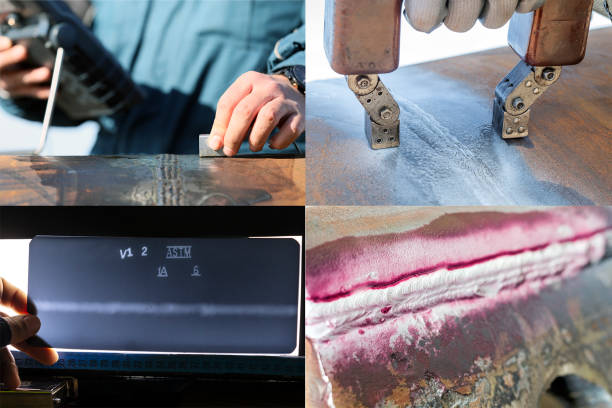
Effective welding quality control is not a single event; it is a continuous process. As highlighted by industry experts, quality management is most effective when it is categorized into three distinct stages: Before, During, and After.
1.1 Phase I: Pre-Welding Inspection (The Prevention Stage)
The highest quality welds are often "made" before the arc is ever struck. Preparation is the primary defense against rework and structural failure.
Material and Consumable Verification: Quality control starts in the warehouse. Inspectors must verify that the base metals and filler materials (electrodes, wires, and flux) match the specific requirements of the project. This involves checking Material Test Reports (MTRs) and ensuring that electrodes have been stored in climate-controlled ovens to prevent moisture pick-up.
Joint Geometry and Fit-Up: Proper fit-up is crucial. Technicians must inspect the root opening, bevel angle, and alignment of the parts. If a joint is poorly fitted, the welder may attempt to "bridge" the gap, leading to internal defects like lack of fusion.
Welding Procedure Specification (WPS) Review: Every critical weld should be governed by a WPS—a "recipe" for a successful weld. Before starting, the inspector ensures the welder is qualified for that specific procedure and understands the parameters.
1.2 Phase II: In-Process Inspection (The Execution Stage)
Monitoring the welding process in real-time allows for the immediate correction of errors, saving thousands of dollars in potential repairs.
Parameter Monitoring: Quality control personnel monitor essential variables such as amperage, voltage, and travel speed. Deviations from the WPS can lead to excessive heat input, which alters the grain structure of the metal and reduces its toughness.
Interpass Temperature Control: In multi-pass welds, the temperature of the metal between passes must be controlled. If the metal becomes too hot or stays too cold, it increases the risk of cracking or loss of mechanical properties.
Cleaning Between Passes: For processes like Shielded Metal Arc Welding (SMAW) or Flux-Cored Arc Welding (FCAW), removing slag between passes is mandatory. Failure to do so leads to slag inclusions, a common cause of failed radiographic tests.
1.3 Phase III: Post-Welding Inspection (The Verification Stage)
Once the weld is completed and cooled, it must be verified against the acceptance criteria defined by industry codes (such as AWS D1.1 or ASME Section IX).
Visual Assessment: This is the most common form of welding quality control. It involves checking for surface defects like undercut, overlap, surface porosity, and improper weld size using specialized gauges.
Dimensional Accuracy: Beyond the weld itself, the entire assembly must be checked for distortion. The intense heat of welding can warp steel; quality control ensures the final product remains within tolerance.
II. Part 2: Understanding and Preventing Weld Defects
A core objective of welding quality control is the identification and elimination of defects. Understanding the "why" behind a failure is the only way to prevent its recurrence.
Common Defects Found in Quality Audits:
Porosity: These are small gas pockets trapped in the weld metal. They are often caused by dirty base metal, moisture on the electrode, or inadequate shielding gas coverage.
Incomplete Fusion and Penetration: This occurs when the weld metal does not properly fuse with the base metal or fails to reach the root of the joint. These are "silent killers" of structural integrity.
Undercut: A groove melted into the base metal at the toe of the weld. It creates a stress concentrator that can lead to fatigue failure.
Cracking: The most severe defect. Hot cracks occur immediately upon cooling, while cold cracks (hydrogen-induced cracking) can appear hours or even days later. Welding quality control protocols often include a "hold period" before final inspection to account for delayed cracking.
Part 3: Essential Welding Quality Testing Methods
To verify that a weld meets the required standards, two main categories of testing are used: Destructive and Nondestructive.
3.1 Nondestructive Testing (NDT)
NDT is the gold standard for welding quality control because it allows for the inspection of the actual finished part without damaging it.
Visual Testing (VT): The first and most vital step. Most defects are caught here.
Liquid Penetrant Testing (PT): A dye is applied to the surface to reveal tiny cracks or pores that are invisible to the naked eye.
Magnetic Particle Testing (MT): Used for ferromagnetic materials, this uses magnetic fields and iron powder to find surface and near-surface discontinuities.
Radiographic Testing (RT): Using X-rays or Gamma rays, RT provides a "shadow image" of the internal weld structure. It is the most reliable way to find internal slag and porosity.
Ultrasonic Testing (UT): High-frequency sound waves are sent through the metal. Changes in the "echo" indicate internal flaws.
3.2 Destructive Testing (DT)
While NDT finds flaws, DT proves the mechanical properties of the weld. These tests are typically performed during the "qualification" phase.
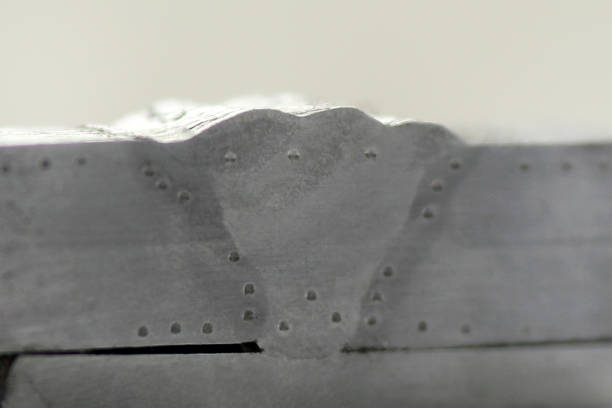
Bend Tests: A specimen is bent to a specific radius to check for ductility and fusion.
Tensile Tests: The weld is pulled until it breaks to measure its ultimate strength.
Nick-Break Tests: The weld is intentionally broken at a notch to allow inspectors to examine the internal grain structure and look for hidden defects.
Part 4: The Role of Documentation in Quality Control
In the world of professional fabrication, "If it isn't documented, it didn't happen." A robust welding quality control system relies on a clear paper trail:
WPS (Welding Procedure Specification): The instructions provided to the welder.
WPQR (Welder Performance Qualification Record): Evidence that the individual welder has the skill to perform the work.
Inspection Reports: A detailed log of every test performed, including the date, the inspector’s credentials, and the results.
Part 5: Implementing a Quality-First Culture
True welding quality control is not just the responsibility of the inspector; it is the responsibility of the entire team.
Training: Constant upskilling of welders on new technologies and materials.
Maintenance: Ensuring that welding machines are calibrated and gas lines are leak-free.
Environment: Providing a workspace protected from wind (to protect shielding gas) and moisture.
Conclusion
Mastering welding quality control is a multifaceted discipline that requires technical knowledge, disciplined execution, and a commitment to safety. By adopting the three-phase approach—thorough preparation, vigilant in-process monitoring, and rigorous post-weld testing—manufacturers can ensure that every joint they produce is of the highest caliber.
In an industry where the stakes are high, a robust quality control program is your most valuable asset. It reduces costs by eliminating rework, protects your reputation, and, most importantly, ensures the safety of the end-users who rely on the integrity of your work.
Related articles:
1. TIG Welding: A Guide to Top-Quality Connections
2. Pulse Welder: A New Technology for High-Quality Welding
3. Spot Size, Laser Quality and Welding Performance
4. How to Improve Robotic Welding Performance?
5. How to Improve Your Stick Welding Technique?