Laser-welding stainless steel has become a go-to method in manufacturing because it delivers high precision, rapid cycle times and superior weld quality. In this article we walk through what laser welding is, why it works so well on stainless steel, the key factors and parameters to control, the practical steps for executing a weld, common challenges (and how to overcome them), and final tips for repeatable performance.
I. What is Laser Welding??
Laser welding uses a high-energy beam of light to melt and fuse metal parts together. The beam is focused onto the joint region; the intense heat creates a molten pool, which solidifies to form a weld. According to industry guidance:
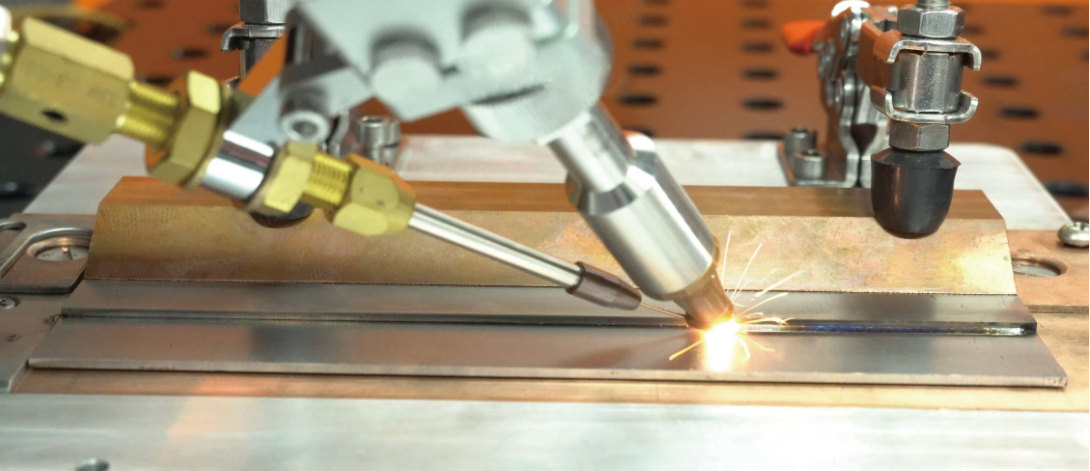
The laser beam is generated (for example, fibre or CO₂) and then focused via optics into a small spot on the workpiece.
Because the beam is concentrated and the process can move rapidly, the heat-affected zone (HAZ) is much smaller compared to many traditional welding methods.
Laser welding also lends itself to automation, very precise control, narrow welds and minimal filler (in many cases).
In short: the method gives you a high degree of control over heat input, melt pool behaviour and final weld geometry.
II. Why Laser Welding is Ideal for Stainless Steel?
Stainless steel is widely used because of its strength, corrosion resistance and versatility—but welding it brings challenges. Laser welding aligns well with these challenges and delivers benefits.
1) Key advantages:
Reduced distortion and narrow HAZ: Because the heat is localized and quickly dissipated, you minimise warping, distortion or broad HAZ in the stainless steel.
High quality finish: The resulting welds tend to be clean, neat and require less post-processing. That matters particularly in applications where aesthetics or hygiene matter (e.g., food, medical).
Strong, corrosion-resistant joints: The process can preserve more of the base material properties (if done correctly) such as corrosion resistance of stainless steel.
High throughput & automation: For production environments, laser welding allows faster travel speeds, less manual finishing and good repeatability.
2) Specific challenges for stainless steel that laser welding helps mitigate:
Reflectivity: Stainless steel reflects more laser energy than some other metals, so high beam quality and correct wavelength are important.
Heat conduction and thermal distortion: Stainless conducts heat differently; uncontrolled heat input can lead to unwanted effects. Laser welding gives better heat control.
Fit-up and cleanliness: Narrow welds and precision welding mean joint preparation, alignment and surface cleanliness become more critical.
High throughput & automation: For production environments, laser welding allows faster travel speeds, less manual finishing and good repeatability.
Maintaining corrosion resistance: Stainless steel’s performance is tied to surface condition and microstructure; controlling HAZ and oxidation becomes crucial.
So in effect, laser welding gives you a toolset to address the intrinsic difficulties of stainless steel while reaping the material’s advantages.
III. Key Factors & Parameters in Laser Welding Stainless Steel
Successful laser welds require attention to multiple variables. Here are the major ones and how they influence outcomes.
1) Laser type & beam characteristics:
Power (Wattage): Determines penetration depth, speed and overall heat input. Higher power = deeper welds / thicker material, but also risk of excessive heat.
Beam quality and focus: A high-quality beam (small spot size, low divergence) allows high energy density and good precision. Lower quality beams may struggle with penetration or yield wider welds.
Wavelength: Different lasers (CO₂, fibre, disk) have different wavelengths and interact differently with stainless steel. For instance, fibres are often preferred now.
Pulse vs continuous: For certain thicknesses or precision work, pulsed lasers may be used to reduce heat input, manage keyhole dynamics, or weld thin materials.
2) Welding speed / travel rate:
A faster travel speed reduces heat input (good for thin material, minimal distortion), but may compromise penetration or fusion.
A slower speed increases penetration but also increases heat input, risk of burn-through, warping or oxidation. The balance must be found.
3) Focus position and spot size:
Focused spot size affects energy density. Smaller spot → higher energy density → better penetration or narrower weld.
Focus position relative to the surface (above/below/at surface) influences weld shape, keyhole stability, and bead appearance.
4) Shielding / backing gas:
For stainless steel, shielding gas (commonly argon or sometimes nitrogen) helps protect the molten pool and resultant weld from oxidation. Proper gas flow and coverage matter.
The choice might differ depending on application (e.g., food-grade, sanitary requirements) or stainless grade.
5) Material thickness & joint design:
Thicker sections require higher power, possibly slower speed or even multiple passes/filler.
Joint type (butt, lap, fillet) and tolerance/gap influence weld quality. Laser welding generally prefers tight fit-up because it has less tolerance for large gaps/facets than some arc methods.
Material grade also plays a role (austenitic, ferritic, duplex stainless steels) because their thermal and metallurgical behaviour differ.
6) Surface condition, cleanliness & fixturing:
Contaminants (oil, rust, scale, debris) can lead to porosity, lack of fusion, spatter or other defects.
Fixturing and alignment matter: movement during welding or misalignment changes focus/spot relative to joint and reduces quality.
7) Heat input and cooling control:
Stainless steel’s thermal conductivity, expansion coefficients, and sensitivity to heat mean that controlling overall heat input is critical to avoid distortion, residual stress, or changing microstructure.
In some instances backing bars, intermittent welds, controlled cooling or pre-chilling are used to manage this.
IV. Practical Step-by-Step: How to Laser Weld Stainless Steel
Below is a recommended workflow to achieve solid results when laser welding stainless steel.
Step 1: Planning & joint design
Identify the stainless steel grade(s) you are working with (for example: 304, 316, duplex, ferritic). Each has different weld behaviour.
Determine material thickness and decide joint style (butt, lap, fillet) and required weld size.
Specify tolerance/gap – ideally very low gap for laser welding to ensure full fusion.
Choose the laser system (power, wavelength, beam quality) suitable for the application and thickness. Consider whether automation is required.
Plan welding path, fixturing/holding strategy, and how to minimise distortion (e.g., symmetric welding, backing plates, intermittent welds).
Step 2: Surface preparation and set-up
Clean the stainless steel surfaces thoroughly: remove oil, grease, oxide scale, mill scale, debris.
Ensure fixturing and clamping so the parts do not move during welding, and gap/fit-up is controlled.
Set up shielding gas (type and flow) to protect the weld pool.
Pre-purge or back-purge if required (for sanitary or high-purity applications) to avoid oxidation on the root side.
Align the laser head, set the focal point, verify spot size and beam delivery optics are clean and aligned.
Step 3: Parameter set-up and test welds
Set initial parameters: laser power, travel speed, focus position, spot size, shielding gas flow. These will be based on your material thickness and joint design.
Perform test welds on scrap material of the same grade and thickness. Inspect bead appearance, penetration, cross section if possible, look for defects like porosity, cracks, lack of fusion.
Adjust parameters as needed: If penetration is insufficient → increase power or reduce speed; If too much weld width or burn-through → reduce power or increase speed; If distortion too high → reduce heat input, use faster speed, optimise fixturing or use backing.
Document the parameter set so you can replicate it for production.
Step 4: Welding execution
Start the actual weld: ensure parts are fixed, gas flowing, laser parameters correct, beam delivery stable.
Monitor the weld pool and bead formation (if possible via camera or viewing port). Ensure the keyhole (if used) remains stable and consistent.
Avoid stopping or starting in the weld zone near the joint end (use proper start/stop strategy or tack welds) to avoid defects at start/stop transitions.
For automated systems: verify motion path, dwell, acceleration/deceleration, pause points, and ensure minimal disturbance to the workpiece.
After welding, allow the welded part to cool under controlled conditions to avoid rapid cooling/thermal shock (which can lead to stress or cracking).
Step 5: Inspection, cleaning & post-processing
Inspect the weld visually and via appropriate NDT method (e.g., dye-penetrant, X-ray, ultrasonic) if required for your application. Look for porosity, cracks, incomplete fusion, excessive HAZ, unacceptable distortion.
Check for surface discoloration or oxidation — particularly for stainless steel where corrosion resistance can depend on surface condition. Remove oxide/scale if required and passivate if necessary.
If distortion is present, apply corrective measures (mechanical straightening, heat treatment if permissible, or redesign of welding sequence).
Record final weld parameters and actual results. Use this live data to refine future jobs and support process control.
V. Common Problems & How to Solve Them
Even with good planning, issues may arise. Here are frequent problems and recommended remedies.
| Issue | Likely cause | Solution |
|---|
| Lack of fusion / incomplete penetration | Power too low, travel speed too high, poor joint fit-up | Increase power or reduce speed; improve joint fit-up; ensure focus is correct |
| Burn-through or excessive weld width | Power too high or speed too low; heat input too large | Reduce power or increase speed; adjust focus; consider backing plate or heat sink |
| Porosity or gas entrapment | Contamination (oil/grease), improper shielding-gas coverage, unstable weld pool | Clean surfaces thoroughly; ensure correct gas flow and nozzle placement; stabilize parameters |
| Distortion / warping | Excessive heat input, uneven clamping/fixturing, poor heat control | Minimize heat input, improve clamping/fixture design, use intermittent welding or pre-cooling when needed |
| Cracking (hot-crack or solidification) | Metallurgical issues in specific stainless grade, high restraint, rapid cooling | Verify material grade suitability; adjust weld sequence; reduce restraint; control cooling rate |
| Poor absorption / reflection of laser energy | Stainless steel reflectivity high, especially at some wavelengths | Choose appropriate laser wavelength (e.g., fiber lasers); ensure clean and properly prepared surface to improve absorption |
VI. Applications Where Laser Welding Stainless Steel Excels
Because of its unique combination of precision, speed and quality, laser welding stainless steel is especially well suited to:
Thin-walled stainless steel sheet and tubing: For example in automotive, exhaust systems, HVAC components where distortion must be minimal.
Hygiene-critical applications: Food & beverage processing equipment, pharmaceutical containers, where welds must be clean, smooth and free of crevices. The minimal HAZ and narrow welds help.
Precision instrument and medical device manufacturing: Where aesthetics, minimal finishing and tight tolerances matter.
Structural or architectural stainless applications: Where welds must not only be strong but also visually acceptable and corrosion-resistant.
High-volume production environments: Automation of laser welding allows consistent high throughput and repeatability compared to manual methods.
VII. Megmeet Lux 4-in-1: The Best Laser Welding Solution for Stainless Steel
In recent years, China has become a major player in the development of laser welding stainless steel technologies. Companies nationwide are investing in advanced machines like the Megmeet Lux to improve production efficiency and product quality. For those looking for an efficient and versatile solution, the Megmeet Lux 4-in-1 Laser Welding Machine (1.5KW/2KW/3KW) is the ideal choice. Here are some of its key features:
High-Quality Light Beam: The precision of the laser ensures a one-time forming process with fewer consumables, reducing production costs while maintaining high-quality results.
Fast and Efficient Welding: Laser welding speed is significantly higher than traditional methods, leading to increased productivity without compromising the integrity of the weld. Additionally, the process results in small deformation, ensuring the final product maintains its design specifications.
Double-Wire Welding (Optional): The Megmeet Lux machine also offers an optional double-wire welding feature, allowing for enhanced flexibility and efficiency when tackling more complex welding tasks.
......
VIII. Best-practice checklist for laser welding stainless steel
Before you begin your laser welding operation on stainless steel, use the following checklist to ensure you’ve covered the major elements:
Confirm stainless steel grade and thickness.
Choose suitable laser system (wavelength, power, beam quality) for the material.
Design joint with proper fit-up (minimal gap), appropriate joint style for laser welding.
Clean and prepare surfaces thoroughly (remove oil, grease, scale, burrs).
Set up fixturing and ensure parts are stable and aligned.
Select shielding/backing gas (type & flow rate) suitable for stainless steel and application environment.
Define initial welding parameters: power, speed, spot size, focus, shielding.
Run test welds on scrap of the same material and inspect bead, cross section, penetration, defects.
Adjust parameters as needed: tweak power/speed/focus until optimal weld is achieved.
Perform production welds, monitor weld pool/appearance, ensure consistent quality.
After welding: inspect final welds for defects, clean/passivate surfaces, document actual results and parameters for future reference.
Review any distortion or defects and adjust process or fixturing as needed for next batch.
Conclusion:
Laser welding stainless steel brings together precision, speed and quality in a way that aligns strongly with the demands of modern manufacturing. Whether you’re joining thin sheets or tubes, creating clean aesthetic welds, or automating high-volume production, this process has real advantages.
The key to success is understanding and controlling the critical variables: laser power and beam quality, welding speed, focus and spot size, shielding gas, fit-up and joint design, heat input and cooling control. With proper preparation, parameter testing and inspection you can deliver high-quality, strong, corrosion-resistant welds in stainless steel.
Related articles:
1. MIG Welding on Stainless Steel: Tips, Techniques, Applications
2. Stainless Steel Welding Distortion Causes and Solutions
3. Welding Methods of Stainless Steel Sheet (0.1~3.0mm thickness)
4. How to Weld Stainless Steel Tube and Pipe: Tips and Tricks.
5. Stainless Steel vs. Carbon Steel Welding: A Complete Analysis