When you're choosing materials for a welding project, stainless steel and carbon steel are two of the most common—and for good reason. But despite both being “steel,” they behave quite differently under heat, in strength, and in how easily you can weld them. Understanding their differences and how those differences affect welding is key to getting strong, durable, and clean welds.
In this guide, we'll compare stainless steel and carbon steel from the ground up, explore the challenges in welding each, go over best practices and filler materials, and answer some frequently asked questions.
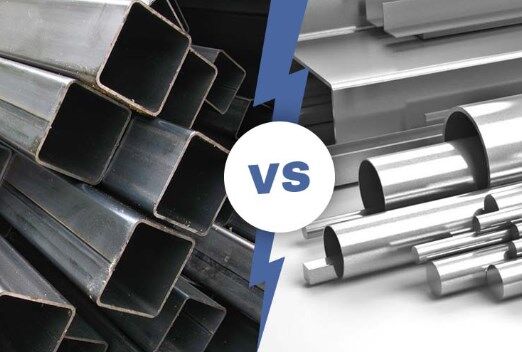
I. What Are Stainless Steel and Carbon Steel?
Before diving into the comparison, let's briefly understand what sets stainless steel and carbon steel apart:
1) Stainless Steel: Composition and Key Properties

Stainless steel is an alloy composed primarily of iron and chromium (at least ~10.5 %) and often nickel or molybdenum, depending on the grade. The chromium gives stainless steel its corrosion resistance: it forms a passive chromium-oxide layer that protects the surface even if scratched.
Some major types of stainless steel include:
Austenitic (e.g., 304, 316): very weldable, non-magnetic in many cases.
Ferritic (low carbon, chromium-based): less common for welding.
Martensitic: higher carbon, stronger but less corrosion resistant.
Duplex and Precipitation-Hardening variants also exist, but their welding behavior often requires special care.
Advantages of stainless steel include:
High resistance to rust and corrosion.
Good strength and tensile properties.
Excellent for hygienic or clean applications (food processing, medical) because of its smooth surface.
Long lifespan and low maintenance.
2) Carbon Steel: Composition and Key Properties
Carbon steel is simpler: primarily iron with a varying amount of carbon, and very small traces of other elements. Depending on the carbon content, it's categorized as:

Low-carbon (mild) steel: ≤ 0.3% carbon
Low-carbon (mild) steel: ≤ 0.3% carbon
High-carbon: more than ~0.6% carbon
Advantages of carbon steel include:
Very cost-effective for manufacturing and welding.
Excellent strength and toughness, especially structural strength.
Good weldability with standard welding processes (stick, MIG, TIG).
Recyclable and versatile.
Limitations: it's prone to corrosion if untreated or exposed to moisture.
II. Comparing the Mechanical & Physical Properties
Here is a breakdown of how stainless steel and carbon steel differ in important mechanical and physical ways (drawing on data from Mead Metals, SteelPRO, and other sources):
| Property | Carbon Steel | Stainless Steel |
|---|
| Tensile Strength | ~370–700 MPa | ~520–1,500 MPa |
| Yield Strength | ~250–450 MPa | ~210–1,100 MPa |
| Hardness (Brinell) | 120–300 HB | 150–350 HB |
| Elongation / Ductility | ~10–30% | ~30–50% |
| Thermal Conductivity | ~50–60 W/m·K | ~15–25 W/m·K |
| Thermal Expansion Coefficient | ~11–13 × 10⁻⁶/K | ~15–17 × 10⁻⁶/K |
Implications of these differences:
Heat behavior: Carbon steel conducts heat more efficiently, making it easier to dissipate welding heat. Stainless steel, by contrast, has low thermal conductivity, so heat tends to concentrate in the weld zone.
Distortion risk: Because of that concentrated heat, stainless steel is more prone to warping or distortion under welding.
Strength vs ductility: Stainless can be stronger and more ductile, depending on the grade.
Cost trade-off: While stainless offers corrosion resistance, it’s more expensive to buy and weld.
III. Challenges in Welding Stainless vs. Carbon Steel
Although Stainless Steel and Carbon Steel have diverse advantages, they also pose challenges in welding, and the challenges are as follows:
1) Why Welding Stainless Steel Is Tricky?
Sensitivity to Heat: Low thermal conductivity means heat input must be carefully managed or you risk overheating, distortion, or burn-through. Too much heat can lead to sensitization: chromium carbides form at grain boundaries, depleting chromium and reducing corrosion resistance.
Precision Required: Using a short arc length, stringer beads, and fast travel speeds helps control heat input. Shielding gas technique matters. Purging or back-purging may be necessary for certain welds (e.g., full penetration).
Equipment Contamination Risk: Tools that touch stainless steel welds should be dedicated (e.g., stainless-only brushes or clamps), because contamination with carbon steel can undermine corrosion resistance.
Cost: The material cost is higher. Add to that the cost of specialized filler metals, more controlled welding processes, and skilled labor.
2) Why Welding Carbon Steel Is Simpler?
Heat Distribution: Because carbon steel spreads heat more easily, it’s more forgiving. Welders can use higher current settings, and the risk of localized overheating is reduced.
Weld Process Versatility: Common welding methods (SMAW/stick, GMAW/MIG, FCAW) work very well.
Corrosion Downside: Without protective measures (painting, coating, galvanizing), carbon steel can rust, especially in damp or corrosive environments.
Less Demanding on Filler Metals: Standard carbon steel fillers (like ER70S wires) are common, affordable, and well understood.
IV. Welding Techniques: Stainless vs. Carbon
Here’s how welding approaches differ between these two steels, and how to best handle each.
1) Welding Stainless Steel:
Processes
TIG (GTAW) is often used for thinner stainless sections because of its precision and low heat input.
MIG welding is suitable for thicker stainless steel sections and provides higher deposition rates, making it more efficient for larger projects.
Technique Tips
Use stringer beads, avoid weaving too much.
Control arc length carefully.
Consider backing gas (especially for full-penetration welds) to protect the underside of the weld.
Use heat sinks (e.g., copper or brass) to help absorb excess heat.
Let pieces cool between passes when needed.
Parameter Adjustments
Use lower amperage than you would for carbon steel (10–15% lower is common advice).
Use proper shielding gas; for MIG, a high argon content mix (for instance) helps with arc stability and reducing heat.
2) Welding Carbon Steel:
Processes
SMAW (Stick): Very common, versatile, usable outdoors.
GMAW (MIG): Good for production, consistent, fast.
FCAW: Useful for thick sections or out-of-position welds.
Technique Tips
Standard welding techniques apply; you don’t have to be as aggressive with heat control.
Interpass temperature is more forgiving, but overheat can still cause issues in some high-carbon steels.
Prepare the base metal properly by cleaning rust, oil, or scale for better weld quality.
V. Welding Stainless to Carbon Steel (Dissimilar Metals)
One very common—and challenging—case is welding stainless steel to carbon steel. Because their metallurgy is quite different, doing this properly requires some planning.
1) Key Challenges:
Thermal Expansion Mismatch: Stainless and carbon expand and contract at different rates, risking stress and distortion.
Dilution: When molten weld metal mixes with base metals, you risk diluting the alloy content in the weld—especially the stainless chromium and nickel content—leading to brittle or weak zones.
Cracking Risk: Because of the different metallurgical phases, hot cracking or martensite formation can occur if filler metal is not well matched.
2) Best Practices & Filler Metals:
Use Over-Alloyed Filler Metals
Type 309 (or 309L/309LSi) is commonly used when welding stainless to carbon steel. It has higher chromium and nickel to resist dilution and maintain a stable microstructure.
For more crack resistance, 312 filler is also used (higher ferrite), especially where dilution is severe.
Buttering Technique
Use Proper Parameters
Limit heat input (stringer beads, low heat travel, controlled arc) to reduce dilution and stress.
For TIG or MIG, maintain careful gas control and avoid long weld puddles.
Post-Weld Treatment
Inspect for cracking.
If distortion occurred, consider stress-relief or controlled cooling.
Clean the weld area and potentially grind and polish stainless side to maintain surface finish and corrosion resistance.
VI. When to Pick One Over the Other: Application Cases
Here are some typical scenarios to help choose between stainless, carbon, or welding them together:
1) Choose Stainless Steel When:
The environment is corrosive (chemical plants, food processing, marine).
Aesthetic or hygienic cleanliness is vital.
Longevity and low maintenance are priorities.
2) Choose Carbon Steel When:
Budget is limited, and corrosion resistance is not critical (or can be managed with coatings).
You need structural strength and durability.
You want simpler, faster, more forgiving welds.
3) Choose Dissimilar Welding (Stainless to Carbon) When:
You need strength + corrosion resistance.
You’re building a frame (carbon) that supports a corrosion-sensitive part (stainless).
The application demands both metals for cost or performance reasons.
VII. Frequently Asked Questions (FAQs)
Q1: Can I just use a regular stainless-steel filler to weld stainless to carbon steel?
Q2: Do I need to preheat carbon steel when welding to stainless?
Q3: Which filler metal is best for dissimilar metal welding?
Q4: How do I control heat when welding stainless?
Use lower amperage, faster travel, shorter arc, stringer beads, backing bars, and possibly purge/back-purge gas.
Q5: How to avoid contamination when welding stainless?
Use dedicated stainless tools (brushes, clamps), avoid touching with carbon steel, and clean thoroughly.
Q6: Is welding stainless more expensive than carbon?
Yes — in material, filler, labor, and technique. But stainless’s longevity and corrosion resistance can offset upfront costs in the right application.
Conclusion
Welding stainless steel and carbon steel involves understanding not just their chemical makeup, but how they respond to heat, stress, and mixing. Stainless offers corrosion resistance and strength, but requires careful heat control and the right filler metals. Carbon steel is versatile, strong, and economical—but lacks built-in corrosion protection.
When you combine the two, using the right welding strategy (like over-alloyed filler and buttering) is essential for a successful, durable joint. By choosing properly based on your project's requirements, you can make sure your welds will perform reliably and look great too.
Related articles:
1. High Carbon Steel Welding Challenges and Solutions Explaination!
2. How to TIG Weld Low Alloy and Carbon Steels?
3. Megmeet Ehave CM 350/400/500 Welder Series: The Epitome of Super-Robust Synergic MIG/MAG Welders for Carbon Steel
4. Stainless Steel Welding Procedure Specifications: A Guide
5. Welding of Various Types of Stainless Steel Pressure Vessels!