In the world of high-precision manufacturing and industrial construction, the stainless steel welding procedure specification (WPS) is more than just a document; it is the definitive blueprint for structural integrity. Whether you are working on a maritime vessel under ABS oversight or a pressure system governed by ASME, a well-drafted WPS ensures that every weld bead meets the rigorous mechanical and corrosion-resistance standards required by the industry.
This guide provides an in-depth exploration of the stainless steel welding procedure specification, covering its essential components, technical requirements across various codes, and the critical metallurgical controls necessary to prevent common defects like sensitization and distortion.
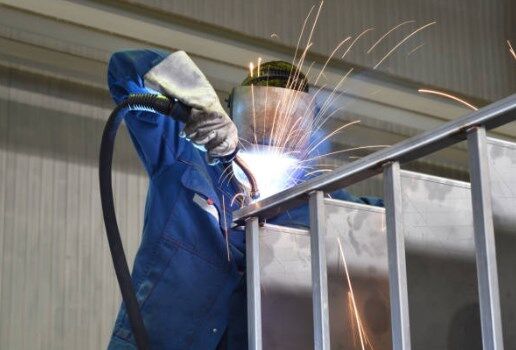
I. Understanding the Stainless Steel Welding Procedure Specification
1) What is a WPS?
A Welding Procedure Specification (WPS) is a formal document that describes the specific parameters and techniques to be used for a particular welding application. It serves as a set of instructions for the welder, ensuring that the finished product is consistent, safe, and compliant with relevant engineering codes. For stainless steel, the WPS is particularly vital because the material’s unique properties—such as low thermal conductivity and high thermal expansion—demand tighter control than standard carbon steels.
2) Why Stainless Steel Requires a Dedicated WPS
Stainless steel is prized for its "passivity"—a thin, protective layer of chromium oxide that prevents rust. However, the heat of welding can easily destroy this layer. A standard steel WPS is insufficient for stainless alloys because it doesn't account for:
Carbide Precipitation: The risk of losing corrosion resistance in the Heat Affected Zone (HAZ).
Distortion: Stainless steel expands about 50% more than carbon steel when heated.
Contamination: The need for dedicated tools to prevent cross-contamination from carbon steel particles.
II. Key Components of a Stainless Steel WPS
A comprehensive WPS for stainless steel must address three categories of variables: essential, non-essential, and supplementary variables.
1. Essential Variables
These are the factors that, if changed, would significantly affect the mechanical properties of the weldment. A change in an essential variable requires the WPS to be re-qualified through a Procedure Qualification Record (PQR).
Base Metal Grade: Switching from a 304L to a 316L stainless steel is an essential variable change.
Welding Process: Moving from Gas Tungsten Arc Welding (GTAW) to Shielded Metal Arc Welding (SMAW).
Filler Metal Specification: The choice of electrode or wire (e.g., AWS A5.9 classification).
Shielding Gas: The composition and flow rate of gases like Argon or Helium mixtures.
2. Non-Essential Variables
These variables must be listed in the WPS, but changing them does not require re-qualification. They are often modified to optimize the welder's efficiency.
Joint Design: Minor changes in the groove angle or root face.
Technique: Switching from a stringer bead to a weave bead.
Cleaning Method: The specific process for removing oxides before and after welding.
3. Supplementary Essential Variables
These become essential when the project requires "toughness" testing (Charpy V-Notch tests), often seen in low-temperature or high-stress maritime and offshore applications.
III. Technical Standards: AWS D1.6 vs. ASME Section IX
When drafting a stainless steel welding procedure specification, you must align with the specific code governing your industry. The two most common standards are AWS D1.6 and ASME Section IX.
1. Structural Applications (AWS D1.6)
The AWS D1.6 code is the primary standard for structural stainless steel welding. It covers everything from design to inspection for stainless-to-stainless and stainless-to-carbon steel joints.
Pre-qualification: Unlike carbon steel (AWS D1.1), AWS D1.6 requires most procedures to be qualified by testing (PQR), though certain "pre-qualified" joints exist for specific austenitic grades.
Scope: Specifically focused on structures with at least one stainless component of 1.5mm (1/16") thickness or greater.
2. Pressure Vessels and Piping (ASME Section IX)
ASME IX is the global standard for pressure-containing equipment. It is highly detailed regarding the qualification of both the procedure and the welder.
P-Numbers: ASME groups metals by "P-Numbers." Most austenitic stainless steels fall under P-Number 8. Qualification on one metal in a P-Number often qualifies the procedure for all others in that same group.
Process Control: ASME IX places a heavy emphasis on the electrical characteristics and the specific transfer modes (for GMAW) used in the process.
3. Maritime Standards (ABS Requirements)
For shipbuilding, the American Bureau of Shipping (ABS) provides specific requirements for stainless steels (often referenced as Part 2 or Guide 302).
Corrosion Testing: ABS may require additional intergranular corrosion tests (such as ASTM A262) to prove that the welding procedure hasn't sensitized the material.
Dissimilar Metals: Ship construction often involves joining stainless steel to high-strength carbon steel. ABS requires specific filler metals, such as 309L, to manage the dilution of alloys at the joint interface.
IV. Critical Controls in Stainless Steel Welding
To ensure a successful WPS, several technical controls must be meticulously defined.
1. Managing Heat Input to Prevent Sensitization
Sensitization occurs when austenitic stainless steel is held in the 425°C to 870°C (800°F to 1600°F) range for too long. In this range, carbon reacts with chromium to form chromium carbides at the grain boundaries, leaving the surrounding areas depleted of chromium and susceptible to "intergranular corrosion."
2. Back Purging and Shielding Gas Optimization
Oxidation on the backside of a weld (often called "sugaring") is a major cause of failure in stainless steel piping.
PT=(V/PGFR)x4
Where PT is Purge Time (hours), V is volume, and PGFR is the gas flow rate.
3. Filler Metal Selection for Grade Compatibility
The filler metal should typically match the corrosion resistance of the base metal.
Low Carbon (L) Grades: When welding "L" grade base metals (e.g., 304L or 316L), always use an "L" grade filler (e.g., ER308L) to ensure the final carbon content remains below 0.03%, preventing sensitization.
309L for Transition: When joining stainless steel to carbon steel, 309L is the preferred filler because its high alloy content compensates for the dilution from the carbon steel side.
V. Common Challenges and Troubleshooting in the WPS
1) Controlling Distortion and Warping
Because stainless steel has a high coefficient of thermal expansion, distortion is a constant threat.
Mitigation: The WPS should specify tack welding at shorter intervals and the use of chill bars (copper or brass) to absorb heat away from the weld zone. Balanced welding sequences, such as the back-step method, should be detailed in the technique section.
2) Preventing "Sugaring" or Oxidation
If the back purge is insufficient, the root of the weld will turn black and scaly. This is not just an aesthetic issue; the scale is a site for future corrosion.
VI. Summary of Essential Variables for a Stainless Steel WPS
| Component | Standard Requirement (ASME IX / AWS D1.6) | Recommended Value for Austenitic SS |
| Process | Essential | GTAW or GMAW (Pulsed) |
| Base Metal | Essential | P-No. 8 (e.g., 304L, 316L) |
| Filler Metal | Essential | ER308L / ER316L |
| Shielding Gas | Essential | 100% Argon or Ar/He Mix |
| Back Purge | Essential (for root) | Argon (Oxygen < 500ppm) |
| Interpass Temp | Essential (Max) | 150°C (300°F) |
| Cleaning | Non-Essential | Acetone + SS Wire Brush |
Conclusion
A stainless steel welding procedure specification is the cornerstone of quality assurance. By strictly defining parameters for heat input, gas purging, and material compatibility, a WPS protects the longevity of the infrastructure and ensures compliance with global safety standards. For manufacturers, investing the time to qualify a robust WPS via a PQR is not just a regulatory hurdle—it is a critical step in delivering high-performance, corrosion-resistant solutions that stand the test of time and environmental stress.
As the industry moves toward more automated and laser-hybrid processes, the fundamentals of the WPS will continue to evolve, but the core objective remains the same: mastering the metallurgical balance of stainless steel through precise, documented engineering.
Related articles:
1. Stainless Steel Welding Methods and Techniques
2. Welding of Various Types of Stainless Steel Pressure Vessels!
3. How can we weld stainless steel without causing it to burn?
4. Welding Stainless Steel Guide: Welding Processes & Welding Tips
5. Pulsed MIG Welding Aluminum and Stainless Steel