In the current era of rapid electrification and high-efficiency electronics, copper has emerged as the "gold standard" for thermal and electrical conductivity. From the complex busbars in electric vehicle (EV) batteries to the delicate components of power electronics, the demand for high-quality copper joints is unprecedented.
However, joining this "red metal" has historically been one of the most significant hurdles in industrial manufacturing. Traditional welding methods often struggle with the material's unique physical properties. Fortunately, advancements in photonics have made laser welding copper not only possible but a preferred method for high-volume, high-precision production.
This guide provides a deep dive into the physics, technology, and best practices for achieving the perfect laser weld in copper.
I. What Makes Copper Difficult to Weld?
To master the art of laser welding copper, one must first respect the physics that make it so notoriously difficult to process. Copper differs from steel or aluminum in two primary ways: reflectivity and thermal conductivity.
1. The Reflectivity Barrier
Standard industrial lasers typically operate in the near-infrared (IR) spectrum (around 1030–1070 nm). At room temperature, solid copper is a near-perfect mirror for this wavelength, reflecting approximately 95% of the laser energy. Because only 5% of the energy is absorbed, manufacturers are often forced to use massive amounts of power just to initiate a melt pool.
2. High Thermal Conductivity
Copper is designed to move heat. In a welding context, this is a disadvantage. As soon as the laser applies heat to the surface, the material conducts that energy away into the surrounding bulk material with incredible speed. This rapid heat dissipation makes it difficult to maintain a stable melt pool without overheating the entire component.
3. The "Absorption Jump"
Perhaps the most dangerous characteristic of copper is what happens when it finally melts. Once the material transitions from a solid to a liquid state, its absorption of infrared light jumps from 5% to over 15–20%. This sudden surge in energy absorption can cause the process to become unstable, leading to explosive vapor expansion and metal expulsion, commonly known as spatter.
II. Can You Laser Weld Copper?
The short answer is: Yes, absolutely.
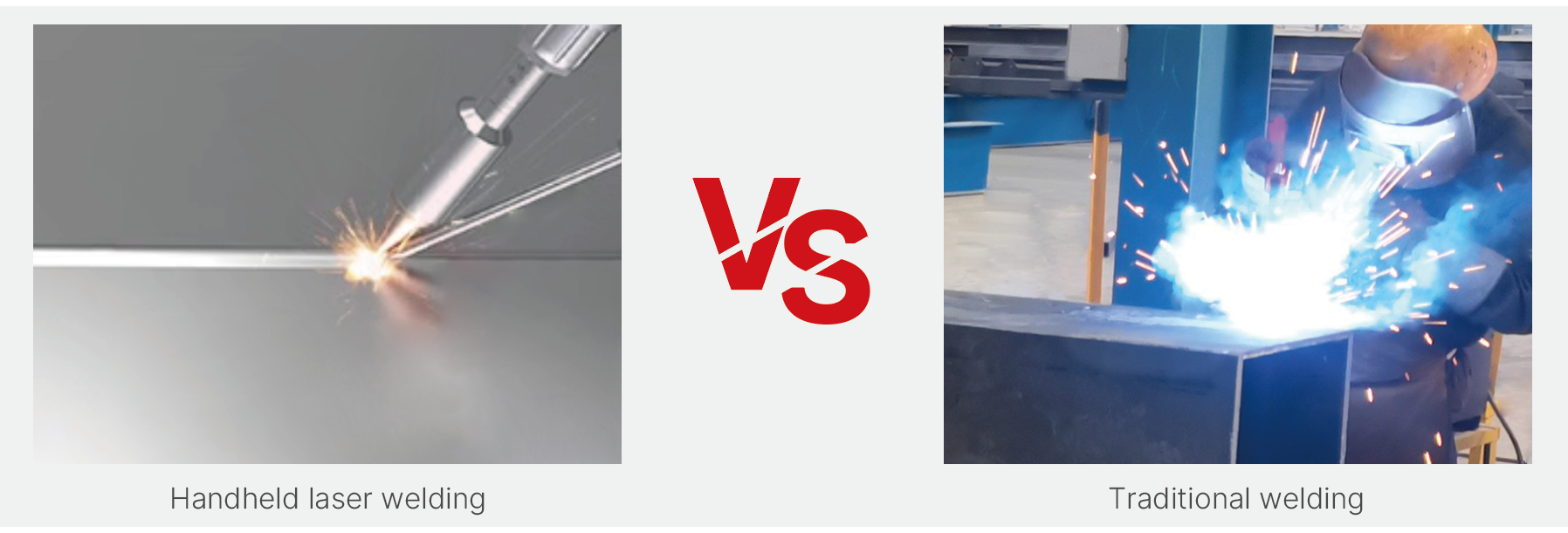
While it was once considered a "niche" or "unreliable" process, laser welding copper has become a standardized industrial application. The transition from "impossible" to "essential" was driven by three major technological shifts:
High-Brightness Fiber Lasers: The ability to focus a massive amount of energy into an extremely small spot size allows IR lasers to overcome the reflectivity barrier through pure power density.
Visible Wavelength Lasers: The development of green and blue lasers, which operate at wavelengths copper naturally absorbs much more efficiently.
Beam Oscillation (Wobbling): High-speed scanning heads that move the beam in patterns to stabilize the weld pool.
Today, laser welding is the primary method for manufacturing EV battery modules, hairpin motors, and high-performance heat exchangers.
III. Challenges in Laser Welding Copper
Even with the right equipment, several metallurgical and process-related challenges persist.
1. Back-Reflections and Machine Damage
Because copper is so reflective, the 95% of energy that is not absorbed must go somewhere. In many cases, it reflects directly back into the laser’s delivery fiber. Without advanced "back-reflection" protection, this can melt the internal components of the laser source, leading to costly repairs and downtime.
2. Porosity and Gas Trapping
Copper is highly susceptible to gas porosity. During the "keyhole" welding process—where the laser creates a vapor tunnel to achieve deep penetration—the high surface tension and low viscosity of molten copper can cause the tunnel to collapse prematurely. This traps metal vapors and shielding gases, resulting in internal voids that weaken the joint and reduce electrical conductivity.
3. Spatter and Surface Contamination
The instability caused by the "absorption jump" often leads to spatter. These tiny droplets of molten copper can land on sensitive electronic components or battery cells, potentially causing short circuits or fire hazards.
4. Cracking (Hot Shortness)
Certain grades of copper contain impurities like oxygen or lead. During the rapid cooling phase of laser welding, these impurities can migrate to the grain boundaries, causing "hot cracks" as the metal shrinks.
IV. Best Laser Types for Copper Welding
Selecting the right laser source is the most critical decision in the process. There are currently three primary contenders in the market.
1. Infrared (IR) Fiber Lasers (1070 nm)
IR lasers are the traditional choice. To weld copper with IR, you generally need high power (often 3kW to 6kW) and a very small focal spot to achieve "keyhole" mode.
Pros: High depth of penetration; widely available; cost-effective for thick materials.
Cons: High risk of spatter; requires "wobble" technology to maintain stability; high energy consumption due to low initial absorption.
2. Green Lasers (515 nm)
Green lasers are a game-changer for copper. Copper absorbs green light about 35-40% better than infrared light.
Pros: Exceptionally stable; minimal spatter; can weld in "conduction mode" (shallow and smooth) or keyhole mode.
Cons: Higher equipment cost; currently limited in maximum power compared to fiber lasers.
3. Blue Lasers (450 nm)
Blue light sits at the peak of copper’s absorption curve (over 65% absorption at room temperature).
Pros: Highest absorption rate; permits "spatter-free" welding; ideal for thin foils and delicate battery tabs.
Cons: Lower power density; generally used for surface or thin-material welding rather than deep structural joints.
4. Dual-Beam / Adjustable Ring Mode Lasers
The latest innovation involves a "2-in-1" beam. A central high-intensity core creates the penetration (the keyhole), while a surrounding "ring" of laser energy stabilizes the melt pool and slows the cooling rate. This hybrid approach effectively eliminates spatter and porosity in IR welding.
V. Key Process Parameters
To achieve a "Class A" weld, several variables must be perfectly synchronized.
1. Power Density and Focal Position
For IR lasers, the focal spot must be precisely placed (often slightly below the surface) to maximize power density. If the spot is too large, the reflection will prevent the melt from ever starting.
2. Welding Speed
Speed is a double-edged sword. Faster speeds reduce the heat-affected zone (HAZ), which is vital for protecting surrounding components. However, if the speed is too high, the keyhole becomes unstable, leading to a "beading" effect where the weld looks like a series of disconnected droplets.
3. Beam Oscillation (The "Wobble")
Modern systems use a "wobbling" technique where the beam moves in a circle, a figure-eight, or a zig-zag as it travels.
This movement keeps the melt pool open longer, allowing gases to escape and smoothing out the final bead.
4. Shielding Gas
Argon and Helium are the standard choices. Helium is often preferred for deep-penetration copper welding because it has higher thermal conductivity and helps suppress plasma formation, allowing more laser energy to reach the part.
VI. Essential Considerations for Successful Copper Welds
Beyond the laser itself, the environment and the material play a massive role in success.
1. Material Grade Selection
The "weldability" of copper depends heavily on its oxygen content:
Oxygen-Free Copper (C10200): The best for welding. Minimal risk of porosity or cracking.
Electrolytic Tough Pitch (ETP) Copper (C11000): Most common but contains oxygen. Requires careful parameter tuning to avoid hydrogen embrittlement and porosity.
2. Surface Cleanliness
Copper oxidizes quickly. A layer of copper oxide changes the absorption characteristics and can introduce contaminants into the weld. Surfaces should be degreased and, if possible, de-oxidized immediately before welding.
3. Joint Design and Fit-Up
Laser welding is a "low-tolerance" process. Because the laser beam is so narrow, the gap between the two pieces of copper must be virtually zero (typically less than 10% of the material thickness). Specialized clamping is often required to ensure a tight fit-up.
4. Monitoring Systems
Because copper welding is so sensitive, many high-volume manufacturers use "in-process monitoring." These systems use sensors to track the light reflected from the melt pool. If the system detects a "flicker" in the keyhole (a sign of an impending pore), it can automatically flag the part for inspection.
Conclusion
Laser welding copper is the cornerstone of the modern green energy transition. While the material's physical properties—high reflectivity and thermal conductivity—present significant challenges, they are no longer deal-breakers.
By utilizing modern wavelengths (Green or Blue), implementing beam oscillation (Wobbling), and strictly controlling material purity, manufacturers can produce copper joints that are stronger, more conductive, and more reliable than ever before. As the industry moves toward even higher power densities and AI-driven process monitoring, the "red metal" will continue to be a primary driver of industrial innovation.
Related articles:
1. Laser Welding Aluminum Guide: Machines, Problems, and Settings
2. Laser Welding, Laser Cutting, Laser Drilling, Laser Marking Basics
3. Prices of All Types of Laser Welding Machines for Reference
4. Solutions to Oil Leakage in Pipeline Continuous Laser Welding
5. 5-Step Laser Welding Process: How Does It Work?