Laser welding represents the pinnacle of modern joining technology, offering unparalleled speed, deep penetration, and a minimal heat-affected zone. However, even this high-tech process is not immune to the traditional nemesis of the fabricator: spatter.
In laser welding, spatter consists of molten metal droplets ejected from the weld pool or the "keyhole." Unlike traditional arc welding, where spatter is often caused by electrical instability, laser welding spatter is a complex thermodynamic event driven by vapor pressure, surface tension, and high-energy beam interactions. Reducing it is critical for ensuring the structural integrity of the weld and protecting sensitive optical components.
This guide explores the science behind laser-induced spatter and provides actionable, research-backed strategies to minimize it for a cleaner, more efficient production line.
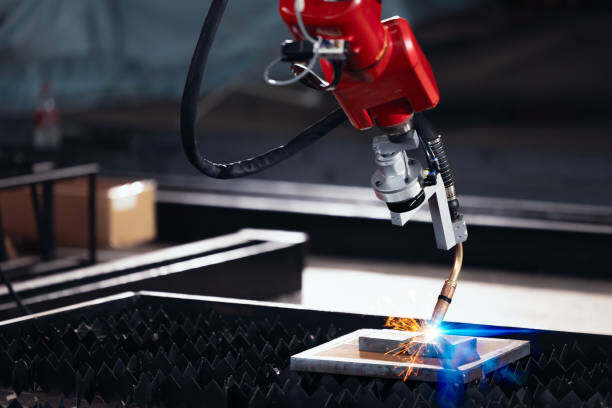
Understanding the Mechanics of Spatter in Laser Welding
To effectively reduce spatter, one must first understand the two primary modes of laser welding: Conduction Mode and Keyhole Mode. Most industrial laser welding occurs in Keyhole Mode, which is where the majority of spatter originates.
1) The Role of the Keyhole
During high-power laser welding, the energy density is so high that it vaporizes the metal, creating a narrow cavity known as a "keyhole." This keyhole is kept open by the balance between the vapor pressure pushing outward and the surface tension/hydrostatic pressure of the molten metal pushing inward.
2) Why Spatter Occurs?
Spatteroccurs when this delicate balance is disrupted. If the vapor pressure becomes too volatile or the molten pool becomes unstable, droplets of liquid metal are "pinched off" from the rim of the keyhole or the rear of the molten pool and ejected at high velocities. Factors such as rapid gas expansion, fluctuations in the keyhole’s shape, and localized overheating are the primary drivers of this instability.
1. Optimize Laser Beam Parameters
The most direct way to influence the weld pool is through the laser beam’s characteristics. Adjusting how energy is delivered can significantly "calm" the molten metal.
1) Beam Shaping and Dual-Beam Technology
Recent research indicates that a single, Gaussian-shaped beam often creates a high-pressure "hot spot" at the center of the keyhole, leading to explosive vapor release.
Adjustable Ring Mode (ARM): By using a beam that consists of a center core and a surrounding ring of power, the temperature distribution becomes more uniform. This stabilizes the keyhole and has been shown to reduce spatter by up to 90%.
Twin-Spot Welding: Using two laser spots—one leading and one trailing—allows the second spot to "smooth over" the molten pool created by the first, letting gases escape more gradually.
2) Modulation and Pulsing
Using a continuous wave (CW) laser is common, but modulating the power (pulsed laser welding) can help. By fine-tuning the pulse frequency and duty cycle, you can allow the keyhole to "breathe," preventing the buildup of excessive vapor pressure that leads to ejections.
2. Manage Welding Speed and Heat Input
There is a critical relationship between the speed of the laser and the stability of the weld pool.
1) The "S-Curve" of Velocity
Low Speeds: At very low speeds, the molten pool becomes excessively large. The volume of liquid metal is harder to control, and gravity can cause the keyhole to collapse, resulting in large, "globular" spatter.
High Speeds: At excessively high speeds, the keyhole can become "trailed out" and unstable, leading to a phenomenon known as "humping" or fine micro-spatter.
Finding the optimal welding velocity is a balancing act. Studies suggest that a slight reduction in speed, combined with a corresponding reduction in power to maintain penetration, often results in a more stable, spatter-free keyhole.
2) Heat Input Formula
The total heat input (Q) can be calculated as:
 Formula.png "Heat Input (Q) Formula.png")
Where:
To reduce spatter, aim for a heat input that maintains a stable keyhole diameter without overheating the surrounding melt.
3. Angle and Focus Position Adjustments
The physical orientation of the laser head plays a massive role in how vapors are directed away from the weld.
1) Beam Inclination (The Trailing Angle)
Welding with the laser beam perfectly perpendicular (90°) to the workpiece often causes the vapor plume to shoot straight back up into the laser optics, creating a back-pressure that destabilizes the keyhole.
2) Focus Position (Defocusing)
The position of the focal point—whether it is on the surface, above it, or buried within the material—changes the energy density.
4. Shielding Gas and Cross-Jet Optimization
Shielding gas isn't just for preventing oxidation; it’s a tool for mechanical stabilization.
1) Gas Type and Flow
Helium vs. Argon: While Argon is cheaper, Helium has a higher ionization potential, which can lead to a more stable plasma plume. Many high-end applications use a mix to balance cost and stability.
Flow Consistency: Turbulent gas flow can push the molten metal around. Use a laminar flow nozzle to ensure the gas provides a steady "blanket" rather than a disruptive force.
2) The Role of the Cross-Jet
A high-velocity air "cross-jet" is often used to protect the laser lens from spatter. However, if not positioned correctly, the cross-jet can create a low-pressure zone above the keyhole (the Bernoulli effect), which actually sucks spatter out of the weld. Ensure the cross-jet is high enough above the workpiece to protect the optics without disturbing the molten pool.
5. Material Preparation and Cleanliness
Laser welding is notoriously sensitive to contaminants. Because the laser beam interacts directly with the surface chemistry, any foreign substance can cause a violent reaction.
1) Degreasing and Oxide Removal
Hydrocarbons: Oil, grease, or even fingerprints can vaporize instantly under a laser, causing "micro-explosions" that eject molten steel.
Surface Oxides: For materials like aluminum, the oxide layer has a much higher melting point than the base metal. This disparity causes the laser to "break through" the crust suddenly, leading to an unstable pool.
2) Gap Management
If there is a gap between the two plates being joined, the keyhole can become asymmetrical. This causes the vapor to escape lopsidedly, often carrying molten metal with it. Precise fit-up and clamping are essential for spatter-free laser welding.
Summary of Spatter Reduction Techniques
| Factor | Action for Spatter Reduction |
| Beam Profile | Use Ring-Mode or Dual-Beam shaping to distribute heat. |
| Angle | Tilt the head 10° to provide a vapor escape path. |
| Focus | Shift focus slightly below the surface (Negative Defocus). |
| Speed | Optimize velocity to avoid keyhole collapse or humping. |
| Cleanliness | Remove all oils, oxides, and coatings from the weld path. |
| Gas | Use laminar flow nozzles to avoid pool turbulence. |
The Impact of Reducing Spatter
Reducing spatter in laser welding is not just about making the part look better. It has tangible benefits for the entire manufacturing ecosystem:
Reduced Post-Processing: Eliminates the need for grinding or chemical cleaning of finished parts.
Optical Longevity: Significantly extends the life of the laser’s protective cover slides, which are expensive and time-consuming to replace.
Improved Structural Integrity: Reduces the risk of internal "blowholes" and porosity, ensuring the weld meets aerospace or medical standards.
Process Consistency: A spatter-free process is a stable process, which is essential for automated production lines utilizing AI and machine monitoring.
Conclusion
Spatter is not an inevitable tax on the laser welding process. By understanding that spatter is a symptom of keyhole instability, engineers and operators can take a scientific approach to its elimination. By combining modern beam-shaping technology with meticulous material preparation and optimized parameters, you can achieve the "holy grail" of fabrication: a deep-penetration weld with zero cleanup required.
Investing the time to tune your laser settings today will pay dividends in reduced scrap, lower consumable costs, and superior product quality tomorrow.
Related articles:
1. Safety Protocols for Handheld Laser Welding: A Practical Guide
2. Anti-Freeze Tips for Handheld Fiber Laser Welder
3. Laser Welding Stainless Steel: Unlocking Precision and Efficiency
4. Laser Welding Copper Guide: Techniques, Challenges, Solutions
5. Laser Welding Aluminum Guide: Machines, Problems, and Settings