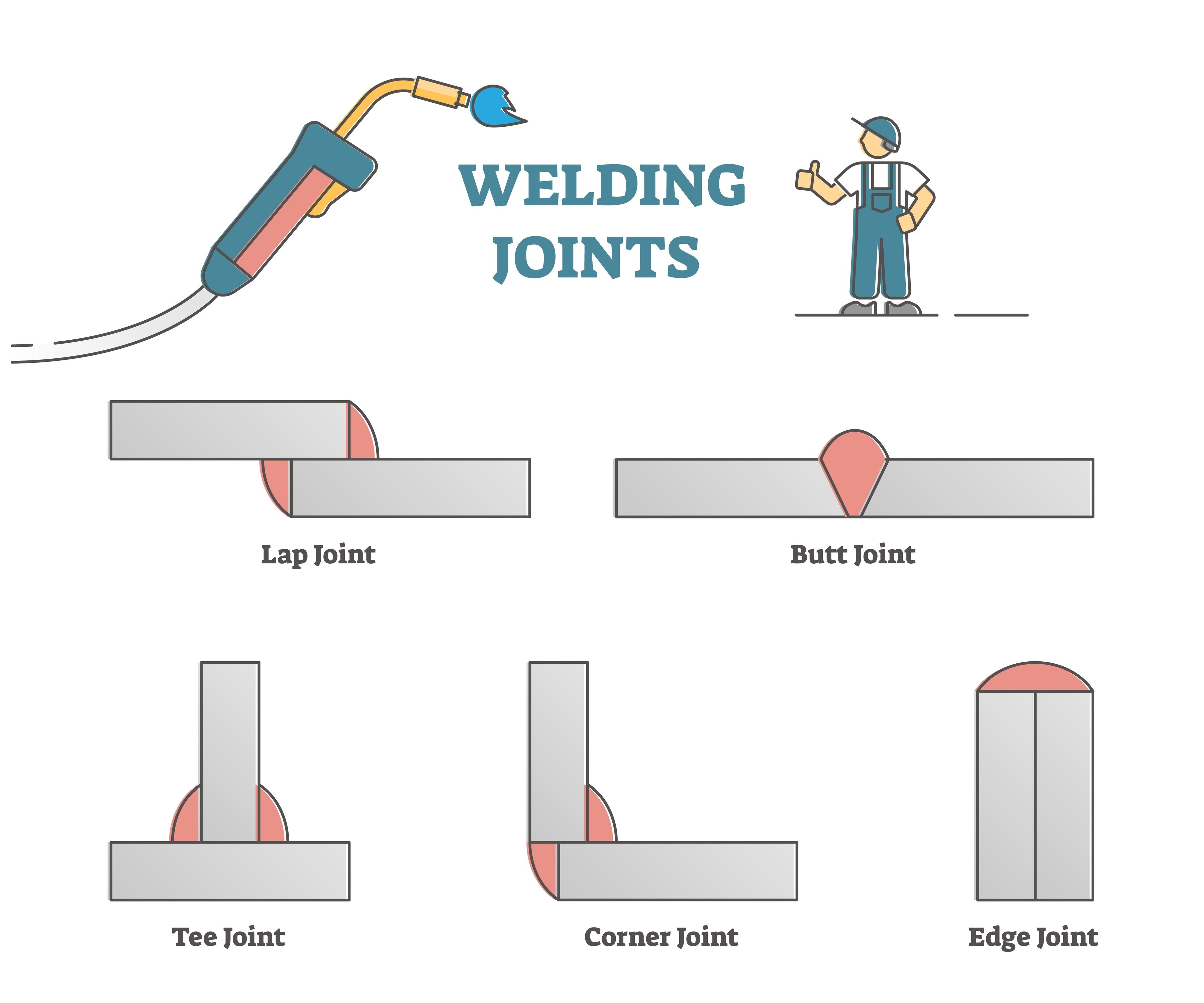
In the world of metalworking, a weld is only as strong as the geometry that supports it. Whether you are building a skyscraper, a high-pressure pipeline, or a custom motorcycle frame, the way you arrange the pieces of metal—the "joint"—determines the load-bearing capacity, the fatigue life, and the overall success of the project.
Choosing the right joint isn't just a matter of convenience; it’s a matter of engineering. It requires a deep understanding of how forces move through metal, how heat distorts material, and how accessible the weld needs to be for the operator. In this guide, we will break down the "Big Five" basic weld joints, explore edge preparation, and provide the technical insight needed to choose the right configuration for your next build.
1. The Butt Joint
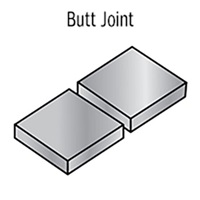
The butt joint is arguably the most common and straightforward type of joint. It is formed when two pieces of metal are placed in the same plane, with their edges meeting side-by-side. Think of it like two boards being laid flat against each other on a table.
1) Variations of the Butt Joint
While a "square" butt joint (where the edges are simply pushed together) works for thin materials, thicker sections require edge preparation to ensure the weld penetrates the full depth of the metal. Common variations include:
Single-V Groove: One or both edges are beveled to create a "V" shape.
Double-V Groove: Both the top and bottom edges are beveled, used for very thick plates where welding from both sides is possible.
J-Groove and U-Groove: These use curved edges rather than straight bevels, often used to save on filler metal costs in extremely thick applications.
2) Technical Considerations
The primary goal of a butt joint is Full Penetration (FP). If the weld doesn't reach the "root" (the bottom) of the joint, the connection acts as a built-in crack, which can lead to catastrophic failure under stress.
2. The Tee Joint
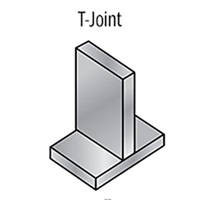
As the name suggests, a Tee joint (or T-joint) is formed when two members intersect at a 90° angle, forming a "T" shape. One piece sits vertically on the surface of another horizontal piece.
1) Common Weld Types for Tee Joints
Tee joints are almost exclusively joined using fillet welds. However, in heavy structural applications where the joint must withstand immense tension, a groove weld may be used in addition to a fillet weld to ensure deeper penetration into the base plate.
2) Challenges: Lamellar Tearing
A unique challenge with Tee joints is lamellar tearing. This occurs when the shrinkage of the weld metal pulls on the base metal in the "through-thickness" direction (perpendicular to the grain of the steel). This can cause the metal to peel apart like the layers of a biscuit. Engineers often specify specific welding sequences or "buttering" layers to prevent this.
3. The Corner Joint
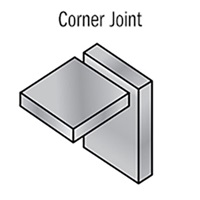
A corner joint is similar to a Tee joint in that the pieces meet at a 90° angle, but the difference lies in where they meet. In a corner joint, the pieces meet at the edges to form an "L" shape.
Open vs. Closed Corner Joints
The way you align the edges determines the "type" of corner:
Closed Corner Joint: The edge of one piece is flush against the side of the other. This is easier to fit up but harder to get deep penetration.
Open Corner Joint: The two pieces meet at their corners, creating a V-shaped valley. This is the preferred method for heavy-duty projects because it allows for a much larger weld pool and better fusion through the entire thickness of the material.
4. The Lap Joint
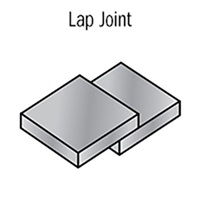
The lap joint is formed when two pieces of metal overlap each other. It is one of the most forgiving joints in terms of fit-up because you can slide the pieces back and forth to get the exact dimensions you need.
1) When to Use a Lap Joint
Lap joints are frequently used in sheet metal applications and for joining materials of different thicknesses. Instead of welding the ends together, you weld the "lap" where the top piece ends and the bottom piece continues.
2) Reinforcement Techniques
If a lap joint requires extra strength, or if the pieces are too wide to rely solely on the edges, welders use:
Plug Welds: Circular holes are cut in the top plate and filled with weld metal to fuse it to the bottom plate.
Slot Welds: Similar to plug welds, but elongated slots are used instead of circular holes.
Note: Lap joints create an "eccentricity" in the load path. Because the two pieces aren't on the same plane, pulling on them creates a slight twisting force (moment), which can be a weakness in high-stress mechanical designs.
5. The Edge Joint
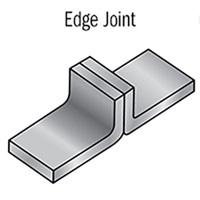
The edge joint is formed when the surfaces of two pieces are placed together so that their edges are even. This joint is most commonly used for sheet metal parts that have flanged edges or for reinforcing the edges of a plate.
Applications and Limitations
Edge joints are rarely used for structural load-bearing applications. They are typically used for:
Because the weld is placed entirely on the edges, this joint is highly susceptible to corrosion if moisture gets trapped between the two parallel plates. It is often recommended to apply a seal weld or a coating to prevent "crevice corrosion."
The Anatomy of a Weld
To master these joints, you must speak the language. Regardless of the joint type, every weld has specific anatomical features that inspectors look for.
The Root: The point where the back of the weld meets the base metal surfaces.
The Face: The exposed surface of the weld on the side from which you welded.
The Toe: The junction between the face of the weld and the base metal. (This is where most cracks start!)
The Throat: The shortest distance from the root to the face. This is the most important measurement for calculating weld strength.
The Math of Strength
For a fillet weld, the theoretical throat thickness (t) can be calculated if you know the leg length (a):
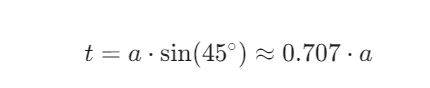
Engineers use this formula to ensure the weld is thick enough to handle the calculated load.
How to Choose the Right Joint?
Selecting the right joint is a trade-off between cost, strength, and accessibility. Use the following table as a quick reference:
| Joint Type | Best For | Main Strength | Main Weakness |
| Butt | High-pressure piping, tanks | Distributed stress | Requires precise edge prep |
| Tee | Structural frames, brackets | Shear resistance | Risk of lamellar tearing |
| Corner | Boxes, frames, tanks | Aesthetic corners | Can be hard to square up |
| Lap | Sheet metal, lap plates | Easy fit-up | Stress eccentricity |
| Edge | Flanges, sheet metal | High-speed production | Poor for structural loads |
Edge Preparation: The Secret to Quality
You wouldn't build a house on a pile of loose sand, and you shouldn't weld on "raw" thick metal. Edge preparation involves removing metal to create a groove that the weld can fill.
1) Methods of Preparation:
Grinding: Common for small shops and repair work.
Oxy-Fuel or Plasma Cutting: Used for heavy plates to create bevels quickly.
Machining: Used in high-precision industries (aerospace, nuclear) to ensure the bevel angle is perfect to within a fraction of a degree.
2) The Root Opening:
A critical part of edge prep is the root opening (or root gap). This is a small space (usually 1/16" to 1/8") left between the pieces. This gap allows the arc to reach the bottom of the joint, ensuring the weld fuses all the way through. Without a root gap on thick material, you are essentially creating a surface-level "bridge" that will snap under pressure.
Conclusion:
Understanding the five basic weld joints is the first step in moving from a "hobbyist" mindset to a "fabricator" mindset. Every project you encounter will be a variation of these five geometries. By choosing the right joint, preparing the edges correctly, and understanding the forces at play, you ensure that your work is not only visually appealing but structurally sound.
Related articles:
1. Welding Joint Types: Butt, Lap, Tee, Edge Joints & More.
2. How welding defects (pores, undercuts) affect weld joint?
3. Welding Positions and Joint Types: 1G, 2G, 3G, 4G, 5G, and 6G
4. What to Do If the Product's Weld Joints Still Leak after Welding?
5. What are the 4 Basic Welding Positions and How to Choose the Right One?