Welding, a fundamental process in numerous industries, relies on the precise interaction of various materials to create strong and durable joints. Two key components often cause confusion for newcomers: filler metal and weld metal. This comprehensive guide delves into the distinct characteristics, applications, and properties of each, clarifying the differences and highlighting their crucial roles in the welding process.
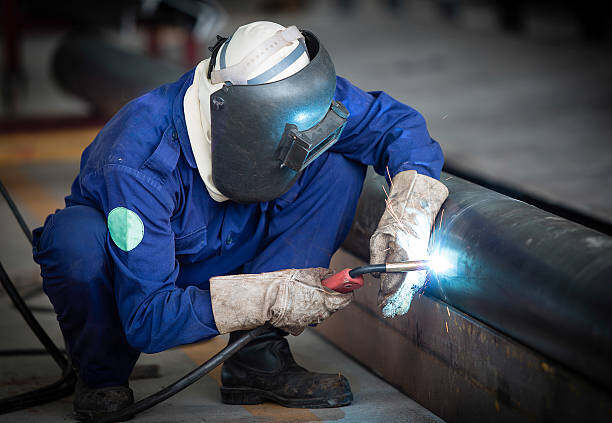
I. Filler Metal: The Foundation of the Weld
Filler metal, also known as welding rod, wire, or electrode, serves as the primary material used to fill the gap between two joined base metals during welding or brazing. These alloys or non-alloy metals, designed with specific melting points and flow characteristics, are heated and melted to create a molten pool that flows into the joint, ultimately forming the weld bead. The capillary action assists the molten filler metal in distributing evenly throughout the prepared weld joint.
The selection of filler metal is critical, as its properties directly impact the final weld's strength, durability, and overall quality. Filler metals are meticulously engineered to meet stringent standards, adhering to specifications set by organizations such as the American Society for Testing and Materials (ASTM), the American Welding Society (AWS), and the International Organization for Standardization (ISO). This ensures consistency and reliability across various welding applications.
A wide array of filler metals exists, each tailored to specific applications and base materials. Common examples include:
Silver: Often used in high-conductivity applications and electronics.
Tin: A common component in lead-based and lead-free solders.
Lead-free solders: Increasingly popular due to environmental regulations, replacing traditional lead-containing solders.
Lead: While less common due to toxicity concerns, it's still utilized in some specialized applications.
Cadmium-free solders: Similarly, chosen for environmental reasons, replacing cadmium-containing solders.
Nickel: Valuable for its corrosion resistance and high-strength applications.
Copper: Used extensively in electrical and plumbing applications due to its conductivity and ductility.
Aluminum: Ideal for lightweight applications and corrosion resistance in various environments.
Gold: Primarily employed in high-reliability applications, such as electronics and aerospace.
Filler metals are available in diverse forms, each offering unique advantages in different welding scenarios:
Pastes: Convenient for applications requiring precise control and fine details.
Solid forms: This encompasses various shapes and sizes, including: rods, powders, shims, wire, rings.
The process of producing filler metal in paste form often involves atomizing the molten filler metal into a fine powder, subsequently mixing it with a flux to create a workable paste.
II. Adding Filler Metal to the Welding Process
The method of incorporating filler metal varies depending on the welding process. In some processes, the filler metal is consumed as part of the electrode:
Gas Metal Arc Welding (GMAW): The filler metal is fed continuously from a spool of wire into the weld pool.
Flux-Cored Arc Welding (FCAW): A tubular wire containing a flux core and filler metal is used as the electrode.
Shielded Metal Arc Welding (SMAW): A coated electrode (stick) containing both the filler metal and a shielding flux is used.
Flux-Cored/Metal-Cored Arc Welding (FC/MCAW): This process combines aspects of FCAW and GMAW.
In other processes, the filler metal is added separately as a filler wire:
Plasma Arc Welding (PAW): A filler wire is manually or automatically fed into the weld pool.
Gas Tungsten Arc Welding (GTAW): A filler wire is manually fed into the weld pool.
Regardless of the method, the heat generated from the welding arc melts both the filler metal and a portion of the base metal's surface (the parent metal). This molten mixture combines to form the weld pool. As the weld pool cools and solidifies, it forms the weld joint. Importantly, the addition of filler metal inherently changes the final weld's chemical composition by introducing additional metallic elements from the filler material itself.
Note: The metals or alloys being welded, brazed, or cut are referred to as the base metal or parent metal.
III. Weld Metal: The Result of the Fusion Process
Weld metal is the solidified material that constitutes the weld joint. This material, once molten, has undergone a transformation during the welding process and subsequently solidified. It's a complex composite typically comprising a mixture of the base metal and the added filler metal, along with any additional elements introduced from fluxing agents or shielding gases used during the welding procedure.
The composition and properties of the weld metal are directly influenced by the welding process employed. In some welding processes, no filler metal is added, resulting in a weld joint with identical characteristics to the base metal:
Laser Welding: The high-energy laser beam melts and fuses the base metals without the need for additional filler.
Self-Shielded Arc Welding: Uses a process where the welding arc generates enough shielding to prevent the entry of external elements and is done without filler materials.
Resistance Welding: This process uses electrical resistance to heat and fuse the materials.
Electron Beam Welding: A high-energy beam of electrons melts the base metals together.
In these cases, the weld metal has the exact chemical composition and mechanical properties as the parent material. However, whenever filler metal is introduced into the weld pool, the weld metal’s properties change to reflect the combined contribution of both the filler and parent material. The resulting weld metal, in such cases, displays a blend of characteristics from both the filler and base metals.
The solidified weld metal inherits mechanical and chemical properties from both the base metal and the filler metal (electrode). Understanding this relationship is essential for predicting and controlling the quality and performance of the weld.
IV. Key Difference: Filler Metal vs. Weld Metal
Here is the simplest summary:
| Filler Metal | Weld Metal |
|---|
| Added material used during welding | Final material created after welding |
| Consumable (rod, wire, electrode) | Solidified mixture of melted materials |
| Chosen before welding | Result of welding conditions and dilution |
| Controls weld chemistry | Determines weld strength and final performance |
| Not always required | Always present in the finished weld |
In short: Filler metal is the input. Weld metal is the output.
V. Factors Affecting the Final Weld Metal Composition
1. Dilution From the Base Metal
One of the most influential factors is dilution, the proportion of base metal that melts and mixes with the filler metal in the weld pool. High dilution reduces the filler metal’s intended chemistry and may lower alloy content, which can impact strength, toughness, and corrosion resistance. Conversely, low dilution preserves filler composition but may cause lack of fusion if energy input is insufficient. Effective control of dilution is essential for achieving a predictable and stable weld metal composition.
2. Filler Metal Chemistry
Although not the sole determining factor, filler metal composition sets the baseline for the final weld-metal alloy content. The filler must be compatible with the base metal and the service conditions of the welded structure. Variations in deoxidizers, alloying elements, and flux ingredients (in flux-cored or coated electrodes) influence weld-metal cleanliness, hardness, and mechanical performance.
3. Welding Process and Parameters
Different welding processes (GMAW, GTAW, SAW, FCAW, etc.) produce varying heat inputs and melting rates. Key parameters such as current, voltage, travel speed, and shielding gas flow affect:
The rate at which base metal melts
The stability of the weld pool
The amount of oxidation or gas absorption
For example, high heat input increases dilution and can alter chemical balance, while low heat input may trap impurities and cause compositional inconsistencies.
4. Shielding Gas and Atmospheric Effects
Shielding gas composition affects weld-pool reactions. Argon, CO₂, and gas blends influence arc characteristics, oxygen levels, and spatter formation. Poor gas shielding allows nitrogen, hydrogen, or oxygen to contaminate the weld, changing its composition and increasing the risk of porosity or cracking.
5. Welding Consumable Reactions
During welding, elements may burn off or react with slag, flux, or the atmosphere. Some alloying elements (e.g., manganese or chromium) can oxidize and be lost from the weld pool, reducing the final alloy content compared to the original filler metal specification.
VI. Choosing the Right Filler Metal: Tips and Best Practices
Selecting the right filler metal is critical for a reliable, high-quality weld. Here’s what to consider:
Compatibility with Base Metal: Make sure the filler’s chemical composition is suitable for your base metals. If you’re welding dissimilar metals, this is even more important.
Mechanical Requirements: Decide what strength, ductility, or toughness you need. The filler should help achieve that when mixed into the weld.
Corrosion or Environmental Conditions: If the welded part will operate in a corrosive environment, choose a filler that resists corrosion.
Melting Behavior & Welding Process: Make sure the filler’s melting point and flow match your welding method (arc welding, brazing, etc.).
Standards & Quality: Filler metals are often specified by standards (e.g., AWS, ISO). Choosing material certified to the right spec ensures consistency.
Dilution Control: Be mindful of how much base metal you're melting into the weld. Adjust parameters (heat input, welding speed) to manage dilution.
Conclusion
Distinguishing between filler metal and weld metal is key to any effective welding strategy. Filler metal is the consumable material added to the weld joint, while weld metal is the final, solidified result — a blend of base and filler materials (and possibly other elements). The right choice of filler, combined with proper welding parameters, determines the mechanical, chemical, and metallurgical character of your welds.
By understanding these fundamentals, welders and engineers can make better material choices, reduce defects, and ensure strong, reliable welds. At Megmeet, we emphasize this understanding in every solution to deliver high-performance welding results for our customers.
Related articles:
1. What Filler Metal to Use in Welding Dissimilar Metals?
2. Welding Materials Unveiled: Understanding the Characteristics of Metals and Alloys
3. Metal Inert Gas (MIG) Welding - Process and Applications
4. How To TIG Weld Different Metal Thickness?
5. How to Weld Thin Metal: Types, Welders, and Techniques (2023)