In the high-stakes world of industrial manufacturing, efficiency and quality are the two primary metrics for success. Whether you are assembling heavy machinery, building storage containers, or fabricating automotive frames, you need a welding process that is both fast and reliable.
Metal Inert Gas (MIG) welding—formally known as Gas Metal Arc Welding (GMAW)—has long been the "workhorse" of the industry. It is prized for its speed, versatility, and ease of use, making it the go-to choice for high-volume production environments. In this guide, we will explore the mechanics of the MIG welding process, the essential equipment required, and the diverse industrial applications that rely on this technology.
 Welding - Process and Applications.jpg "Metal Inert Gas (MIG) Welding - Process and Applications.jpg")
I. How Does the MIG Welding Process Work?
At its core, MIG welding is an arc welding process that uses a continuous, consumable solid wire electrode. This wire is fed through a specialized welding gun and into the weld pool, where it serves two purposes: it acts as the heat source (via the arc) and provides the filler metal needed to join the parts.
.jpg "Gas-shielded arc welding processes (TIG-MIG-MAG)")
To ensure a strong joint, the molten metal must be protected from the surrounding atmosphere. Oxygen, nitrogen, and hydrogen in the air can react with the weld pool, causing defects like porosity (tiny holes) or embrittlement. This protection is provided by a shielding gas, which flows through the nozzle of the gun to envelope the arc and the weld puddle until the metal solidifies.
The Distinction Between MIG and MAG
You will often see the process referred to as MIG/MAG. The difference lies entirely in the type of shielding gas used:
MIG (Metal Inert Gas): Uses only inert gases, such as Argon or Helium, which do not react with the weld pool. This is typically used for non-ferrous metals like aluminum and copper.
MAG (Metal Active Gas): Uses "active" gases, such as Carbon Dioxide (CO₂) or Argon mixed with Oxygen. These gases react with the weld to improve penetration and arc stability, making MAG the standard for welding carbon and stainless steels.
II. What Equipment Is Essential for MIG Welding?
A professional industrial setup is a coordinated system of high-performance components. To achieve consistent results, each piece of equipment must be properly selected and maintained.
1. The Power Source
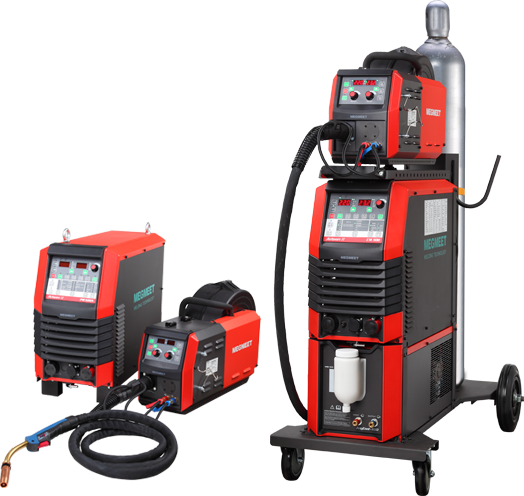
MIG welding requires a Constant Voltage (CV) power source. Unlike other processes where the welder controls the arc length manually, a CV machine maintains a steady voltage regardless of the distance between the gun and the workpiece. Modern industrial systems use digital inverter technology, which allows for precise control over the arc and significantly reduces energy consumption.
2. The Wire Feeder
The wire feeder is the "heartbeat" of the productivity cycle. It pulls the filler wire from a spool and pushes it through the gun cable. Industrial feeders typically use a 4-roll drive system to ensure the wire moves smoothly without slipping or tangling.
3. The MIG Gun and Consumables
The gun is the primary interface for the operator. It houses several critical consumables that wear out over time and must be replaced to maintain quality:
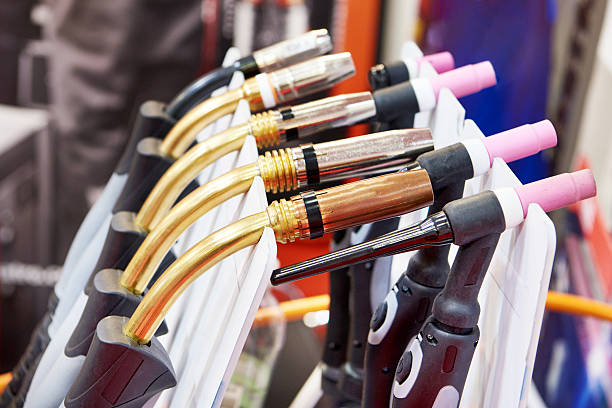
Contact Tip: Transfers the electrical current to the wire. Using high-quality alloys like Chrome Zirconium (CuCrZr) can double or triple the lifespan of the tip compared to standard copper.
Nozzle: Directs the shielding gas. Nozzles come in different shapes—cylindrical for high-amperage flat welding or tapered for better access in tight joints.
Liner: The conduit that guides the wire through the cable. A clogged or kinked liner is the leading cause of wire feeding issues.
4. Shielding Gas and Regulator
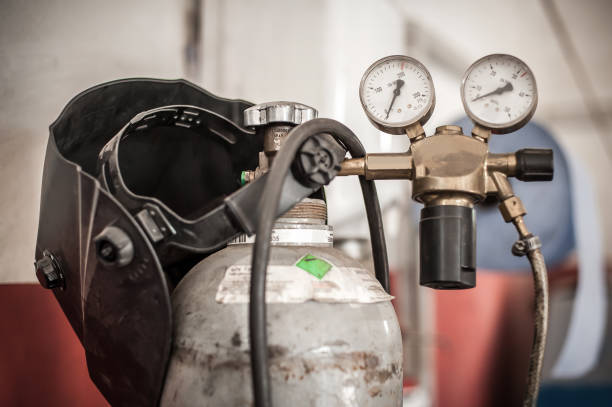
The gas cylinder provides the protective atmosphere, while the regulator controls the flow rate. For most industrial applications, a flow of 25 to 35 cubic feet per hour (cfh) is recommended.
III. Why Is Shielding Gas Selection Critical for Success?
The shielding gas does more than just protect the weld; it determines the shape of the bead, the depth of penetration, and the amount of spatter produced.
| Material | Shielding Gas Choice | Performance Impact |
| Mild Steel | 75% Argon / 25% CO₂ (C25) | The "industry standard." Provides a stable arc, low spatter, and good bead appearance. |
| Mild Steel (Thick) | 100% CO₂ | The most cost-effective option. Provides deep penetration for thick plates but increases spatter. |
| Aluminum | 100% Argon | Mandatory for aluminum. Prevents oxidation and ensures a clean, shiny weld. |
| Stainless Steel | Argon / CO₂ / Helium Tri-mix | Improves "wetting" (the flow of the metal) and preserves corrosion resistance. |
IV. Which Materials Can You Weld with the MIG Process?
The versatility of MIG welding allows it to be used on a wide range of materials by simply changing the wire and gas combination.
Carbon Steel: From thin sheet metal for appliances to thick structural beams for skyscrapers, carbon steel is the most common material welded with the MIG/MAG process.
Aluminum: While aluminum is "soft" and can be difficult to feed, MIG is the preferred method for high-speed aluminum fabrication in shipbuilding and aerospace. To prevent jams, shops often use U-groove drive rolls and Teflon or nylon liners.
Stainless Steel: Used extensively in the food, medical, and petrochemical industries. MIG allows for long, continuous welds on stainless steel without the slow speeds associated with TIG welding.
V. What Are the Key Industrial Applications?
1. Automotive and Transportation
MIG welding is the backbone of automotive assembly. It provides the high-strength joints and rapid production speeds required for frames, chassis, and exhaust systems. In modern factories, digital power sources communicate with robots in real-time to adjust parameters for every millisecond of the weld.
2. Shipbuilding and Marine Engineering
Shipyards require long, continuous seams on both steel and aluminum. MIG welding allows for high deposition rates—meaning more metal is put into the joint per hour—which is essential for the massive scale of marine structures.
3. Construction and "Yellow Goods"
Heavy equipment like excavators, cranes, and mining machinery (Yellow Goods) are subject to extreme stress. The deep penetration capabilities of industrial MAG welding ensure that these machines can withstand harsh field conditions.
4. Pressure Vessels and Shipping Containers
In industries where leaks are not an option, the consistency of digital inverter welding is critical. Modern systems can monitor and log every weld performed, ensuring that quality standards are met across thousands of units.
VI. How to Optimize Your MIG Welding Parameters?
Setting the correct parameters is the difference between a high-quality joint and a costly rework. In an industrial environment, there is a simple "rule of thumb" for starting points: Each.001 inch of material thickness requires approximately 1 amp of output.
Wire Feed Speed (WFS): In MIG welding, WFS controls your amperage (heat). If the speed is too high, you risk "burn-through" on thin metal. If it's too low, the arc will lack penetration.
Voltage: This determines the height and width of the bead. If the voltage is too low, the wire will "stub" into the metal; if it's too high, the arc will become jumpy and erratic.
Listen for the "Sizzle": When your settings are dialed in perfectly, the arc should sound like sizzling bacon. A loud popping sound usually indicates your voltage is too low for your wire speed.
VII. Why Choose Megmeet for Your Industrial Welding Needs?
Megmeet stands out as a trusted provider of industrial welding solutions by combining deep technical expertise with customer-focused innovation. With decades of experience in welding power sources and control systems, Megmeet delivers reliable, high-performance equipment designed to improve productivity and weld quality across diverse manufacturing environments.
Key Advantages of Choosing Megmeet:
Advanced Technology: Megmeet invests heavily in research and development to integrate the latest digital control, power electronics, and automation technologies into its welding products—ensuring precision, consistency, and energy efficiency.
Comprehensive Product Portfolio: Megmeet offers a broad range of welding solutions, including MIG, TIG, SAW, Laser and multi-process welders, plus automation and robotic welding systems, enabling one-stop sourcing for complex industrial needs.
Customization and Flexibility: Understanding that every application is unique, Megmeet provides tailored welding solutions and system configurations to match specific production goals, materials, and workflows.
Quality and Reliability: Built to withstand demanding industrial conditions, Megmeet welding equipment emphasizes durability, minimal downtime, and long service life—backed by stringent quality control and global support networks.
Application Expertise: Megmeet combines product quality with industry know-how, offering technical support, training, and application optimization to help customers maximize performance and reduce costs.
By choosing Megmeet, manufacturers benefit from cutting-edge welding technology, adaptable solutions, and a partner committed to driving operational excellence.
VIII. FAQs of Metal Inert Gas (MIG) Welding Basics
Q1: Can I use MIG welding outdoors?
MIG welding is difficult to perform outdoors because the wind can blow away the shielding gas, leading to porosity. For outdoor work, it is better to use Flux-Cored Arc Welding (FCAW) with self-shielding wire, which does not require external gas.
Q2. Is a digital inverter better than a traditional transformer welder?
Yes, for industrial use. Digital inverters are more energy-efficient, offer far better arc control (especially for pulsed welding), and are significantly lighter and more portable than old transformer-style machines.
Q3. What is "Synergic" control?
Synergic control is a feature where the welder automatically adjusts the voltage and arc parameters based on the wire feed speed you select. This makes it much easier for operators to find the "sweet spot" for a high-quality weld.
Q4. How often should I replace my contact tip?
There is no set schedule, but you should change it the moment you notice arc instability or if the hole in the tip becomes "keyholed" (oval-shaped). In high-production environments, this can happen every few shifts.
Q5. Can MIG welding handle thick materials?
Absolutely. While processes like Submerged Arc Welding (SAW) are used for extremely thick plates, heavy-duty industrial MIG machines like the Megmeet Artsen II PM500 can easily weld thick sections using multiple passes and high-amperage spray transfer modes.
Related articles
1. A Comprehensive Guide to Pulse MIG Welding
2. 11 Tips to Sharpen Your MIG Welding Skills
3. Spot Welding vs. TIG Welding vs. MIG Welding: Differences & How to Choose?
4. Shielding Gases for TIG & MIG Welding: which gas is best?
5. Pulsed MIG Welding: Mastering Techniques for Superior Results