If you have ever spent more time with a grinder in your hand than a welding torch, you know the "hidden cost" of standard MIG welding: spatter. Traditional MIG welding—while fast and reliable—often leaves behind a mess of metal droplets and heat-warped panels.
But what if you could get the speed of MIG with the precision and cleanliness of TIG?
That is where Pulse MIG welding (formally known as Pulsed Gas Metal Arc Welding, or GMAW-P) comes into play. Once reserved for high-end aerospace and automotive factories, pulse technology is now accessible to almost every professional fabricator. In this guide, we will break down the principles, benefits, and practical applications of Pulse MIG so you can decide if it’s the right move for your shop.
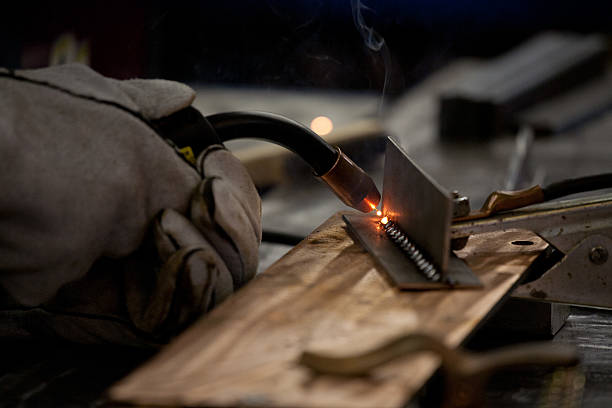
I. What is Pulse MIG Welding and How Does It Work?
To understand Pulse MIG, you first have to understand the two traditional ways MIG metal is transferred: Short-Circuit (which is cooler but creates spatter) and Spray Transfer (which is clean but very hot and only works on thick metal).
Pulse MIG is the "middle ground" that provides the best of both worlds.
The "Heartbeat" of the Arc
Think of Pulse MIG as a high-speed heartbeat. Instead of a constant stream of electricity, the welding machine "pulses" the current.
Peak Current: The machine sends a high burst of electricity. This burst is hot enough to melt the end of the welding wire and "fire" a single droplet of metal across the arc and into the puddle.
Background Current: Immediately after the droplet is sent, the machine drops the electricity to a much lower level. This background current is just enough to keep the arc alive, but not hot enough to melt more wire or overheat the metal.
This cycle happens dozens, sometimes hundreds, of times per second. Because the metal is transferred droplet-by-droplet without the wire ever actually touching the puddle (which is what causes spatter in short-circuit), the result is an incredibly clean, controlled weld.
II. How Does Pulse MIG Control the Puddle?
The magic of Pulse MIG lies in its ability to separate heat input from metal deposition.
In standard MIG, if you want more metal, you turn up the wire speed, which automatically increases the heat. On thin materials, this often leads to burn-through. In Pulse MIG, the machine’s computer controls the waveform. You can have a high "peak" to ensure the metal fuses properly, but a long "background" period to let the weld pool cool down.
Droplet-on-Demand
In a true pulse system, the machine achieves "one drop per pulse." This precision allows the welder to work in positions that were previously difficult with standard MIG. For example, because the droplet is "pushed" across the arc by the peak current, you can weld out-of-position (overhead or vertical-up) much more easily than with traditional spray transfer, which would simply drip out of the joint due to gravity.
III. What Are the Real-World Benefits of Pulsed MIG?
Why are industrial shops switching to Pulse MIG? It isn't just because it's "high-tech." It offers tangible improvements to the bottom line.
1. Massive Reduction in Spatter:
Since the wire never "shorts" into the puddle, there is virtually zero spatter. This saves hours of post-weld cleanup. For shops that paint or powder-coat their products, this can reduce labor costs by 20% to 30%.
2. Lower Heat Input and Less Distortion:
Because of the background current "cooling" phase, the overall heat put into the metal is much lower than standard MIG. This makes Pulse MIG the king of thin material welding. It prevents the "oil-canning" and warping that typically plagues sheet metal fabrication.
3. Ability to Weld Difficult Metals:
Pulse MIG is the industry standard for Aluminum and Stainless Steel.
Aluminum: It breaks through the tough oxide layer with the peak pulse but prevents the base metal (which has a low melting point) from sagging or blowing through.
Stainless Steel: It reduces the "Heat Affected Zone" (HAZ), which helps maintain the corrosion resistance of the metal.
4. Better Aesthetics:
While it’s hard to beat the beauty of a TIG weld, Pulse MIG comes very close. It produces a consistent, ripple-pattern bead that many customers prefer for visible joints.
IV. Pulse MIG vs. Standard MIG: A Comparison
| Feature | Short-Circuit MIG | Spray Transfer MIG | Pulse MIG |
| Spatter Level | High | Low | Virtually Zero |
| Heat Input | Low | High | Medium (Controlled) |
| Out-of-Position | Good | Poor (Gravity issues) | Excellent |
| Thin Materials | Good | Poor (Too hot) | Excellent |
| Thick Materials | Poor (Lack of fusion) | Excellent | Excellent |
| Learning Curve | Easy | Easy | Moderate (Setup is key) |
V. Where Is Pulse MIG Used Most?
While Pulse MIG can be used on almost anything, it shines in specific industrial sectors:
1. Automotive Manufacturing:
From thin body panels to structural aluminum frames, Pulse MIG allows for fast, automated, or manual welds that meet strict safety standards without ruining the metal's temper.
2. Aerospace and Marine:
Aluminum is the lifeblood of boat building and aircraft components. The ability to weld thick aluminum plate with deep penetration—while still being able to handle thin piping—makes Pulse MIG indispensable.
3. Food and Chemical Processing:
When working with stainless steel tanks and piping, maintaining the metal's integrity is vital. Pulse MIG ensures the stainless doesn't get "cooked," which would lead to rust later on.
VI. How to Set Parameters for Pulse MIG?
Setting up a Pulse MIG machine is slightly different from a "set it and forget it" standard welder. Most modern machines use Synergic Programming.
1. What is Synergic Welding?
In a synergic system, you tell the machine:
The type of metal (e.g., Aluminum 4043).
The wire diameter (e.g., .035").
The shielding gas (e.g., 100% Argon).
The machine then automatically chooses the best waveform, peak current, and frequency. When you turn the dial, it adjusts both the wire speed and the voltage together to maintain the perfect pulse.
2. Manual Fine-Tuning
If you are using a non-synergic or professional-grade machine, you may need to adjust:
Arc Length (Trim): This adjusts how long the arc is. If the wire is bumping into the puddle, you increase the trim.
Frequency: How many pulses per second. Higher frequency leads to a narrower, more focused bead.
Inductance: This controls how "fluid" the puddle is.
VII. FAQs: Common Questions About Pulse MIG
Q1: Do I need a special gas for Pulse MIG?
Yes. Pulse MIG generally requires a high-Argon mixture. For steel, a mix of 80% Argon / 20% CO2 or 90/10 is common. For aluminum, you use 100% Argon. You cannot run Pulse MIG effectively on 100% CO2 because the gas is too reactive to allow for a stable "droplet" transfer.
Q2: Is Pulse MIG harder to learn than standard MIG?
The "hand-eye" coordination is exactly the same as standard MIG. The only "hard" part is understanding the settings. However, with modern synergic machines, the machine does the hard work for you. Many welders find Pulse MIG easier because the arc is more stable.
Q3: Can I use Pulse MIG on rusty or dirty metal?
Pulse MIG is a high-precision process. It performs much better on clean, prepped metal. If you are welding dirty, rusty farm equipment, a standard "gritty" short-circuit MIG or a Stick welder is actually a better tool for the job.
Q4: Does Pulse MIG save money?
The initial cost of the machine is higher. However, you save money through:
Conclusion: Is Pulse MIG Right for You?
Pulse MIG welding represents the pinnacle of "smart" welding technology. It solves the age-old problem of balancing heat and speed, making it the perfect choice for anyone working with aluminum, stainless steel, or thin carbon steel. While it requires a bit more knowledge to set up, the results—clean, strong, and beautiful welds—speak for themselves.
To truly harness the power of pulse technology, you need a power source capable of high-speed digital processing. The Megmeet MIG welding machine is a prime example of this technology in action. Known for its world-class arc stability and advanced synergic pulse programs, Megmeet machines are designed to simplify the complex waveforms of pulse welding. Whether you are aiming for high-speed industrial production or precision custom fabrication, a Megmeet machine provides the reliability and control needed to eliminate spatter and master the most challenging materials.
For more information about Megmeet MIG/MAG Welder Series, visit Megmeet Welding and explore the product details. Unleash the precision of Pulse MIG welding and take your welding projects to new heights with Megmeet.
Related articles
1. Megmeet Pulse MIG Welders: Artsen II, Pro & Plus Series Welders
2. Advantages of Pulse Spray Transfer in GMAW Welding
3. Pulsed MIG Welding: Mastering Techniques for Superior Results
4. Pulsed MIG Welding Aluminum and Stainless Steel
5. Advantages of Utilizing Pulsed MIG Welding for Aluminum