The welding industry is currently navigating a period of rapid transformation, shifting from a manual trade to a high-tech, data-driven cornerstone of modern manufacturing. As we move into 2026, the landscape is being redefined by a combination of labor shortages, a push for extreme precision, and global sustainability mandates.
The global welding equipment and consumables market, valued at approximately $14.7 billion in 2025, is projected to reach over $15.4 billion by 2026 as industries modernize their operations . This growth is not merely about more machines; it represents a strategic shift toward advanced technologies like collaborative robots (cobots), AI-driven power sources, and laser welding systems that can perform at levels human hands cannot sustain. For professionals in manufacturing and fabrication, staying competitive means moving away from the "status quo" and embracing these changes to meet the rigorous demands of tomorrow.
I. Key Industry Demands Driving Change in Welding Technology
The "spark" for technological change in welding isn't coming from the labs alone—it is being driven by the specific needs of the shop floor. Four major pressures are currently forcing companies to upgrade their equipment and processes.
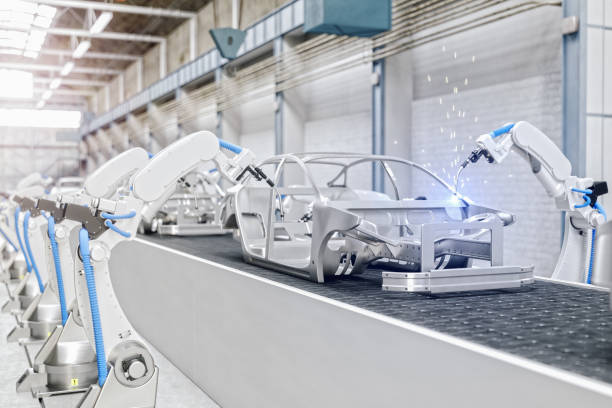
1. The Global Labor Shortage and the Need for Automation
The most significant driver of change is a critical shortage of skilled labor. Estimates suggest that nearly 330,000 new welding professionals will be needed by 2028 to replace an aging workforce and meet new infrastructure demands . With approximately 45% of the current workforce eligible for retirement in the next decade, companies are turning to automation not to replace workers, but to fill gaps and augment existing talent .
Automation allows a shop to scale quickly without adding overhead. While a skilled manual welder might achieve an "arc-on" time of roughly 20% to 50% due to fatigue and setup, a robotic system can maintain up to 95% arc-on time, working continuously across multiple shifts .
2. Higher Precision and Stringent Quality Control
Modern industries, particularly aerospace and electronics, now require tolerances that leave no room for human error. Precision-critical sectors demand a high degree of repeatability—meaning the 5,000th weld must be identical to the first. Digitalized welding systems now integrate sensors and vision technology that monitor arc stability and seam alignment in real-time, making automatic adjustments that prevent defects before they occur.
3. Demand for Faster Production and Reduced Downtime
In high-volume sectors like automotive manufacturing, a few minutes of downtime can translate into thousands of dollars in lost throughput . Industry leaders are increasingly focused on "total cost of ownership" rather than the initial sticker price of equipment . This has led to the adoption of high-performance consumables and "smart" machines that provide predictive maintenance alerts, identifying issues with wire feeding or contact tip wear before they cause an unplanned shutdown.
4. The Push for Environmentally Friendly and Sustainable Solutions
Sustainability is no longer a buzzword; it is a regulatory and economic necessity. The industry is shifting toward "green welding"—practices that reduce energy consumption, minimize material waste, and lower emissions of harmful fumes . Modern inverter-based welding machines, for example, consume up to 40% less energy than older transformer-based models.
| Efficiency Factor | Traditional Equipment | Modern Technology | Impact |
| Power Consumption | High (Transformer-based) | Low (Inverter-based) | Up to 40% energy savings |
| Arc-On Time | 20% - 50% (Manual) | 85% - 95% (Robotic) | 3x to 5x throughput |
| Material Waste | Higher (Over-welding) | Precise (AI-controlled) | Significant reduction in filler waste |
II. Technological Advancements in Welding
To meet these four demands, manufacturers have introduced cutting-edge hardware and software that bridge the gap between human craftsmanship and mechanical speed.
1. Robotic Welding and Collaborative "Cobots"
Traditionally, robots were massive, expensive machines locked in safety cages, suited only for large-scale automotive lines. The rise of collaborative robots (cobots) has changed this. Cobots are designed to work safely alongside humans on hybrid shop floors. They are easier to program, often using hand-guiding techniques that allow a welder to "teach" the robot a path in minutes. Since 2023, cobot market penetration has surged by 78%, particularly in small to mid-sized shops.
2. Advanced Machines and Power Sources
The transition from analog to digital power sources has been revolutionary. Smart machines now use the Industrial Internet of Things (IIoT) to collect and analyze data, optimizing the welding process and improving traceability. Inverter-based systems offer superior arc control and are significantly lighter and more portable than their predecessors. Furthermore, dual-process robots—capable of performing both TIG for precise roots and MIG for fast fills in a single cell—are now becoming more common in industrial fabrication.
3. Innovations in Welding Consumables and Materials
High-performance consumables are essential for maintaining the high duty cycles of automated systems. Standard copper contact tips often soften at 500°F, leading to mechanical wear known as "keyholing" . Modern Chrome Zirconium (CuCrZr) alloys can withstand temperatures up to 932°F, while silver-plated tips offer even higher conductivity and heat reflection, lasting up to nine times longer than standard copper .
III. Impact on Key Welding Industries
The ripple effects of these technological shifts are being felt across every major metalworking sector.
1. Automotive and Transportation
Automotive production currently holds over 30% of the total welding market share. The shift toward Electric Vehicles (EVs) has created a surge in demand for welding lightweight materials like aluminum for battery trays and chassis. Manufacturers now utilize high-speed pulsed MIG processes to limit heat distortion on thin materials, producing quality that rivals traditional TIG welding but at much faster speeds .
2. Aerospace and Defense
Aerospace requires the highest standards of precision. Technologies like Electron Beam Welding and Laser-Hybrid Welding are utilized to join safety-critical components with minimal heat-affected zones. In a 2025 case study, NASA utilized AI-driven robotics to manufacture complex toroidal fuel tanks, achieving 87% cost savings and reducing production timelines from 19 months to just 12 weeks .
3. Construction and Infrastructure
In structural steel fabrication, mobile robotic platforms are being used to weld column joints and beams on-site . These robots can move, climb walls, and maneuver around obstacles, ensuring high-quality multi-pass welds in hazardous environments where human safety is a concern .
IV. Challenges in Adapting to New Technologies
While the future looks promising, the transition to these advanced systems presents several hurdles for businesses.
High Initial Investment: The upfront cost of a fully automated robotic cell or a handheld laser system can be substantial . While the long-term ROI is high, the initial capital requirement can be a barrier for small to medium enterprises (SMEs) .
Training and the Skills Gap: As equipment becomes more digital, the definition of a "welder" is changing. Workers now need "data literacy" to program cobots and troubleshoot digital monitoring systems .
System Integration: Retrofitting new technology into existing production layouts often requires significant infrastructure modifications and software compatibility checks .
V. The Future of Welding Technology: AI and Machine Learning

The next frontier for the industry is Physical AI. Companies are already deploying foundational AI models trained on millions of welded inches . These systems scan every seam and plan the weld in real-time, adjusting parameters instantly as conditions change—no precise programming for every part is required .
We are also seeing the rise of Digital Twins, virtual models that allow engineers to simulate and validate robot trajectories and welding conditions before any hardware even reaches the floor. This "virtual commissioning" reduces setup delays and ensures that high-mix, low-volume manufacturers can finally automate their processes .
Conclusion
The welding industry is evolving to meet the "Need for Speed" while maintaining absolute precision and safety. By transitioning from manual processes to automated, data-driven systems, manufacturers can overcome labor shortages and reduce their environmental impact. Staying ahead requires a commitment to continuous learning and a willingness to invest in the technologies that define modern fabrication.
Megmeet Automotive Welding Solutions
For high-demand sectors like automotive manufacturing, precision and reliability are non-negotiable. Megmeet welding solutions (https://www.megmeet-welding.com/en/solutions/automotive) are designed specifically for these environments. Their technology, such as the Ehave CM500H MIG/MAG Welder, is optimized for the automatic welding of safety-critical parts like drum brake shoes, where limiting heat distortion is essential. By utilizing intelligent power sources like the Artsen Plus series, Megmeet helps manufacturers achieve ultra-low spatter and high stability, ensuring that automated production lines run continuously with minimal rework.
Frequently Asked Questions (FAQs)
Q1: Will robots replace human welders entirely?
No. Robots are excellent for repetitive, high-volume tasks, but they lack the real-time judgment and finesse required for custom fabrication or complex repairs . The industry is moving toward a hybrid model where humans oversee, program, and work alongside robots.
Q2: How does AI help in welding?
Q3: What is the return on investment (ROI) for a welding robot?
If used correctly, most robotic welding systems pay for themselves within one to three years . The ROI is driven by increased throughput, reduced material waste, and the ability for one operator to manage multiple stations .
Q4: How much energy can modern welding machines save?
Q5: What are the benefits of using a cobot over an industrial robot?
Cobots are smaller, more affordable, and don't require expensive safety cages, making them ideal for small to mid-sized shops. They can be programmed much faster and work directly beside human operators.
Related articles:
1. The Evolution of Laser Welding Technology
2. How Welding Technology Drives Manufacturing Industry
3. Quick Pulse: A Welding Technology More Suitable for Manual Welding
4. How does Megmeet's RDT Welding Technology Surpass CMT?
5. Megmeet RDT (Retract Droplet Transfer) Cold Metal Transfer Zero-Spatter High-speed Servo Arc Welding Technology Makes Its Debut at the Exhibition