Choosing the right welding technique is less about picking a “best” process and more about matching the process to the job. The right choice depends on the base material, thickness, weld position, productivity target, finish quality, available equipment, and whether the work is happening indoors or outdoors. Welding references consistently frame technique selection around those practical constraints rather than around one universal method.
A good welding technique should help you achieve sound fusion with minimal rework, acceptable speed, and a weld profile that matches the application. In production settings, that can mean a process with high deposition and repeatability; in repair or field work, it may mean portability and tolerance for difficult access. The most effective welders do not simply “pick a process”; they evaluate the job first and then select the technique that fits the geometry, environment, and finish requirements.
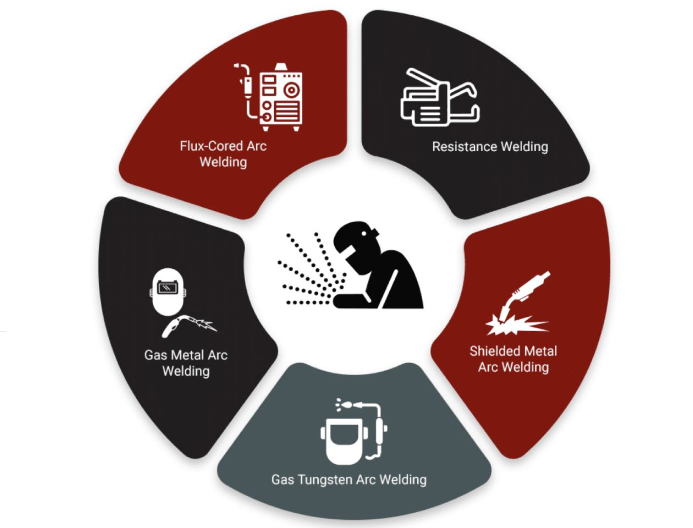
I. Why Technique Selection Matters?
The technique you choose affects penetration, spatter, cleanup time, distortion, and how easily the weld can be inspected. It also affects whether the weld can be completed safely and consistently in the required position, especially when the work is vertical, overhead, or outdoors. Those factors directly influence quality and cost.
In many shops, the wrong process creates avoidable problems: excessive heat input, poor sidewall fusion, difficult puddle control, or too much post-weld cleanup. In the field, the wrong process can fail because shielding is compromised or the joint is inaccessible. That is why technique selection is a production decision, not just a skill preference.
II. Main Factors to Consider When Choosing the Welding Technique
1) Material type
Different metals respond differently to heat, shielding, and arc characteristics. Mild steel is generally flexible in terms of process choice, while stainless steel, aluminum, and other specialty materials often require tighter control or different shielding and filler strategies. Material compatibility is one of the first filters in process selection.
2) Thickness
Thickness is one of the most important variables because it determines how much heat the joint can absorb without burning through and how much energy is needed to achieve acceptable penetration. Thin-gauge material often benefits from lower-heat, more controllable processes, while thicker plate generally needs more robust arc output and better penetration control.
3) Weld position
Flat and horizontal welding are generally easier to control than vertical or overhead welding. Once gravity becomes a factor, puddle control becomes much more important, and some processes or transfer modes become more practical than others. For example, vertical-up welding is commonly used on thicker material and in situations where the work cannot be repositioned.
4) Indoor or outdoor environment
Outdoor welding is more sensitive to wind and weather because shielding gas can be disrupted. That is why self-shielded or flux-based methods are commonly favored in field conditions, while gas-shielded methods are often preferred in controlled shop environments.
5) Productivity and finish requirements
If the job values speed and high deposition, a process with a broader operating window and less cleanup may be preferred. If the job prioritizes precision and appearance, a process with finer heat control may be better, even if it is slower. Welding guidance repeatedly separates speed-focused fabrication from precision-focused work for exactly this reason.
III. The Main Welding Techniques and When to Use Them
| Technique | Best suited for | Strengths | Limitations |
|---|
| Gas Metal Arc Welding (MIG/GMAW) | Mild steel, thin to medium material, shop work, automation | Easy to learn, fast, versatile, low cleanup, good for production | Less forgiving outdoors without protection; can be less ideal for difficult out-of-position work |
| Shielded Metal Arc Welding (Stick/SMAW) | Construction, repair, field work, thicker steel | Portable, no shielding gas required, strong welds, works well outdoors | Slower, more spatter and slag, more manual skill required |
| Flux-Cored Arc Welding (FCAW) | Fabrication, outdoor repair, structural work, higher deposition | High productivity, good outdoor capability, strong penetration options | Slag cleanup, parameter sensitivity, can be less clean than MIG |
| TIG/GTAW | Thin material, stainless, aluminum, precision work | Excellent control, high-quality finish, precise heat input | Slower, more complex, harder to master, usually less productive |
| Submerged Arc Welding (SAW) | Long, heavy, repetitive shop welds | Very high productivity, automated or semi-automated, efficient on long seams | Limited position flexibility, mostly suited to controlled environments |
IV. How to Choose the Right Welding Technique Step by Step?
1. Start with the material
Ask what you are welding first: mild steel, stainless steel, aluminum, or something more specialized. Mild steel gives you the widest range of options, while stainless and aluminum narrow the field because heat control, filler choice, and shielding requirements become more important.
2. Measure the thickness and joint design
Thickness determines the heat range you need and how aggressively the joint can be welded without defects. Thin material usually benefits from a cooler, more controlled process; thicker material often needs a technique that can drive deeper fusion and sustain a stable puddle. Joint type matters too, because groove welds, fillet welds, lap joints, and tees do not behave the same way.
3. Identify the weld position
If the work can be held flat, many processes become easier and more forgiving. If the weld must be done vertical or overhead, you need a technique and parameter set that keeps the puddle under control. Vertical-up and overhead welding often demand slower travel, tighter puddle management, and more attention to comfort and body position.
4. Decide where the weld will be made
For outdoor jobs, especially where wind may interfere with shielding gas, self-shielded or flux-based processes are often more practical. For indoor shop fabrication, gas-shielded processes can offer cleaner results and better consistency because the environment is controlled.
5. Match the technique to productivity goals
If you need speed and repeatability, look at processes that support faster travel and less cleanup. If you need maximum control and the highest-quality cosmetic finish, a slower precision process may be worth the extra time. Good process selection is ultimately a balance between speed, quality, and rework avoidance.
6. Check equipment and power availability
Not every site has the same power supply, machine capacity, or consumable setup. Process choice must fit the available equipment, not just the ideal theory. Welding guidance consistently treats power source capability as part of the selection decision.
7. Consider operator skill level
Some processes are naturally easier to learn and more forgiving, while others require fine hand control, timing, and heat management. In practice, a highly skilled welder can do more with a demanding process, but a production team may get better results from a process with a wider operating window.
V. Technique Selection by Job Type
1. Thin sheet and light fabrication
For thin material, choose a technique that limits heat input and helps prevent burn-through. MIG and TIG are often strong choices depending on whether you need speed or precision. TIG is especially useful when appearance and heat control matter more than throughput.
2. General shop fabrication
For shop work on mild steel, MIG and flux-cored processes are often the most practical because they combine speed, repeatability, and manageable cleanup. In controlled environments, those methods can deliver efficient production while keeping weld quality consistent.
3. Outdoor repair and field work
For field work, stick welding and self-shielded flux-cored welding are usually the most practical because they do not depend on external shielding gas the way gas-shielded methods do. That makes them more reliable when wind, access, or mobility are issues.
4. Thick plate and structural work
For thicker materials, the process must deliver enough heat and penetration while still allowing control of the puddle. Stick, flux-cored, and certain MIG transfer modes are commonly used depending on position, joint configuration, and productivity requirements. Vertical-up welding becomes more important when thick assemblies cannot be rotated into flat position.
5. High-precision work
If the project involves cosmetic welds, thin stainless, aluminum, or applications where distortion must be minimized, TIG is often the most appropriate choice. It is slower and more difficult, but its heat control and finish quality make it the preferred method for delicate, high-spec work.
VI. How to Read a Weld Bead When Choosing or Adjusting Technique
A weld bead tells you whether your technique is aligned with the job. A good bead typically shows proper penetration, a stable profile, and good tie-in at the toes. If the weld is too high in voltage or too fast in travel, the bead can become inconsistent or narrow with poor fusion. If travel is too slow, heat can become excessive and the bead may spread too wide or burn through thin material.
That is why technique selection is not a one-time decision. The correct process still needs the correct settings, and the correct settings still need the correct travel speed, work angle, and manipulation. In other words, the “right” technique only works when it is executed correctly.
VII. Common Mistakes When Choosing a Welding Technique
One common mistake is choosing a process because it is familiar rather than because it fits the job. Another is ignoring the effect of thickness and weld position, which can lead to poor fusion or excessive distortion. A third is forgetting the environment: a process that works well indoors may become unreliable outdoors.
A related mistake is overvaluing appearance and undervaluing practicality. A clean-looking weld is not necessarily the correct weld if it lacks penetration or was produced with the wrong technique for the joint. Technique choice should support both quality and function.
VIII. Practical Decision Tree
Use MIG when: You are welding mild steel in a shop, need speed, and want relatively easy setup with low cleanup. It is especially effective for medium and thin material in controlled environments.
Use Stick when: You need portability, outdoor capability, strong welds, or a process that does not rely on shielding gas. It is a dependable choice for field fabrication and repair.
Use Flux-Cored when: You want higher deposition and outdoor practicality without moving to a fully gas-dependent process. It is a strong middle ground for construction and structural work.
Use TIG when: You need precise heat control, a clean finish, or work on thin or specialty metals where detail matters more than speed.
Use Submerged Arc when: You are in a controlled shop environment with long, repetitive seams and productivity is the main target.
IX. Technique, Position, and Parameters Must Work Together
Selecting the right technique is only part of the job. The welder also has to adapt angle, travel speed, voltage, wire feed, and manipulation to the position and joint geometry. For example, vertical and overhead welding often require cooler settings and more controlled puddle management than flat welding.
That is why practice on scrap is such a useful step. It lets the welder verify that the chosen process actually works for the real joint before committing to production metal. In complex work, that small test can prevent expensive rework later.
X. Safety Should Influence Technique Choice Too
Safety is not separate from process selection. Some techniques create more fumes, more spatter, or greater heat exposure, and different environments demand different controls. Welding safety guidance emphasizes ventilation, fire prevention, and protective equipment as part of normal welding practice, not as optional add-ons.
In practical terms, this means the right technique is one that can be performed safely in the actual work environment. If a process creates unacceptable exposure or cannot be controlled properly where the work is happening, it is not the right choice, even if it looks ideal on paper.
Final Checklist for Choosing the Right Welding Technique
Before you start, answer these questions:
What metal am I welding?
How thick is it?
What position is the weld in?
Is the work indoors or outdoors?
Do I need speed, appearance, or precision?
What machine and power are available?
How experienced is the operator?
What finish and quality level does the job require?
If your answers point toward portability and outdoor tolerance, stick or flux-cored is usually the better path. If your answers point toward shop productivity and cleaner output, MIG or submerged arc may be better. If your answers point toward precision and thin material, TIG is often the strongest choice. The best technique is the one that fits the work, not the one that sounds most advanced.
Conclusion
To choose the right welding technique, start with the job conditions and work backward. Material, thickness, weld position, environment, skill level, and production goals should guide the decision more than habit or brand preference. Welding guidance across industry sources is consistent on this point: the best process is the one that aligns with the joint, the environment, and the required quality level.
When you choose that way, welding becomes more efficient, more predictable, and easier to inspect. That is the real advantage of proper technique selection: fewer defects, less rework, and a better final weld.
Related articles:
1. Container Welding Guide: Techniques, Equipment, Quality Control
2. Stick Welding Electrode Selection & Techniques Guide
3. Guide to Carbon Steel Welding Techniques and Precautions
4. Welding Galvanized Steel Techniques, Benefits, and Best Practices
5. Laser Welding Copper Guide: Techniques, Challenges, Solutions