The Ultimate Guide to Carbon Steel Welding: Techniques, Tips, and Best Practices
If you look around you right now, chances are you are surrounded by carbon steel. It is the invisible skeleton of the buildings we work in, the frames of the cars we drive, the pipelines that transport our energy, and the heavy machinery that builds our infrastructure. It is the undisputed workhorse of the global manufacturing and construction industries.
Because carbon steel is so pervasive, mastering carbon steel welding is a foundational skill for any welder, whether you are a weekend hobbyist, a small shop owner, or an engineer overseeing a massive industrial project.
While mild carbon steel is famously forgiving and widely considered the easiest metal to weld, stepping up to medium and high carbon steels changes the game entirely. As the carbon content rises, the metal becomes a metallurgical tightrope walk where one wrong move can lead to cracked joints and structural failure.
Whether you need to scale up your production or perfect your technique on a home project, this complete carbon steel welding guide is designed to provide you with the deep technical knowledge required to achieve strong, flawless welds every time. We will explore the different grades of carbon steel, evaluate the best methods for welding carbon steel, and break down the science of heat management.
I. Understanding Carbon Steel: The Basics
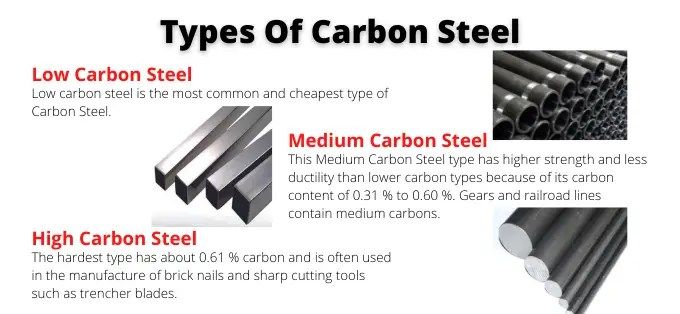
Before striking an arc, it is essential to understand what makes carbon steel unique. Carbon steel is an alloy consisting primarily of iron and carbon. The carbon content typically ranges from 0.05% to 2.1% by weight. This percentage significantly influences the metal's weldability, hardness, and tensile strength.
1. Low Carbon Steel (Mild Steel)
This is the most common form of carbon steel, containing between 0.05% and 0.25% carbon.
Weldability: Excellent.
Common Uses: Structural beams, automotive body panels, pipes, and general fabrication.
Why it is easy to weld: Low carbon steel does not readily form brittle microstructures when it cools rapidly. You can weld it with almost any process, and it rarely requires complex pre-heating or post-heating treatments.
2. Medium Carbon Steel
Containing between 0.25% and 0.60% carbon, this material strikes a balance between strength and ductility.
Weldability: Fair.
Common Uses: Axles, gears, shafts, rails, and structural components requiring higher strength than mild steel.
Welding Challenge: As the carbon content rises, the metal becomes more prone to cracking as it cools. Welding carbon steel in this range requires careful control of heat input and often necessitates pre-heating the base metal to slow the cooling rate.
3. High Carbon Steel
Containing between 0.60% and 1.50% carbon (and occasionally up to 2.0%), this is the hardest and most brittle class of carbon steel.
Weldability: Poor.
Common Uses: Cutting tools, high-strength wires, springs, and wear-resistant plates.
Welding Challenge: High carbon steel is notoriously difficult to weld without cracking. When heated and cooled rapidly (as happens in a typical weld), it forms a very hard, brittle crystalline structure called martensite. Successful welding in this category demands strict pre-heating, tightly controlled interpass temperatures, and immediate post-weld heat treatments (annealing or stress-relieving).
II. Popular Processes for Carbon Steel Welding
Choosing the right process is the first step in any successful carbon steel welding guide. Depending on your project’s scale, thickness, and environment, you might choose one of the following methods:
1. MIG Welding (GMAW)
Gas Metal Arc Welding, commonly known as MIG, is the go-to process for a vast majority of carbon steel fabrication. It uses a continuous solid wire electrode fed through a gun, along with an external shielding gas to protect the weld pool.
Why it's great for carbon steel: It is incredibly fast, efficient, and easy to learn. MIG welding produces very little spatter when dialed in properly, requires minimal post-weld cleanup, and is highly adaptable to both thin sheet metal and thick plate.
Best Shielding Gas: For mild carbon steel, a classic "75/25" mix (75% Argon and 25% CO₂) is the industry standard. It provides a stable arc and great penetration. For spray-transfer on thicker plates, a 90% Argon / 10% CO₂ mix is preferred.
2. Stick Welding (SMAW)
Shielded Metal Arc Welding, or Stick welding, is the oldest and most rugged method for welding carbon steel. It uses a consumable electrode covered in a flux coating. As the rod burns, the flux creates its own shielding gas and leaves a layer of slag over the weld.
Why it's great for carbon steel: Stick welding is the ultimate field process. It requires no external gas tanks, making it highly portable. More importantly, Stick welding is incredibly forgiving on dirty, rusty, or painted carbon steel. It burns right through surface contaminants that would ruin a MIG or TIG weld.
Common Rods for Carbon Steel: * E6010 / E6011: Great for deep penetration on dirty metal or root passes on pipes.
E7018: The gold standard for structural steel. It is a low-hydrogen rod that produces incredibly strong, ductile welds on medium and thick-section carbon steels.
3. TIG Welding (GTAW)
Gas Tungsten Arc Welding uses a non-consumable tungsten electrode to create the arc and requires the welder to manually feed a separate filler rod.
Why it's great for carbon steel: TIG welding offers the highest level of control and aesthetic beauty. It creates zero spatter and allows the welder to fine-tune the heat input perfectly. It is the preferred choice for critical root passes on high-pressure carbon steel pipes and thin-gauge custom fabrication.
The Drawback: It is significantly slower than MIG or Stick and requires a high level of operator skill.
4. Flux-Cored Arc Welding (FCAW)
Flux-Cored welding is a wire-fed process similar to MIG, but the wire is hollow and filled with a flux compound. "Self-shielded" FCAW requires no external gas, while "dual-shield" uses both the internal flux and an external gas shield.
Why it's great for carbon steel: It offers massive deposition rates (melting a lot of wire quickly). Self-shielded flux-cored is heavily used in outdoor construction because, like Stick welding, the gas cannot blow away in the wind. Dual-shield flux-cored is favored in heavy manufacturing for its ability to weld thick plates extremely fast.
III. The Definitive Carbon Steel Welding Guide: Step-by-Step
To achieve professional-grade results when welding carbon steel, a structured approach is essential. Follow these non-negotiable steps to ensure structural integrity and a clean finish.
Step 1: Material Identification and Cleaning
While we mentioned that Stick welding can burn through dirt, the best practice for any weld is to start with clean metal.
Mill Scale: Carbon steel is often covered in a dark gray, flaky layer called mill scale, which forms during the hot-rolling process. Welding over mill scale can cause arc instability and lead to a lack of fusion. Use a wire brush or an angle grinder to remove it down to shiny, bare metal.
Rust and Paint: Always remove heavy rust and paint from the weld zone. These contaminants introduce hydrogen and oxygen into the weld puddle, leading to porosity (tiny air pockets that weaken the joint).
Step 2: Edge Preparation and Fit-Up
If you are welding thin sheet metal (under 1/8 inch), a simple square butt joint is usually fine. However, as the thickness increases, you must create a gap or bevel the edges to ensure complete penetration.
Beveling: For steel thicker than 1/4 inch, grind the edges into a V-groove or a J-groove. This allows the weld arc to reach the bottom of the joint, ensuring the entire cross-section is fused.
Tack Welding: Carbon steel expands when heated. To prevent the parts from pulling apart or warping during the main weld, place small "tack welds" every few inches to lock the parts in place.
Step 3: Selecting the Right Filler Metal
You must match your filler metal to the mechanical properties of your base steel. Filler metals are classified by their tensile strength.
For standard mild steel (like A36 structural steel), the target tensile strength is usually 70,000 psi.
If MIG welding, use ER70S-6 wire. The added silicon and manganese act as deoxidizers to help clean the weld pool.
If Stick welding, use E7018 or E6010 rods.
Pro-Tip on Stick Rods: The "70" in E7018 stands for 70,000 psi of tensile strength. The "1" means it can be used in all positions (flat, vertical, overhead), and the "8" indicates the low-hydrogen flux coating.
Step 4: Machine Settings and Technique
Setting up your machine requires balancing wire speed (amperage) with voltage.
If it crackles like bacon (MIG): You are in a good short-circuit transfer mode.
If it pushes your hand back: Your wire speed is too fast for your voltage.
If the arc is massive and hissing: Your voltage is too high, or you have entered a spray-transfer mode (which requires a specific gas mix).
When manipulating the torch, you can either push or pull the puddle.
Pushing (Forehand): Directs the heat away from the completed weld. It produces a flatter bead and less penetration.
Pulling/Dragging (Backhand): Directs the heat back into the weld puddle. It produces a narrower, more built-up bead and offers the deepest penetration. A common industry saying goes: "If there is slag, you must drag." (Always pull/drag Stick and Flux-Cored welds).
IV. Managing Heat: Preheating and Cooling
A critical aspect of a carbon steel welding guide is understanding "Heat Affected Zones" (HAZ). As the carbon content increases, so does the risk of hydrogen cracking.
Preheating: For medium and high carbon steels, heating the metal to a specific temperature (usually between 200°F and 500°F) before welding slows the cooling rate, reducing internal stress.
Slow Cooling: Avoid quenching high-carbon welds in water. Instead, wrap them in a thermal blanket or bury them in sand to allow the molecular structure to stabilize slowly.
V. Common Challenges and How to Fix Them
Porosity: Often caused by inadequate shielding gas or wind blowing the gas away. Check your flow meter and look for drafts.
Undercut: A groove melted into the base metal next to the weld. This is usually caused by excessive voltage or improper torch angle.
Spatter: Common in MIG and Stick. Reducing your wire speed or switching to a higher Argon gas mix can help.
VI. Advanced Tip: Welding Dissimilar Metals
A common task in many fabrication shops is joining carbon steel to other alloys, most frequently stainless steel.
Challenge: You cannot use standard carbon steel filler metal (like ER70S-6) or standard stainless filler metal (like 308L). If you do, the chemistry of the weld pool will be diluted, leading to a brittle joint that will crack almost immediately.
Solution: You must use a highly alloyed filler metal like 309L. 309L contains extra chromium and nickel, which accounts for the dilution from the carbon steel side while maintaining a strong, corrosion-resistant austenitic structure.
Conclusion
Mastering welding carbon steel is the true dividing line between a beginner and a master fabricator. Carbon steel may be the most common metal on Earth, but its deceptive simplicity hides a world of complex metallurgy.
By understanding the grade of carbon steel you are working with, selecting the appropriate carbon steel welding methods for your environment, and strictly managing your heat input through proper pre-heating on high-carbon materials, you can produce welds with unmatched mechanical integrity and visual appeal.
Every skyscraper, every bridge, and every heavy machine started as raw carbon steel and a welder's vision. With the fundamentals outlined in this guide, you hold the key to building the modern world.