If you’ve ever tried to weld a leaf spring, a high-strength tool, or a piece of heavy machinery and watched the weld literally "ping" and crack right before your eyes, you’ve experienced the frustration of high carbon steel.
High carbon steel (metal with a carbon content between 0.60% and 1.00%) is prized in the industrial world for its hardness, strength, and wear resistance. However, those same qualities make it a nightmare to weld. Without the right approach, the heat of the arc turns the metal brittle, leading to immediate or delayed cracking.
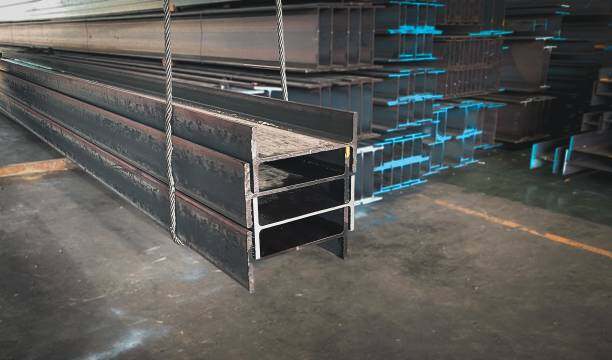
In this guide, we’ll dive deep into MIG welding high carbon steel. We’ll cover everything from metallurgical "why" to the practical "how," including preheating schedules, parameter settings, and the cooling techniques that ensure a professional-grade, crack-free joint.
I. Why Is High Carbon Steel So Difficult to Weld?
To master the technique, you have to understand the enemy. In low carbon steel (mild steel), the metal is "forgiving." It can handle rapid heating and cooling without changing its internal structure too much.
High carbon steel is different. When you strike an arc on high carbon steel, the metal reaches a high temperature and then cools very quickly once the torch moves away. This rapid cooling creates a structure called Martensite. Martensite is incredibly hard, but it is also as brittle as glass.
Additionally, high carbon steel is highly susceptible to Hydrogen Induced Cracking (HIC). If moisture or grease is present, hydrogen gets trapped in the weld. Because the metal is so hard and under so much internal stress from the heat, that trapped hydrogen acts like a wedge, forcing the weld to split.
II. Essential Preparation: The Pre-Weld Checklist
You cannot simply walk up to high carbon steel and start welding. Success is 80% preparation and 20% trigger time.
1) Cleanliness is Non-Negotiable:
Since hydrogen is the enemy, you must remove every source of it.
Grind it: Remove all mill scale, rust, and paint at least two inches back from the joint.
Degrease it: Use a dedicated solvent to remove oils.
Dry it: Even humidity on the metal can cause issues. A quick pass with a torch to "sweat" out moisture is a good habit.
2) Beveling and Fit-up:
Because high carbon steel doesn't flow as easily as mild steel, you need a proper bevel (V-groove) to ensure full penetration. Avoid tight "butt joints" on thick sections; a 60-degree included angle is usually ideal.
III. The Secret Ingredient: Preheating
If you take only one tip from this article, let it be this: You must preheat high carbon steel. Preheating serves two vital purposes:
It slows down the cooling rate, preventing the formation of that brittle martensite.
It expands the metal slightly, reducing the "shrinkage" stress that pulls the weld apart as it cools.
Recommended Preheating Temperatures
Pro Tip: Use "Tempilstiks" (temperature-indicating crayons) or an infrared thermometer to ensure the metal is heated evenly. Heating just the edge isn't enough; you need to soak the heat into the bulk of the part.
IV. Choosing the Right MIG Welding Parameters
When setting up your MIG welding settings, your goal is to minimize the "Heat Affected Zone" (HAZ) while ensuring the filler metal blends properly.
1. Filler Metal Selection:
Don’t grab a standard roll of ER70S-6 and expect it to work on high-strength tools. While ER70S-6 can be used for some high carbon applications, it often lacks the ductility needed.
Low Hydrogen Options: Specialized wires like ER80S-D2 or even stainless steel wires (like 309L) are often used. Stainless steel wire is more ductile and can "soak up" the stress that would otherwise crack carbon steel.
Match the Strength: If the part is structural, ensure the tensile strength of the wire matches the base metal.
2. Shielding Gas:
A standard C25 mix (75% Argon / 25% CO2) is usually the best all-rounder. The CO2 provides the necessary penetration, while the Argon keeps the arc stable. For very thick sections where you need even more heat, a 90/10 mix or even a tri-mix can be used.
3. Voltage and Wire Feed Speed:
Think "Hot and Fast": You want enough voltage to ensure the puddle "wets out" (flows) into the edges of the bevel. If the voltage is too low, the weld will sit on top of the metal, creating a stress riser at the toe of the weld.
Avoid "Short-Circuit" on Thick Parts: For heavy industrial parts, use Spray Transfer mode. This requires higher voltage and a higher Argon gas mix, but it ensures the deep fusion necessary to prevent the weld from simply peeling off the high carbon base.
V. Welding Technique for Crack Prevention
How you move the torch matters just as much as the settings.
Stringer Beads over Weave Beads: Do not use wide weaving motions. A wide weave puts too much heat into the metal at once, enlarging the brittle Heat Affected Zone. Instead, use multiple narrow "stringer" beads.
Avoid Arc Strikes: Never strike your arc outside of the weld joint. An arc strike on the cold surface of high carbon steel creates a tiny spot of martensite that will almost certainly turn into a crack later.
Crater Filling: When you reach the end of a weld, don't just pull the trigger and stop. This leaves a "crater" which is the weakest point. Back-step slightly or dwell for a second to ensure the crater is fully filled and rounded.
VI. Post-Weld Heat Treatment: The "Slow Cool"
The most dangerous time for high carbon steel is the first 10 minutes after the arc stops. If the metal hits a cold concrete floor or a draft of wind hits it, it will crack.
Maintain Interpass Temperature: If you are doing multiple passes, don't let the metal cool down below your preheat temperature between beads.
Post-Heating: Once the welding is done, apply heat again for 15–30 minutes to let the stresses equalize.
Controlled Cooling: Wrap the part in a welding blanket or bury it in a bucket of dry sand or lime. The goal is to make it take hours, not minutes, to reach room temperature. If you can still feel heat in the part four hours later, you’ve done it right.
VII. Comparison Table: Mild Steel vs. High Carbon Steel MIG Welding
| Feature | Mild Steel (Low Carbon) | High Carbon Steel |
| Preheating | Usually not required | Mandatory (400°F - 900°F) |
| Filler Metal | ER70S-6 (Standard) | ER80S, ER90S, or Stainless (309L) |
| Cooling | Air cool | Controlled slow cool (Sand/Blanket) |
| Crack Risk | Low | Very High (Hydrogen/Brittle) |
| Joint Prep | Standard cleaning | Extreme degreasing/beveling |
| Heat Control | Forgiving | Critical (Minimize HAZ) |
VIII. Troubleshooting Common Defects
1. Centerline Cracking:
The Cause: The weld bead is too deep and narrow, or the cooling stress is too high.
The Fix: Increase the width of your bead slightly (not a wide weave, just a slower stringer) and ensure your preheat is high enough.
2. Porosity:
The Cause: Contamination or gas coverage issues.
The Fix: High carbon steel "gasses off" more than mild steel. Ensure your metal is 100% clean and increase your gas flow slightly if welding in a drafty area.
3. Toe Cracks:
The Cause: The "Heat Affected Zone" is too brittle.
The Fix: Use a "temper bead" technique. Lay a final bead slightly overlapping the edges of the previous beads to "re-heat" and soften the brittle area next to the weld.
IX. FAQs: Mastering High Carbon MIG
Q1: Can I MIG weld high carbon steel without preheating?
On very thin sections (less than 1/8 inch), you might get away with it if using a 309L stainless filler, but for any structural or industrial part, welding without preheat is almost guaranteed to result in failure.
Q2: Is gasless flux-core okay for high carbon steel?
Q3: Why did my weld crack two days later?
Q4: Can I use 100% CO2 gas?
You can, but it creates more spatter and a more "violent" arc. For high carbon steel, arc stability is key to preventing defects, so an Argon/CO2 mix (C25) is highly recommended.
Conclusion: The Importance of a Stable Arc
Welding high carbon steel is a test of a welder's patience and technical knowledge. It requires a deep understanding of heat control and a commitment to the "boring" parts of the job—the cleaning, the preheating, and the slow cooling.
However, even with perfect technique, your results are limited by the consistency of your welding machine. High carbon steel is extremely sensitive to fluctuations in voltage and current; a momentary "hiccup" in the arc can create a cold spot that turns into a crack.
In heavy industrial settings where the cost of a failed weld can be thousands of dollars in downtime, you need a power source that offers unshakeable stability. Megmeet heavy-duty industrial welding machines are engineered for these exact challenges. With advanced digital control systems that monitor arc characteristics thousands of times per second, Megmeet machines provide the ultra-stable arc necessary to manage the narrow window of success that high carbon steel requires. Whether you are using specialized pulse programs to reduce heat input or high-amperage spray transfer for thick sections, Megmeet delivers the precision and reliability that professional industrial welders depend on.
Related articles:
1. Industrial MIG Welding: Setting the Correct Parameters
2. How to Adjust the Current and Voltage of MIG Welding?
3. A Comprehensive Guide to Pulse MIG Welding
4. Shielding Gases for TIG & MIG Welding: which gas is best?
5. Pulsed MIG Welding Aluminum and Stainless Steel