Welding is a versatile and crucial process in various industries, from construction to manufacturing. Two popular welding methods often used are Stick Welding (Shielded Metal Arc Welding or SMAW) and MIG Welding (Gas Metal Arc Welding or GMAW). Both processes have their unique characteristics and applications, making them suitable for different welding needs. In this in-depth guide, we'll explore the differences between Stick Welding and MIG Welding, helping you understand when and why to choose one over the other.
1. Stick Welding (SMAW)
Stick welding, also known as Shielded Metal Arc Welding (SMAW), is one of the oldest and most straightforward welding processes. It involves the use of a consumable electrode coated in flux. Here's how it works:
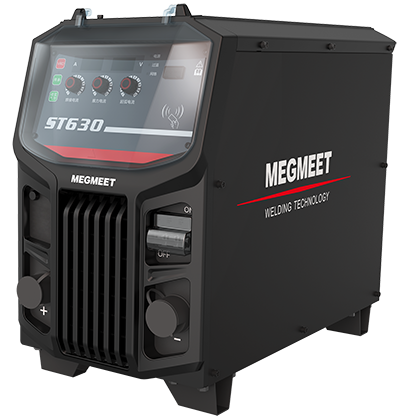
1.1. How Stick Welding Works
The welder strikes an arc between the electrode and the workpiece.
The heat generated by the arc melts the electrode's core and the base metal, creating a molten pool.
The flux coating on the electrode releases gases that shield the molten weld pool from atmospheric contaminants.
As the molten pool cools, it solidifies and forms a strong weld.
1.2. Advantages of Stick Welding
Portability: Stick welding equipment is compact and doesn't require a shielding gas, making it highly portable.
Versatility: Stick welding can be used on various metals, including steel, stainless steel, and cast iron.
Outdoor Use: Stick welding is suitable for outdoor applications, as wind and weather conditions do not affect the process significantly.
Low Equipment Cost: Stick welding machines are typically more affordable than MIG welding equipment.
1.3. Limitations of Stick Welding
Slower Welding Speed: Stick welding is generally slower than MIG welding, making it less efficient for large-scale projects.
Skill Requirement: Achieving high-quality stick welds can be challenging and requires practice.
Limited Welding Positions: Stick welding is less versatile in terms of welding positions compared to MIG welding. Post-Weld Cleanup: Stick welding leaves slag that needs to be chipped off after welding.
2. MIG Welding (GMAW)
MIG welding, or Gas Metal Arc Welding (GMAW), is a more modern welding process that utilizes a continuous wire electrode and a shielding gas. Here's how it works:
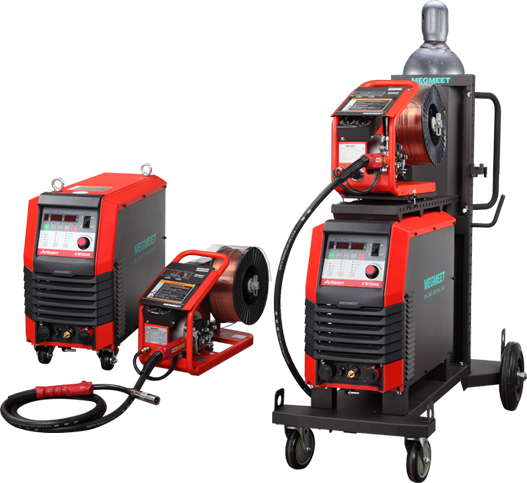
2.1. How MIG Welding Works
A wire electrode is fed continuously through a welding gun. The welding machine sends an electrical current through the wire, creating an arc between the wire and the workpiece. Simultaneously, a shielding gas, typically a mix of argon and carbon dioxide, is released through the welding gun to protect the weld from atmospheric contaminants. The arc melts the wire and the base metal, creating a molten pool that solidifies to form a weld.
2.2. Advantages of MIG Welding
High Welding Speed: MIG welding is a fast and efficient process, making it suitable for high-production environments.
Clean Welds: MIG welding produces clean, spatter-free welds with minimal post-weld cleanup.
Easy to Learn: MIG welding is relatively easy to learn, making it accessible to beginners.
Versatility: MIG welding can be used on various metals, including steel, aluminum, and stainless steel.
2.3. Limitations of MIG Welding
Equipment Cost: MIG welding equipment is typically more expensive than Stick welding equipment.
Shielding Gas Dependency: MIG welding relies on a continuous supply of shielding gas, which may not be suitable for outdoor use in windy conditions.
Less Portability: MIG welding machines are bulkier and less portable compared to Stick welding machines.
Limited Metal Thickness: MIG welding may not be suitable for very thick materials, as it's more commonly used for thinner metals.
Related articles: MIG Welding Tips From Megmeet, MIG Welding VS. MAG Welding: Welding Processes Comparison
3. Differences Between Stick Welding and MIG Welding
Now that we've discussed the fundamentals of both welding processes, let's delve deeper into the key differences between Stick and MIG welding.
| Category | Stick Welding (SMAW) | MIG Welding (GMAW) |
|---|
| Full Name | Shielded Metal Arc Welding | Gas Metal Arc Welding |
| Basic Principle | Uses a flux-coated consumable electrode to create an arc between the electrode and base metal. The flux forms a gas shield and slag to protect the weld pool. | Uses a continuously fed wire electrode and shielding gas (e.g., argon or CO₂) to protect the weld from atmospheric contamination. |
| Shielding Method | Flux coating produces gas and slag for shielding. | External shielding gas supplied from a cylinder. |
| Equipment Complexity | Simple and compact — power source and electrode holder only. | More complex — requires power source, wire feeder, torch, and gas supply. |
| Welding Speed | Slower, due to frequent electrode replacement. | Faster, continuous wire feed allows higher deposition rate. |
| Weld Appearance | Slightly rougher surface; slag must be removed after welding. | Smooth, clean welds with minimal spatter or slag. |
| Skill Requirement | Requires higher skill level to control arc length and slag coverage. | Easier to learn and produces consistent results with less training. |
| Portability | Highly portable; ideal for on-site or field repairs. | Less portable due to gas cylinders and wire feeders. |
| Outdoor Suitability | Excellent — not affected much by wind or weather. | Poor — shielding gas can be disrupted by wind; best used indoors. |
| Material Thickness | Suitable for thick materials and heavy sections. | Best for thin to medium-thickness metals. |
| Material Types | Mild steel, stainless steel, cast iron, and low-alloy steels. | Carbon steel, stainless steel, and aluminum. |
| Penetration Depth | Deep penetration, ideal for structural and heavy-duty joints. | Shallow to medium penetration, depending on settings and wire type. |
| Post-Weld Cleanup | Requires slag removal. | Minimal cleanup required; no slag formation. |
| Deposition Rate | Lower. | Higher. |
| Typical Applications | Construction, pipelines, heavy fabrication, maintenance, shipbuilding. | Automotive, manufacturing, sheet metal work, robotics, general fabrication. |
| Equipment Cost | Lower initial cost; simple power source. | Higher initial cost due to gas and feeder systems. |
| Operating Cost | Lower overall cost; electrodes are inexpensive. | Slightly higher due to gas and wire consumption. |
| Ease of Automation | Difficult to automate; mainly manual. | Easily automated and used in robotic welding systems. |
| Weld Quality Consistency | Depends heavily on operator skill. | High consistency with proper setup and parameters. |
4. Applications of Stick and MIG Welding
Each welding process has its niche and is better suited for specific applications:
4.1. Stick Welding Applications
Construction: Stick welding is commonly used for on-site construction and repairs, particularly for structural steel.
Pipeline Welding: It's a preferred method for welding pipelines, as it can handle the rigors of outdoor conditions.
Maintenance and Repairs: Stick welding is suitable for general maintenance and repair work across various industries.
Heavy Fabrication: It's ideal for thicker materials and heavy fabrication projects.
4.2. MIG Welding Applications
Automotive Industry: MIG welding is widely used in the automotive sector for its speed and versatility, especially for welding thin sheet metals.
Manufacturing: It's the go-to choice for manufacturing industries due to its high production efficiency.
Sheet Metal Fabrication: MIG welding is perfect for welding thin metals in applications like HVAC systems and appliance manufacturing.
DIY and Hobbyist Projects: Beginners and DIY enthusiasts often prefer MIG welding for its ease of use.
5. Which Process Should You Choose?
Environment: Outdoor fieldwork → Stick. Controlled indoor shop → MIG.
Production volume: High throughput or repeatable welds → MIG. One-off repairs → Stick.
Material thickness: Thick sections and dirty/painted surfaces → Stick; thin sheet or aluminum → MIG (with proper setup).
Skill & training: Less-experienced operators will get consistent results quicker with MIG. Experienced welders can achieve high-quality, adaptable results with SMAW.
Budget & logistics: If portability and low equipment cost are priorities → Stick. If throughput and finish quality justify higher equipment cost → MIG.
6. FAQs of SMAW and MIG Welding:
Q1: Is stick welding stronger than MIG welding?
A: Strength depends on joint design, penetration and procedure. Stick welding can achieve deep penetration in thick sections; MIG provides consistent, high-quality welds for thinner materials.
Q2: Which process is better for beginners?
A: MIG is generally easier to learn and produces acceptable results faster; stick requires more technique to master.
Q3: Can MIG be used outdoors?
A: MIG can be used outdoors with proper shielding (e.g., gasless flux-cored wire) or wind protection, but standard MIG with gas is best in controlled environments.
Q4: What maintenance does each process require?
A: Stick needs electrode storage and basic power-source maintenance. MIG needs wire feed maintenance, liner care and gas system checks.
Q5: Are consumable costs higher for one method?
A: Consumable costs vary by application, but MIG wire and shielding gas can make operating costs higher in continuous production; stick electrode costs are typically lower per unit but slower deposition can affect total cost.
Conclusion
In summary, Stick Welding (SMAW) and MIG Welding (GMAW) are two distinct welding processes, each with its set of advantages and limitations. The choice between the two depends on various factors, including the type of project, materials being welded, skill level, and environmental conditions.
Stick welding excels in outdoor and rugged environments, making it suitable for construction, pipeline welding, and maintenance work. On the other hand, MIG welding offers higher speed and efficiency, making it the preferred choice for industries like automotive manufacturing, sheet metal fabrication, and high-production settings.
Understanding the differences between Stick and MIG welding allows you to make informed decisions and select the right welding method for your specific needs. Whether you're a seasoned professional or a method for your specific needs. Whether you're a seasoned professional or a novice welder, knowing both processes can expand your welding capabilities and enhance your project outcomes.
Related articles:
1. MIG vs. TIG Welding Machines Based on Every Application
2. CO2 Gas Shielded Welding VS. Manual Welding VS. TIG Welding
3. Spot Welding vs. TIG Welding vs. MIG Welding: Differences & How to Choose?
4. Arc Welding vs. Laser Welding: The Key Differences
5. MIG vs. TIG Welding vs. Arc Welding vs. Other Welding Types