Welding is an essential process in industrial production, and the choice of techniques and methods directly impacts product quality and production efficiency. Among numerous welding methods, Submerged Arc Welding (SAW) and Gas Shielded Welding (GMAW) stand out for their distinctive characteristics and widespread applications. This article provides an in-depth analysis of their pros and cons, application scenarios, and a brief introduction to Megmeet's SA1000/SA1250 Submerged Arc Welding Machines and Ehave2 CM 350/500/630M multifunctional gas-shielded welding machines, exploring the strengths and suitability of these advanced devices.
I. What is Submerged Arc Welding?
Submerged Arc Welding (SAW) is a welding process that generates heat through an electric arc between a continuously fed electrode and the workpiece. The weld area is protected by a blanket of granular flux, which minimizes oxidation and contamination during the process.
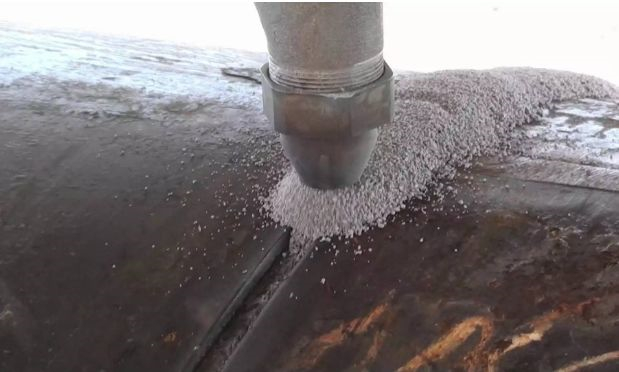
1)Advantages of Submerged Arc Welding:
High Welding Speed: SAW can achieve high welding speeds, making it suitable for large-scale production tasks.
Excellent Weld Quality: The granular flux covering the weld minimizes oxidation and gas inclusions, resulting in superior mechanical properties and aesthetic quality of the weld.
High Degree of Automation: SAW is easily integrated with automated systems, reducing labor costs and improving productivity.
Versatile Application: Capable of welding various thicknesses and materials, it is widely used in industries such as shipbuilding, boilers, and pressure vessels.
Reduced Welding Fumes and Gases: Compared to other methods, SAW generates less smoke and fumes, enhancing workplace safety.
Strong Weld Joints: Weld joints typically exhibit higher strength than the base materials, making them ideal for heavy-duty structures.
Cost-Effective Operation: Despite the high initial equipment investment, its efficiency and low consumable costs lead to lower overall operational expenses.
2)Disadvantages of Submerged Arc Welding:
High Equipment Costs: The initial investment in SAW equipment and accessories is significant, making it more suitable for large-scale operations.
Unsuitability for Thin Materials: SAW is not ideal for welding thin materials due to the high heat input, which can cause warping or defects.
Limited Welding Positions: It is primarily used for flat welding, with reduced adaptability for vertical or overhead positions.
Complex Control of Molten Metal: Maintaining optimal parameters is crucial to avoid weld defects, requiring precise control of molten metal.
Environmental Sensitivity: External factors like airflow can affect the quality of the weld, especially in unsealed environments.
Joint Preparation: SAW often requires extensive joint preparation to ensure high-quality welds.
3)About Megmeet SA1000/SA1250 Submerged Arc Welding Machines:
Megmeet's SA1000/SA1250 series submerged arc welding machines are renowned for their exceptional performance and efficiency. These versatile devices integrate SAW, carbon arc gouging, and manual arc welding functions. They are ideal for high-quality welding in industries like boilers, pressure vessels, shipbuilding, steel structures and wind energy, particularly for medium and thick plate applications.
.png "Megmeet SA1000/SA1250 series submerged arc welding machines")
II. What is Gas Shielded Welding?
Gas Shielded Welding (GMAW), often referred to as MIG/MAG welding, utilizes inert or active gases like argon or carbon dioxide to protect the weld area from oxidation and contamination. This method is highly effective for joining a wide range of materials.
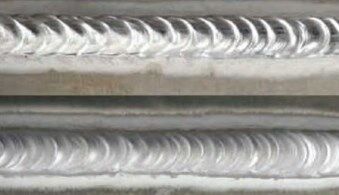
1)Advantages of Gas Shielded Welding:
Fast Welding Speed: GMAW supports rapid welding, making it efficient for high-volume production, especially with thin materials.
High Weld Quality: Gas shielding prevents oxidation and gas inclusions, resulting in clean, high-quality welds with minimal defects.
Wide Material Compatibility: Suitable for welding various metals and alloys, GMAW adapts well to different material thicknesses.
Flexible Operation: The equipment is relatively simple, enabling operations in multiple welding positions such as flat, vertical, and horizontal.
Lower Skill Requirement: Compared to other welding methods, GMAW is easier for operators to learn and use effectively.
Minimal Heat-Affected Zone: GMAW’s controlled heat input reduces the heat-affected zone, minimizing material deformation and residual stress.
Environmental Benefits: Produces less smoke and harmful gases compared to many other welding methods.
Continuous Feeding Mechanism: Continuous wire feeding enhances efficiency and ensures consistent weld quality.
Versatile Welding Modes: GMAW supports short-circuit, spray, and pulsed modes, catering to different welding requirements.
2)Disadvantages of Gas Shielded Welding
High Equipment Costs: The cost of GMAW equipment and gas supplies is higher compared to manual welding methods.
Wire Consumption: Continuous wire feeding increases consumable usage, raising operating costs.
Environmental Limitations: GMAW is sensitive to wind and humidity, making it less suitable for outdoor or challenging environments.
Position Limitations: While adaptable, certain positions like overhead welding can be more challenging.
Skill Requirements: Operators must possess basic skills to adjust parameters and handle the equipment effectively.
Larger Heat-Affected Zone: The higher heat input can lead to larger heat-affected zones, potentially impacting material properties.
Gas Shielding Challenges: Insufficient gas flow or shielding can result in weld oxidation or porosity.
Pre-Weld Preparation: GMAW often requires meticulous joint preparation to ensure optimal results.
3)About Ehave2 CM 350/500/630M Multifunctional Gas Shielded Welding Machines
The Ehave2 CM series multi-process industrial intelligent welding machine is celebrated for its flexible operation and outstanding performance. Combining multiple welding processes, including CO₂, MAG, MIG, TIG, and MMA, these machines support versatile applications. They can even function as dedicated arc welding power sources for robots. With over 20 proprietary technologies like arc ignition control and soft arc transition, these machines offer unparalleled reliability and welding quality.
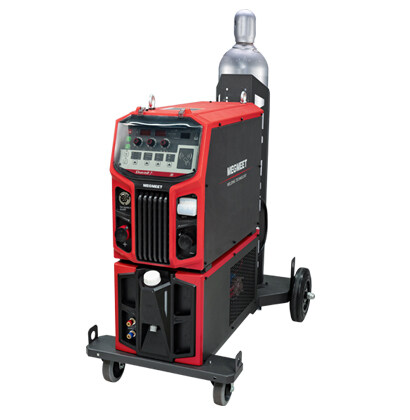
III. Comparing Submerged Arc Welding and Gas Shielded Welding
| Category | Submerged Arc Welding (SAW) | Gas Shielded Welding (GMAW/MIG/MAG/TIG) |
|---|
| Definition | A welding process where the arc is submerged under a layer of granular flux, providing protection and stabilizing the arc. | Welding processes that use shielding gas (CO₂, Ar, Ar-mixes) to protect the molten pool from atmospheric contamination. |
| Shielding Method | Granular flux covers the arc and weld pool. | External gas (CO₂, Ar, He, or mixtures). |
| Welding Visibility | Arc is hidden—no visible light (no spatter). | Arc fully visible to the operator. |
| Process Types | Single-wire SAW, twin-wire, tandem SAW, multi-arc SAW. | MIG/MAG, TIG, Pulsed MIG, Synergic MIG, etc. |
| Typical Welding Positions | Mostly flat or horizontal due to heavy fluid weld pool. | Suitable for all positions (flat, horizontal, vertical, overhead). |
| Deposition Rate | Very high (up to 45 kg/hr or more). | Moderate (5–15 kg/hr depending on process). |
| Penetration | Deep penetration, ideal for thick plates. | Variable—can be low (TIG) to high (MAG). |
| Weld Quality | High-quality weld, minimal spatter, excellent mechanical properties. | Generally good, but more sensitive to parameters and gas composition. |
| Heat Input | High heat input. | Lower or medium heat input depending on settings. |
| Suitability for Thin Sheet | Poor—excessive melting and heat. | Good—especially in MIG/TIG processes. |
| Automation Level | Mostly automated or semi-automated; ideal for long seams. | Easily automated; widely used for robots and production lines. |
| Equipment Complexity | Large, heavy, industrial systems. | More compact, portable, and flexible. |
| Power Source | Requires high-power machines (transformer or inverter SAW systems). | Medium-power inverter MIG/MAG/TIG systems. |
| Applications | Heavy fabrication: shipbuilding, pressure vessels, wind towers, pipelines, bridges, thick steel structures. | General fabrication, automotive, thin sheet metal, pipe welding, aluminum/stainless steel welding. |
| Material Compatibility | Mostly carbon steel and low-alloy steel. | Wide range: carbon steel, stainless steel, aluminum, copper alloys, etc. |
| Production Speed | Extremely high for long welds. | Moderate; depends on process and robotic integration. |
| Operational Skill Requirement | Lower—mostly machine-controlled. | Moderate to high—operator skill influences quality. |
| Cost (Operation) | Cost-effective for bulk welding; high deposition reduces overall cost. | Higher due to shielding gas, spatter cleanup, and slower speed (vs. SAW). |
| Portability | Low—requires heavy flux equipment and large power sources. | High portability (especially inverter MIG/TIG/MAG). |
| Environmental Considerations | Minimal fumes (flux captures contaminants); no arc glare. | Fume and arc radiation present; proper ventilation required. |
| Ideal Use Cases | Long, straight, thick-plate welds; consistent production environments. | Flexible welding tasks, thin material, complex structures, multi-material welding. |
IV. Choose SAW or GMAW Welding for Your Application
When deciding between Submerged Arc Welding (SAW) and Gas Metal Arc Welding (GMAW), often referred to as MIG welding, there are several factors to consider. Both are arc welding processes, but they differ significantly in their application, efficiency, and the type of results they produce. The following is the main factors that you should consider:
1. Material Thickness and Joint Design
SAW excels on thick plate and long, straight seams.
GMAW adapts better to thin-to-medium materials and complex joints.
2. Production Volume & Automation
SAW is ideal for high-volume, automated welding with long continuous runs.
GMAW supports both manual and automated setups, offering flexibility for varied production.
3. Welding Speed & Efficiency
4. Weld Quality & Appearance
SAW produces clean, slag-free welds with excellent mechanical properties.
GMAW gives good appearance and minimal cleanup, especially with solid wire and shielding gas.
5. Work Environment & Accessibility
6. Cost & Equipment Considerations
SAW requires larger, more specialized equipment but is cost-effective for heavy fabrication.
GMAW has lower equipment investment and is economical for diverse, smaller, or mobile jobs.
Conclusion
Both SAW and GMAW have unique advantages and drawbacks. The choice of method depends on specific application needs and production goals. In large-scale industrial settings, SAW is favored for its efficiency and quality, while GMAW’s flexibility and adaptability make it ideal for smaller-scale and outdoor projects.
Megmeet's SA1000/SA1250 Submerged Arc Welding Machines and Ehave2 CM Gas Shielded Welding Machines cater to diverse welding requirements. Enterprises should evaluate their production circumstances and technical demands when choosing welding equipment to achieve the best outcomes.
By understanding the distinctions between these two welding methods, you can make informed decisions for future welding projects. Explore Megmeet's extensive product range to discover the perfect solution. Learn more about Megmeet Welding Technology.
Related articles:
1. MIG VS TIG Welding: What are the Differences?
2. MIG Welding VS. MAG Welding: What is the differences?
3. Three-phase Welding Machine VS. Single-phase Inverter Welding Machine
4. Laser Welding vs TIG Welding - What’s the Difference
5. GMAW vs. CO2 Welding: A Comparison of Two Metal Arc Welding Processes