In the world of industrial infrastructure, few jobs are as demanding as pipeline welding. Whether it is a high-pressure natural gas line crossing a desert or a municipal water main under a bustling city, the integrity of the weld is the only thing standing between a successful operation and a catastrophic leak.
For professional welders and project managers, the primary challenge isn't just the technique—it is the environment. Pipelines are often built in some of the most unforgiving places on Earth. In these remote locations, your welding machine is more than just a tool; it is your lifeline. A breakdown in the field doesn't just mean a few hours of downtime; it can mean stalled projects, massive financial penalties, and compromised safety.
In this guide, we will explore why durability is the non-negotiable standard for pipeline welding equipment and how modern digital technology is redefining what a "tough" machine can do.
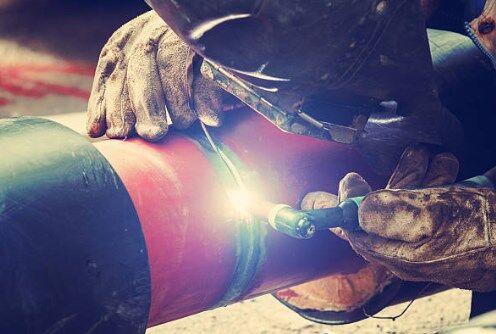
I. Why Durability is the Foundation of Pipeline Welding?
Pipeline welding often takes place far from the controlled environment of a fabrication shop. Equipment is subjected to extreme temperatures, physical impacts, and inconsistent power supplies.
1) Harsh and Remote Environments:
Machines must survive "scorching heat, freezing cold, and high humidity" without a drop in performance. In remote oilfields or high-altitude construction, there is no nearby service center. If a machine fails, it might take days to get a replacement or a technician to the site. This makes reliability the most important specification on the data sheet.
2) High Industrial Demands:
Projects operate on razor-thin schedules. A durable machine must handle "continuous operation" for 10 to 12 hours a day, day after day, without overheating.1 When a project has thousands of joints to complete, even a 15% reduction in rework—achievable through stable arc control—can save weeks of labor.
3) Safety and Structural Integrity:
A flickering arc or an unexpected power surge can cause internal defects like porosity or lack of fusion. In high-pressure pipelines, these flaws are unacceptable. A durable, digitally-controlled machine ensures a stable arc, which directly minimizes the risk of accidents and weld failures.
II. Anatomy of a Durable Pipeline Welding Machine
What actually makes a welding machine "durable"? It is not just a thick metal case. It is the engineering inside that protects the delicate electronics from the outside world.
1. Robust Physical Construction:
Pipeline equipment takes a beating. Look for machines with:
Solid Frames and Casings: Built to withstand rough handling during transport over rugged terrain.
IP23S Protection Rating: This certification ensures the machine is protected against solid objects and can withstand spraying water (rain), which is vital for outdoor fieldwork.
Vibration Resistance: Internal components, particularly the Printed Circuit Boards (PCBs), must be designed to resist the constant vibration and occasional collisions typical of construction sites.
2. Advanced Cooling and Power Management:
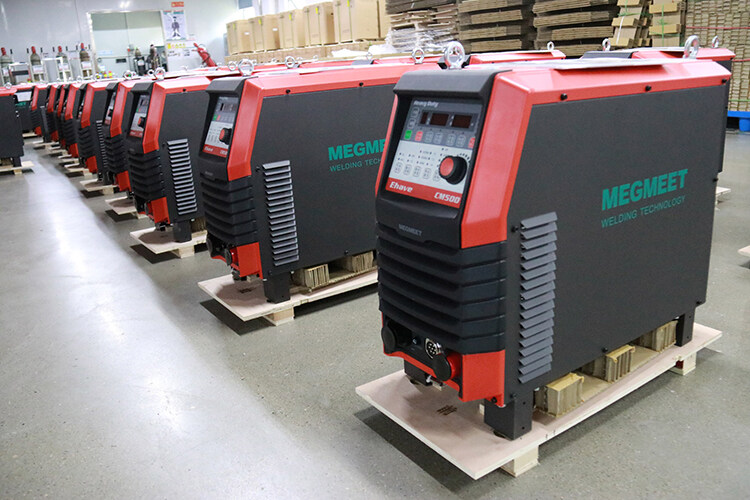
Heat is the enemy of electronics. Modern heavy-duty welders like the Megmeet Ehave and Artsen series utilize advanced cooling systems to maintain optimal temperatures.
Overheating Prevention: Intelligent fans and heat sinks allow for a 100% duty cycle at high currents, meaning the machine can weld at full power indefinitely without needing a break.
Voltage Fluctuation Tolerance: In the field, power often comes from portable generators. A durable machine must handle input voltage fluctuations of up to ±25% without affecting the arc quality.
III. Essential Technical Features for Pipeline Success
Choosing the right machine involves matching the technology to the specific challenges of the pipe.
1. Positional Welding Mastery (1G to 6G):
Pipe welding is rarely done in a comfortable flat position. Welders must work through the 1G (rolled), 5G (fixed horizontal), and the dreaded 6G (inclined) positions.
Vertical-Up Welding: This is the preferred direction for thick-walled pipes as it offers better pool control and deeper penetration.
Megmeet’s DP Fusion: This technology combines short-circuit and pulse waveforms to make vertical-up welding significantly easier, even without the traditional "weaving" technique.
2. Long-Distance Stability:
On massive projects like bridge construction or large-scale refineries, the power source might be 100 meters away from the actual joint.
Cable Compensation: Standard machines lose arc stability as the cable gets longer. High-end industrial units, such as the Megmeet Artsen2 CM500C series, are engineered to provide a stable arc even with 100-meter cables.
Remote Controls: Wireless or wired remote modules allow the welder to adjust current and parameters at the joint, eliminating the time-consuming "walk, adjust, return" cycle.
| Feature | Importance for Pipelines |
| IP23S Rating | Protects against rain and dust |
| VRD Function | Reduces shock risk in damp areas |
| Tranquil Fusion | Eliminates spatter, reduces cleaning |
| 100m Cable Support | Reaches remote joints easily |
| SMARC Cloud | Real-time monitoring and data |
IV. Choosing the Right Process for Your Project
While "Stick" welding (SMAW) remains popular for its portability, semi-automatic processes are quickly becoming the industry standard for speed and quality.
1. Shielded Metal Arc Welding (SMAW / Stick):
Best for: Remote site repairs and small-diameter pipes.
The Durable Choice: The Megmeet ST2 series (400A/500A/630A). These machines are built specifically for harsh environments like petrochemical plants and power construction.
2. Gas Metal Arc Welding (GMAW / MIG):
Best for: High-productivity shop fabrication and large-scale girth welds.
The Durable Choice: The Ehave2 CM500C, Artsen Plus or Dex2 series. These digital intelligent machines offer "Tranquil Fusion," which creates a soft arc with almost zero spatter, dramatically reducing the time spent grinding and cleaning.
3. Gas Tungsten Arc Welding (GTAW / TIG):
Best for: The critical "Root Pass" and high-purity pipelines (stainless steel).
The Durable Choice: The MetaTig series. It provides the high-frequency ignition and precision arc control needed for the internal seal of the pipe, ensuring 100% penetration.
V. Joint Preparation: The Unsung Hero of Pipeline Quality
Even the best welding machine cannot fix a poorly prepared joint. Success begins before the arc is ever struck.
Beveling: For pipes thicker than 3mm, the edges must be beveled (usually to 30℃ or 37.5℃) to allow the arc to reach the bottom of the joint.11
The Root Gap: Maintaining a consistent gap of 1.5mm to 4mm between the pipes is essential for "root runs"—the first pass that seals the internal diameter.
Cleaning: Removing oil, rust, and moisture prevents the "Holey Weld Horror" of porosity.
VI. The Future: IoT and Automated Management
The next generation of durable welding isn't just about hardware; it’s about data. Megmeet’s SMARC (Smart Management and Remote Control) platform allows managers to connect their fleet to the cloud.
Traceability: You can track the exact parameters used for every single weld on a pipeline, which is vital for quality audits.
Consistency: Automation and robotic integration (such as cobots for pipeline supports) ensure that every weld meets the exact same standard, regardless of human fatigue.
VII. Safety Standards in High-Risk Environments
Pipeline welding often happens in "confined spaces" like tunnels or inside large tanks.
Oxygen Depletion: Inert gases like Argon can displace oxygen, leading to suffocation.
Voltage Reduction Device (VRD): This is a critical safety feature for pipeline welders. It reduces the open-circuit voltage to a safe level (around 15V) when the machine is idle, preventing electric shocks in damp or metallic environments.
VIII. FAQs of pipeline welding
Q1: Why is an IP23S rating important for pipeline welding?
Q2: Can I weld on a pipeline that is still in service?
Q3: What is the advantage of a digital inverter over traditional machines?
Digital inverters, like those from Megmeet, monitor the arc thousands of times per second. This allows for features like "Tranquil Fusion" (low spatter) and "Consistent Fusion" (automatic adjustment for wire length), which are impossible with old-school analog machines.
Q4: How does "Vertical-Up" welding differ from "Vertical-Down"?
Conclusion
A durable welding machine is not an expense—it is an investment in your project's success. In the high-stakes world of pipeline construction, equipment failure is simply not an option. By choosing robust, digitally-advanced systems like the Megmeet Artsen or ST series, you are ensuring that your team has the stability, safety, and reliability they need to get the job done right the first time.
Whether you are performing a precision root pass on stainless steel or a heavy-duty fill in the 6G position, remember that the quality of your machine determines the quality of your weld.
Ready to invest in a durable welding machine for your pipeline projects? Contact Megmeet Welding Technology today to explore our range of high-quality welding solutions. Visit us at https://www.megmeet-welding.com/en/contacts to discover how we can help you achieve exceptional results in pipeline welding.
Related articles:
1. Internal and External Weld Seam Problems & Solutions of Pipeline
2. High Pressure Pipeline Welding Guide - Basics & Considerations
3. Seamless Steel Pipe Welding Technology (process, materials, etc.)
4. Pipeline Vertical Welding Methods Basics and Precautions
5. Common Pipeline Welding Methods (difficulties, solutions, cases)