I. Introduction: Why CO2 Welding Remains an Industrial Powerhouse
Carbon Dioxide welding, formally classified as Gas Metal Arc Welding using the Carbon Dioxide shielding gas (GMAW-C), is one of the most widely adopted processes in manufacturing and heavy fabrication. It is categorized under the Metal Active Gas (MAG) welding umbrella due to the reactive nature of the shielding gas. This process is distinguished by its operational efficiency, speed, and suitability for automation.
GMAW-C relies on a continuously fed electrode wire that is melted by an electric arc, with the molten weld pool protected from atmospheric contamination by a cloud of CO2 gas.
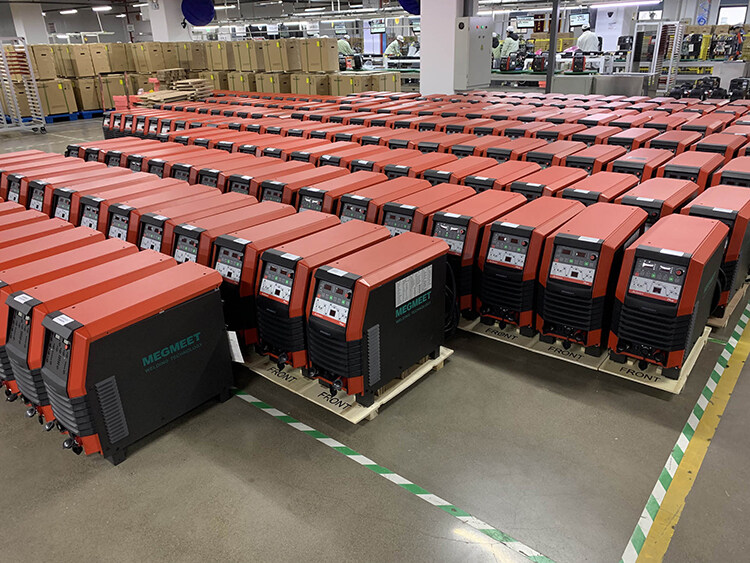
1) Preparation Before Welding
The inherent characteristics of GMAW-C provide significant economic and production advantages over legacy processes, such as Shielded Metal Arc Welding (SMAW). These benefits include dramatically higher efficiency and metal deposition rates, which directly translate to increased throughput in high-volume production environments.
Furthermore, the process results in significantly less slag, substantially reducing the post-weld cleaning and rework required, thereby lowering overall welding costs. For fabrication shops where speed and continuous operation are paramount, the continuous wire feed mechanism and high productivity make GMAW-C an optimal choice.
2) Process Limitations and Context
While highly productive, GMAW-C is not without operational constraints. The effectiveness of the gas shield is highly susceptible to air movement. The process requires windbreaks to maintain weld quality when not performed in a controlled environment. Moreover, relying on gas cylinders and feeding equipment inherently limits the mobility of the welder compared to processes like SMAW. This often means that GMAW-C is best employed in stationary, high-volume production lines or fixed fabrication bays rather than field applications.
II. The Fundamental Science of CO2 Shielding and Metallurgy
Understanding the successful application of GMAW-C requires a deep appreciation for the chemical and metallurgical dynamics occurring within the arc zone. Unlike Metal Inert Gas (MIG) welding, which uses non-reactive gases like Argon, CO2 is an active gas, making the GMAW-C process fundamentally a managed chemical reaction.
1) The Active Gas Dynamic: Dissociation and Oxidation Management
In the high heat of the welding arc, the CO2 gas does not remain stable; it undergoes dissociation, breaking down into carbon monoxide (CO) and highly reactive free oxygen (O).
2CO2→2CO+O2
This intentional introduction of active oxygen provides critical benefits: it helps stabilize the electric arc and contributes to deep weld penetration. However, if left unchecked, this oxygen would react with the molten base metal, leading to severe oxidation, weakening the weld, and causing defects such as porosity. The successful use of CO2 hinges entirely on counteracting this oxidation effect.
2) The Critical Role of Deoxidizers and Filler Metal Selection
To maintain the required mechanical properties of the finished weld metal, which must be similar to those of the base plate material, specialized metallurgical countermeasures must be integrated into the welding process. This necessity mandates the use of welding wires containing specific deoxidizing elements.
The primary deoxidizers used in solid carbon steel filler metals are Manganese (Mn) and Silicon (Si). These elements are engineered into the wire (for example, in AWS A5.18 classifications such as ER70S-6) to actively "scavenge" the free oxygen present in the weld pool. During the metal transfer phase, the oxygen reacts with these elements, forming stable compounds such as Silicon Dioxide (SiO2) and Manganese Oxide (MnO). These compounds are less dense than the molten steel, allowing them to float out of the weld pool and often remain as easily removable slag or scale on the weld surface, thus preventing porosity and ensuring the final mechanical integrity of the joint.
The reliance on these specialized, highly deoxidized wires represents the technical trade-off required to leverage the lower cost of the CO2 gas. The process is, therefore, a carefully controlled chemical reaction rather than a simple shielding mechanism.
3) Pure CO2 vs. Argon Mixtures: Penetration and Quality Trade-offs
The choice between pure CO2 and a mixed gas dictates the thermal characteristics and final appearance of the weld.
4) Pure CO2 (100% CO2)
Pure CO2 is the most economical shielding gas and provides maximum heat input, resulting in the deepest possible penetration. This is highly advantageous for welding thick sections and achieving the structural depth required in heavy fabrication. However, the high reactivity and intense arc energy inherently produce increased levels of weld spatter and a coarser weld ripple, demanding more time for post-weld cleanup.
5) Argon-CO2 Mixtures (e.g., C25)
For applications demanding a smoother cosmetic finish and lower spatter, mixtures of Argon and CO2 are employed. A common industrial mixture, often referred to as C25 (75% Argon/25% CO2), offers an excellent balance: good weld appearance, reduced spatter, and sufficient penetration. For thinner materials, where reducing the total heat input is crucial to prevent burn-through, mixtures with higher argon content (e.g., 80%–90% Argon) are preferred.7 The addition of argon stabilizes the arc and leads to cleaner, more manageable weld pools.
III. Core Equipment Configuration and Function
Successful GMAW-C relies on the cohesive operation of several specialized components, engineered to handle the continuous feed and high current density of the process.
1) The Constant Voltage (CV) Power Source Requirement
GMAW-C systems universally employ a constant voltage (CV) power source set on Direct Current Electrode Positive (DCEP) polarity. The CV design is essential because it allows the welding system to self-regulate the arc length. In the CV mode, a minor fluctuation in the arc gap automatically results in a large and immediate change in current, which quickly adjusts the rate at which the electrode melts, thereby stabilizing the arc length and ensuring consistent bead formation.
A critical design distinction of the industrial power source for this process is its ability to handle continuous short-circuiting. The short-circuiting mode of metal transfer, which dominates lower amperage CO2 welding, requires the power supply to sustain repeated, intentional short-circuit events hundreds of times per second. This requirement explains why the power circuit, unlike standard electrical circuits, is designed explicitly without traditional fuses or switches in the useful resistance path (the arc itself); standard fuses would constantly trip due to the necessary high current spikes.
2) Wire Feeding Mechanics and Current Control
The wire feeder is the primary mechanical component responsible for the continuous delivery of the solid electrode wire. Its setting, the Wire Feed Speed (WFS), is not merely a mechanical speed control; it serves a crucial electrical function. The WFS setting directly dictates the rate at which filler material is supplied to the arc, which, in turn, controls the Welding Current (IS). A higher WFS requires a corresponding increase in amperage to melt the faster-moving wire, establishing a direct link between mechanical input and electrical output.
3) Gas Delivery System: Regulation and Shielding Effectiveness
The gas delivery system manages the flow of the shielding gas from the cylinder to the torch. Key components include the gas cylinder, pressure regulator, and flow meter. The regulator reduces the high pressure of the stored gas to a manageable level, while the flow meter controls the volumetric rate at which the gas is supplied to the weld zone. Maintaining the correct flow rate is paramount; it ensures that the protective shield effectively displaces ambient oxygen and nitrogen, preventing atmospheric contamination that leads to defects.
4) Optimizing the Torch and Electrode Extension (Stickout)
The electrode extension, or "stickout," is defined as the length of the wire extending beyond the end of the contact tip. For GMAW-C, maintaining a relatively short stickout, typically between 6 to 13 mm (1/4 to 1/2 inch), is vital for maximizing productivity.
The practice of using a short electrode extension allows the process to operate at substantially higher current densities than other arc welding methods. This high density of current passing through a short length of wire facilitates a very high melting rate, resulting in exceptional metal deposition efficiency. If the stickout is allowed to increase, the resistive heating losses rise unnecessarily, dropping the current density at the arc, reducing the melting rate, and compromising the high-efficiency advantage inherent to the process. Consistent control of the stickout is therefore a non-negotiable technique for optimizing industrial speed.
IV. Mastering Parameter Control and Metal Transfer Modes
The success of GMAW-C relies on mastering the critical relationship between welding current (IS) and welding voltage (US). These two parameters must be finely tuned to ensure a stable arc and the desired mode of metal transfer.
1) The Interdependent Variables: Voltage, Current, and WFS
The current (IS) is primarily controlled by the Wire Feed Speed (WFS), while the voltage (US) is controlled by a separate setting on the power unit. The electrical efficiency of the weld—including penetration, bead shape, and spatter levels—is acutely sensitive to their proper balance.
A commonly used approximation for maintaining a stable arc relationship, particularly at higher amperages, is given by the formula:
Us≈14+0.05·Is
This relationship holds generally true for amperages up to 600 A when using pure CO2. If mixed shielding gases (e.g., Argon/CO2) are used, slightly smaller voltage values typically need to be selected to compensate for the change in arc characteristics.
2) Short Circuit Transfer (Dip Transfer) — Thin Material Work
Short circuit transfer is the dominant metal transfer mode utilized in CO2 welding, especially for lower currents (IS≤200 A) and smaller wire diameters (typically≤1.2 mm).
Mechanism: This mode involves a rapid alternation between arcing and short-circuiting phases. The electrode wire physically dips into the weld pool, causing a short circuit. The resultant surge of high current intensity detaches the molten droplet from the electrode tip, and the process repeats. For a 0.8 mm wire, this detachment process can occur at frequencies as high as 200 dips per second. This consistent, repetitive short-circuiting is necessary for initiating and sustaining the welding process at low heat inputs, making it ideal for thin materials.
3) Spray Transfer — Heavy Fabrication Efficiency
Spray transfer is a non-short-circuiting mode that occurs when the welding amperage is significantly increased. The metal is transferred across the arc in a continuous stream of fine molten droplets, or "spray."
Application: This high-current CO2 technique is characterized by extremely high metal deposition efficiency and deep penetration. Because of the high heat input and fluidity of the weld pool, it is most often employed as a machine or mechanized welding process for heavy structural fabrication where maximum throughput and deep fusion are mandatory.
4) Fine-Tuning the Arc: Troubleshooting by Adjustment
The most common operational issues in GMAW-C are often resolved by adjusting the voltage and current relationship. The immediate physical consequences of parameter imbalance are highly visible:
Extremely High Weld Voltage (↑US): This results in a long, unstable arc, the formation of large, irregular metal drops, coarse weld ripples, and excessive spatter.3 Excessive spatter is a direct operational cost, requiring extensive cleanup.
Remedy: The voltage must be reduced, or the welding amperage (WFS) must be increased to maintain the balance.
Remedy: The voltage must be increased, or the welding amperage (WFS) must be reduced to achieve a smoother transfer.
The following table provides foundational settings for successful mild steel welding using solid wire with DCEP polarity:
Table: Recommended Parameter Settings for Mild Steel (Solid Wire - DCEP)
| Material Thickness | Wire Diameter (mm / inch) | Welding Current (A) | Voltage (V) | Wire Speed (IPM) | Shielding Gas |
| 1.2 mm (18 ga) | 0.8 / 0.030 | 100 – 140 | 14 – 16 | 150 – 250 | PureCO2 or C25 |
| 3.2 mm (1/8 in) | 1.0 / 0.040 | 180 – 220 | 18 – 20 | 300 – 400 | PureCO2 or C25 |
| 6.4 mm (1/4 in) | 1.2 / 0.045 | 250 – 300 | 22 – 24 | 400 – 550 | PureCO2 |
V. Practical Setup and Technique Optimization
Beyond the electrical settings, the efficiency and quality of the GMAW-C process depend heavily on correct mechanical setup and technique.
1) Weld and Joint Preparation (Efficiency Focus)
A fundamental step in successful GMAW is meticulous base material preparation. The surface must be cleaned thoroughly, removing all rust, oil, grease, paint, or moisture using a solvent or grinder. The presence of contaminants disrupts the arc stability and introduces elements that lead directly to defects like porosity.
The high penetration capability afforded by CO2 welding allows fabricators to use joint geometries that are more efficient and cost-effective than those used for SMAW. For example, a square butt type weld can be used for larger work thicknesses, and single-V butt welds can be prepared with a smaller included angle. These modifications significantly shorten the preparation time and reduce the required volume of expensive welding filler metal, contributing to overall project cost reduction.
2) Torch Angle and Travel Speed
Proper torch manipulation is essential for fusion. Welders must select the appropriate torch angle (push or drag) and maintain a consistent travel speed. Traveling too slowly or using an incorrect gun angle can lead to lack of fusion or cold lap, where the molten weld metal fails to fuse completely to the base material or previous weld bead. A typical welding angle should be maintained between 0 and 15 degrees relative to the joint.
3) Critical Gas Flow Rate Management
The gas flow rate is a critical variable that directly impacts shielding effectiveness. If the flow rate is too low, atmospheric gases contaminate the weld pool, causing porosity and brittle welds. However, excessively high flow rates can cause turbulence, which paradoxically pulls ambient air into the gas stream, also leading to porosity.
The environmental sensitivity of CO2 shielding is a key operational consideration. If welding is performed in a controlled indoor environment with no drafts, a flow rate of 10 to 15 cubic feet per hour (CFH) is generally sufficient. However, if the welding area is subjected to drafts, such as those caused by fans or exhaust systems, the flow rate must often be increased significantly, sometimes reaching 20 to 30 CFH (approximately 10 to 14 liters per minute), to maintain adequate atmospheric protection. The requirement for windbreaks and increased flow highlights that GMAW-C is best suited for highly controlled, stationary fabrication settings.
Table: Shielding Gas Flow Rate Guide (CFH/LPM)
| Shielding Gas Type | Welding Environment | Minimum Flow Rate (CFH) | Minimum Flow Rate (CFH) |
| Pure CO2 or Argon Mix | Controlled Indoor (No Draft) | 10 CFH | 15 – 20 CFH (7 – 9.5 L/min) |
| Pure CO2 or Argon Mix | Drafty Environment (Fans/Exhaust) | 20 CFH | 25 – 30 CFH (12 – 14 L/min) |
VI. Advanced Troubleshooting and Defect Remediation
Even with precise parameter settings, defects can occur due to technique, material contamination, or electromagnetic forces. The ability to quickly diagnose and correct these issues is the hallmark of an expert operator.
1) Addressing Porosity:
Porosity involves gas bubbles becoming trapped within the solidified weld metal. It is one of the most common MIG/MAG defects, often resulting from insufficient shielding.
2) Root Causes and Fixes:
Inadequate Shielding Gas Coverage: Check the regulator and flow meter and increase the flow if necessary, especially if drafts are present. Block off the welding area to eliminate drafts.
Contamination: Ensure the base metal is thoroughly cleaned of rust, grease, oil, and moisture.
Equipment Issues: Check the gas hoses and welding gun for leaks. Ensure the nozzle is free of spatter and large enough to fully cover the weld pool.
3) Mitigating Excessive Spatter:
Spatter consists of small metal droplets scattered around the weld bead. While pure CO2 inherently produces more spatter than Argon mixtures, excessive spatter indicates incorrect parameters.
4) Root Causes and Fixes:
Incorrect Voltage/Amperage Balance: The most frequent cause is voltage (US) being too high relative to the wire feed speed (IS). This creates an unstable, violent arc.
Solution: Fine-tune the V/WFS balance by slightly reducing voltage or increasing WFS.
Improper Technique: Ensure the electrode extension (stickout) is kept short (no more than 1/2 inch past the nozzle).
5) Solving Lack of Fusion (Cold Lap):
Lack of fusion, or cold lap, occurs when the molten weld metal fails to bond correctly to the base metal or the previous bead.
Root Causes and Fixes:
Insufficient Heat Input: This is typically caused by excessively low voltage (US) settings.
Solution: Increase the welding voltage and, consequently, the current (WFS) to ensure the arc generates enough heat to melt the base material.
Improper Technique: Traveling too fast or using an incorrect gun angle prevents the heat from reaching the root of the joint.
Solution: Reduce travel speed and maintain a proper gun angle (typically 0° to 15° push or drag).
6) Counteracting Arc Blow (Magnetic Deflection):
Arc blow is the deflection of the arc from its intended path due to residual magnetism or the magnetic fields generated by the DC welding current. This is particularly noticeable when welding near the end of a joint or in corners.
Advanced Solutions: Since the magnetic field cannot be easily controlled by adjusting voltage or WFS, corrective measures focus on magnetic field manipulation and physical technique.
Torch Angle Adjustment: Angle the electrode opposite the direction of the arc blow.
Ground Cable Manipulation: By wrapping the ground (work) cable around the workpiece, the returning current flow creates a magnetic field that can be used to neutralize the magnetic field causing the deflection.
Work Connection Placement: Weld away from the work connection to reduce "back blow"; weld toward the work connection to reduce "forward blow".
Table: Advanced Troubleshooting: Defects, Causes, and Expert Solutions
| Weld Defect | Primary Cause | Expert Solution (Parameter Adjustments) | Expert Solution (Technique/Equipment) |
| Excessive Spatter | Voltage too high relative to WFS; pure CO2 use | Decrease Voltage (US) or increase Wire Feed Speed (IS) | Use Argon-CO2 mixture (C25); verify short electrode extension (stickout) |
| Porosity | Inadequate gas coverage; contaminated surface | Increase gas flow rate (20–30 CFH if drafts are present) | Ensure base metal is clean; block drafts; check hose connections for leaks |
| Lack of Fusion / Sticking | Voltage too low; wire speed too high | Increase Voltage (US); decrease Wire Feed Speed (IS) | Reduce travel speed; maintain 0°–15° gun angle |
| Arc Blow | Magnetic field interference from DC current | Not directly adjustable by V/A/WFS | Angle the torch opposite the blow direction; wrap the ground cable around the workpiece |
VII. Industrial Applications of GMAW-C
GMAW-C is favored across numerous industrial sectors due to its superior productivity and reliable penetration depth.
1) Structural and Heavy Equipment Fabrication:
For applications demanding high structural integrity and deep, reliable fusion, such as in bridge construction, heavy equipment manufacturing, and pressure vessel fabrication, GMAW-C is frequently specified. The high heat input associated with the active CO2 gas allows for consistent, quality welds in thicker materials.
2) Automotive and Mass Production:
The speed, efficiency, and suitability for robotic and automated systems make CO2 welding ideal for the automotive sector and large-scale manufacturing processes that require strong, rapid joining of carbon steel components. The process maximizes the weld rate while maintaining the required quality standards for mass-produced items.
Conclusion
GMAW-C provides fabricators with a highly effective and economical welding solution, offering high deposition rates and deep penetration essential for large-scale production. However, realizing the full economic potential of the process—which includes lower gas costs and minimal post-weld cleanup—is contingent upon mastering several interconnected technical domains.
The central challenge lies in managing the metallurgical complexity introduced by the active CO2 gas, specifically by selecting highly deoxidized filler wire (such as ER70S-6) to mitigate oxidation and prevent weld defects. Furthermore, operational profitability is highly sensitive to the precise balancing of welding voltage and wire feed speed; deviations from the optimal V/WFS ratio quickly lead to energy waste, excessive spatter, and costly rework. By understanding the physics of metal transfer, the necessity of short electrode extension for achieving high current density, and the environmental constraints on shielding gas effectiveness, engineers and welders can effectively harness GMAW-C as a powerful driver of quality and throughput in manufacturing.
Expert FAQ on CO2 Welding (GMAW-C)
GMAW-C is favored across numerous industrial sectors due to its superior productivity and reliable penetration depth.
Q1: How does CO2 welding differ from standard MIG welding?
MIG welding, strictly defined, uses Metal Inert Gas (MIG), such as pure Argon, which does not react with the weld pool. CO2 welding uses Carbon Dioxide, an active gas (MAG - Metal Active Gas). The active gas dynamic causes the CO2 to split into oxygen, requiring specialized deoxidizing filler wires to prevent porosity and contamination.
Q2: Why do I need deoxidizing elements in my welding wire?
The high heat of the arc splits CO2 into oxygen. This free oxygen would severely compromise the weld’s mechanical properties. Deoxidizing elements like Manganese and Silicon, present in the filler wire, chemically react with the oxygen, "scavenging" it to form easily removed compounds that float out of the molten metal, protecting the final weld integrity.
Q3: What is Short Circuit Transfer and why is it used so often?
Short Circuit Transfer, or Dip Transfer, is a metal transfer mode where the electrode wire physically touches the weld pool hundreds of times per second. This contact causes a brief short circuit which detaches the molten droplet. It is the dominant mode used for lower amperages and thin materials because it maintains a controlled, low heat input.
Q4: Is it safe to use CO2 welding outdoors?
While possible, CO2 welding is highly sensitive to environmental factors. Wind or drafts can easily blow away the shielding gas, leading to porosity and contamination. If welding outdoors or in drafty environments, windbreaks are necessary, and the gas flow rate must often be increased significantly (up to 30 CFH) to maintain adequate protection.
Q5: If my arc is too long and violent, what is the fastest fix?
A long and violent arc with excessive spatter is a clear indication that the welding voltage (US) is too high relative to the wire feed speed (IS). The fastest correction is usually to slightly reduce the voltage setting on the power source. Alternatively, increasing the wire feed speed will draw more current and restore the correct V/WFS balance, shortening and stabilizing the arc.
Related articles:
1. GMAW vs. CO2 Welding: A Comparison of Two Metal Arc Welding Processes
2. CO2 Gas Shielded Welding Thick Plates Techniques and methods
3. How to Adjust the Current and Voltage of MIG Welding?
4. MIG vs. TIG vs. Stick: Choosing the Right Welding Process
5. Causes and Solutions for Slag Spatter in Dual-shield Welding