In the 2026 manufacturing sector, Gas Tungsten Arc Welding (GTAW)—commonly known as TIG welding—remains the gold standard for high-purity joints and aesthetic precision. From aerospace airframes to semiconductor vacuum chambers, the TIG process is selected for its ability to produce welds with unmatched metallurgical integrity.
However, this precision comes at a cost: sensitivity. TIG is arguably the most unforgiving of all manual welding processes. Even a microscopic amount of surface oil or a minor fluctuation in shielding gas flow can lead to catastrophic joint failure. For welding engineers and quality assurance professionals, identifying common TIG welding problems before they compromise a production run is a vital skill.
This guide provides an exhaustive engineering analysis of the top 10 TIG welding problems, examining the underlying physics of the arc, the chemical interactions of the molten pool, and actionable solutions for 2026 fabrication standards.
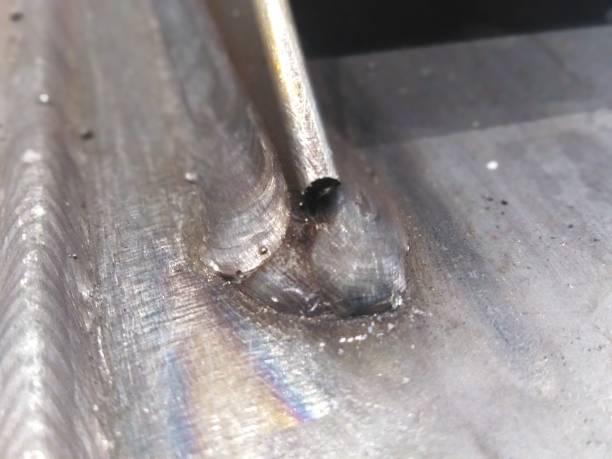
1. Atmospheric Contamination and Poor Gas Coverage
Atmospheric contamination is the most pervasive of all common TIG welding problems. The TIG process relies on a $100\%$ inert gas envelope (typically Ar or He) to protect the incandescent tungsten electrode and the molten metal from oxygen (O₂), nitrogen (N₂), and hydrogen (H₂).
1) The Fluid Dynamics of Gas Flow
A common misconception among beginner technicians is that increasing gas flow always increases protection. In reality, gas flow is governed by the transition from laminar to turbulent flow. If the flow rate is set significantly higher than the recommended 15–20 CFH (cubic feet per hour), the high-velocity gas creates a low-pressure zone at the nozzle exit due to the Bernoulli principle. This zone aspirates atmospheric air directly into the shielding stream, causing "bubbles," "pinholes," and "sooty" welds.
2) Technical Solutions:
Utilize a Gas Lens: Standard collet bodies produce a turbulent, "cone-shaped" gas flow. High-performance shops in 2026 utilize gas lenses containing fine mesh screens to create a laminar column of gas, allowing for greater tungsten stick-out (up to 1 inch) without loss of coverage.
Leak Testing: Breaches often occur at the torch head or hose fittings. Technicians should utilize a chloride-free soap solution to check for bubbles under positive pressure.
Post-Flow Management: To prevent the tungsten and the end of the weld bead from oxidizing while they cool, post-flow should be set to a minimum of 1 second per 10 Amps of current.
2. Incorrect Polarity and AC Balance for Aluminum
Aluminum is arguably the most challenging material for TIG because of its refractory oxide layer (Al₂O₃). While base aluminum melts at approximately 1221°F (660°C), the oxide layer does not melt until it reaches 3700°F (2037°C).
1) The Physics of Cathodic Cleaning
Attempting to weld aluminum on Direct Current Electrode Negative (DCEN) is a primary error. DCEN directs 70% of the heat into the workpiece but provides zero cleaning action. To solve this, technicians must use Alternating Current (AC).
In an AC cycle:
Electrode Positive (EP): Electrons flow from the workpiece to the tungsten, physically shattering and "scrubbing" away the oxide layer (cathodic cleaning).
Electrode Negative (EN): Electrons flow to the workpiece, providing the heat necessary for deep penetration.
2) Troubleshooting AC Balance:
Modern inverter machines allow for the adjustment of the AC Balance, or the ratio of time spent in EP versus EN.
Too much EP (Cleaning): Results in a wide "etched" zone and causes the tungsten tip to ball excessively, leading to arc wander.
Too much EN (Penetration): Causes "black pepper" flakes—small bits of un-melted oxide—to float in the puddle, compromising joint strength.
3. Lack of Fusion (LOF) and Incomplete Penetration
Structural failures are often traced back to a Lack of Fusion (LOF), where the weld metal fails to bond with the base material or previous passes.
Root Causes of Fusion Problems:
Excessive Arc Length: As the distance between the tungsten and the workpiece increases, the arc cone widens, and the energy density drops exponentially. This "lazy arc" melts the surface but fails to penetrate the root.
Improper Fit-Up: Gaps between components act as thermal barriers. The heat cannot conduct across the joint, causing the edges to melt away (undercut) before the root fuses.
Low Amperage on Thick Sections: Aluminum acts as a massive heat sink. A T-joint allows heat to dissipate in three directions, requiring 20-30% more amperage than a butt joint of the same thickness.
| Material Thickness | Amperage Rule of Thumb | Optimal Arc Length |
1/16 in (1.6 mm) | 50 – 70 A | 1/16 in |
| 1/8 in (3.2 mm) | 120 – 135 A | 3/32 in |
| 1/4 in (6.4 mm) | 200 – 250 A | 3/32 in |
4. Crater Cracking (Solidification Pathology)
The end of a weld bead is a high-stress zone. As the arc is extinguished, the molten pool shrinks by approximately 6% in volume during solidification.
1) The Mechanism of "Star Cracking"
If the welder terminates the arc abruptly, the puddle leaves a concave "crater." The center of the crater is the last to solidify; as the surrounding metal contracts, it pulls on the center, causing it to tear. These "star cracks" can propagate through the entire weldment under load.
2) Prevention Strategies:
Amperage Tapering: Use a foot pedal or thumb control to slowly decrease current at the end of the bead.
Filler Back-filling: Add one or two final "dabs" of filler rod as the arc is fading to ensure the crater is convex rather than concave.
Back-stepping: Reverse the direction of travel for 1/2 inch before breaking the arc to move the crater away from the high-stress joint edge.
5. Dirty Base or Filler Metal Contamination
A TIG weld is only as clean as its preparation. Contaminants such as hydrocarbons (oil), moisture (H₂O), and oxides are the root causes of porosity.
1) Metallurgical Impact of Hydrocarbons:
When the arc strikes oil or grease, the molecules dissociate. Hydrogen is highly soluble in molten aluminum but has zero solubility in solid metal. As the weld freezes, the hydrogen is rejected, forming microscopic gas pockets known as "cluster porosity."
2) 2026 Preparation Protocol:
Degrease: Wipe with high-purity acetone using a lint-free cloth.
Mechanical Removal: Use a stainless steel brush dedicated strictly to that material (e.g., one for aluminum, one for stainless) to prevent cross-contamination from carbon steel particles.
Filler Rod Care: Filler rods often carry residual drawing lubricants from manufacturing. Wipe each rod with acetone before use and store them in sealed, airtight "quivers."
6. Poor Color and Oxidation on Stainless Steel
Stainless steel (SS) is selected for its corrosion resistance, which is provided by a thin "passive" layer of chromium oxide (Cr₂O₃). Overheating during welding destroys this layer.
1) The "Rainbow" Gradient:
The colors seen on a stainless weld represent the thickness of the oxide layer and the degree of chromium depletion.
Gold/Straw: Acceptable; minimal loss of properties.
Blue/Purple: High risk; indicates significant chromium migration.
Black/Dull Gray: Catastrophic failure; the material has lost its stainless properties and will rust in service.
2) Technical Fixes for Color Issues:
Increase Travel Speed: Move fast enough that the heat doesn't build up, but slow enough for fusion.
Use Pulsed TIG: Modern inverters can pulse the current at 100–500 PPS (pulses per second), which constricts the arc and narrows the Heat-Affected Zone (HAZ).
Chill Bars: Clamp copper or aluminum blocks near the joint to act as heat sinks.
7. Sugaring (Backside Oxidation)
When welding stainless steel pipe or tubing, the "root" (the back side of the joint) is exposed to the air inside the pipe. At high temperatures, the back of the weld oxidizes into a black, porous mass called "sugaring."
1) Impact on Food and Pharma Industries:
Sugaring is a rejectable defect in hygienic applications. The porous surface traps bacteria and moisture, leading to "pitting" and contamination.
2) The Back Purge Solution:
The standard industrial solution is Back Purging. The interior of the pipe is sealed with purge dams or water-soluble paper and filled with 99.99% pure Ar. This displaces all oxygen before the arc is struck.
| Purge Variable | Requirement |
| Purge Gas | 100% Argon or Ar/N₂ mix |
Flow Rate
| 5–10 L/min |
| Oxygen Level | < 50 ppm (parts per million) |
8. Tungsten Contamination and Electrode Pathologies
The tungsten electrode is a non-consumable component. However, its degradation is a major cause of arc instability.
Common Failures:
Dipping the Tip: Touching the electrode to the molten puddle or the filler rod immediately contaminates the tungsten. This changes the arc's electrical properties, causing it to "flicker" or "spin."
Incorrect Grinding Geometry: Tungsten must be ground longitudinally (lengthwise). Radial (circular) grind marks cause the arc to spiral and wander.
Splitting/Cracking: Often caused by using 2% Thoriated (Red) tungsten at high AC frequencies. In 2026, 2% Lanthanated (Blue) or "Tri-Mix" (Chartreuse) electrodes are preferred for their superior stability on both AC and DC.
9. Arc Wander and Magnetic Arc Blow
Arc wander occurs when the plasma column deviates from its intended path. This is often caused by Magnetic Arc Blow, where the magnetic fields generated by the current interact with the base metal.
1) Root Causes:
Ground Placement: If the ground clamp is placed too far from the joint, or if current is forced to travel through a large mass of ferromagnetic steel, the magnetic field becomes unbalanced.
Residual Magnetism: Parts handled by industrial lifting magnets can retain a magnetic charge that "pulls" the arc to one side.
2) Troubleshooting Arc Blow:
Switch to AC: The rapid switching of polarity prevents a strong magnetic field from building up in one direction.
Reposition Ground: Move the ground clamp closer to the weld or use multiple ground clamps to balance the current flow.
Shorten Arc Length: A tight arc is much harder to deflect than a long, lazy arc.
10. Burn-Through and Distortion in Thin Materials
As fabrication moves toward lightweighting, technicians are increasingly welding thin-gauge sheets (under 1/16 inch). The margin for error is nearly zero.
1) Physics of Distortion:
Aluminum has a high coefficient of thermal expansion—nearly twice that of steel. When heated, the local metal expands, but the surrounding cold metal restrains it. Upon cooling, the metal contracts permanently, leading to "warping" or "oil-canning."
2) Advanced Techniques for 2026:
High-Frequency Pulsing: Setting the pulse frequency above 100 Hz stiffens the arc and focuses the energy, allowing for full penetration at a lower "Average Amperage."
Tack Welding Sequence: Do not weld a long seam in one pass. Utilize frequent, small tacks and weld in a "staggered" or "back-step" sequence to distribute the heat evenly.
Precision Fixturing: Use rigid clamps and jigs. In precision aerospace work, parts are often welded while secured to water-cooled copper fixtures.
Conclusion
Mastering TIG welding problems is a discipline of procedural consistency. In an era where skilled labor is increasingly scarce, the "Engineer-First" approach to troubleshooting—understanding the why behind the defect—is what separates a world-class fabrication shop from the competition.
By prioritizing surgical cleanliness, leveraging advanced inverter features like high-speed pulsing, and adhering to strict shielding gas dynamics, manufacturers can harness the full potential of the TIG process to deliver joints that meet the rigorous structural and aesthetic demands of modern engineering.
Related articles:
1. 9 Maintenance Problems that Cause Bad Welds
2. Inverter Welder Problems and How to Solve Them?
3. Welding Defects, Problems And Easy Solutions [2023]
4. Top 5 Common Welding Problems and Solutions
5. Pulsed Welding Technology Solves Sheet Metal Problems