In the world of metal fabrication, there is a clear line between workshop projects and industrial-scale engineering. When the materials move from sheet metal to thick-plate steel, and the environment shifts from a climate-controlled shop to a windswept shipyard or a high-heat manufacturing floor, you have entered the realm of heavy-duty welding.
Heavy-duty welding is the backbone of global infrastructure. It is the process responsible for the integrity of offshore oil platforms, the structural skeletons of skyscrapers, and the massive machinery used in surface mining. In these applications, a weld failure isn't just a quality control issue—it is a catastrophic risk.
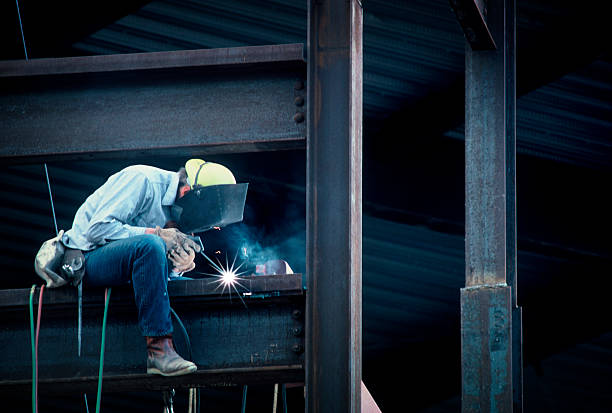
This guide serves as a comprehensive resource for understanding the technical requirements, the specialized equipment needed, and the strategic processes that define heavy industrial fabrication. If you are looking to optimize your production or invest in a heavy-duty welding machine, this deep dive into the "heavy" side of the industry is for you.
I. Defining Heavy-Duty Welding: Beyond the Surface
What exactly makes a welding task "heavy-duty"? While a hobbyist might consider 1/4-inch steel thick, in heavy industry, that is often just the starting point.
Generally, heavy-duty welding involves base materials that are 1/2 inch (12.7 mm) thick or greater. However, the definition extends beyond mere thickness. It encompasses:
Extreme Material Thickness: Often involving plates ranging from 1 to 5 inches thick.
High Duty Cycles: The requirement for machines to run at maximum output for 8 to 24 hours a day without interruption.
High Deposition Rates: The need to melt large amounts of filler metal into a joint as quickly as possible to reduce labor costs.
Structural Integrity Requirements: Stringent code compliance (such as AWS D1.1 or ASME Section VIII) that requires 100% X-ray quality welds.
II. Anatomy of a Heavy-Duty Welding Machine
When you are operating at 400, 600, or even 1000 amps, a standard shop welder will quite literally melt down. A professional heavy-duty welding machine is engineered as a piece of industrial power equipment rather than a simple tool.
1. Duty Cycle: The 100% Standard
In light-duty welding, a "60% duty cycle" means you can weld for 6 minutes out of 10. In heavy industry, that 4-minute wait is lost profit. A true heavy-duty power source often offers a 100% duty cycle at its rated output. This is achieved through massive internal heat sinks, high-velocity cooling fans, and high-grade copper windings.
2. Multi-Process Capability
Modern industrial projects often require a mix of processes. A single heavy-duty welding machine should ideally handle:
GMAW/FCAW: For high-speed production.
SMAW (Stick): For site work and out-of-position welding.
Carbon Arc Gouging: Using a carbon electrode to "blow out" old welds or prepare joints—a process that requires massive, stable current.
3. Environmental Durability (IP Ratings)
Heavy-duty machines live in the "real world"—dust, rain, metal shavings, and extreme temperatures.
Ingress Protection (IP23): Look for machines rated for outdoor use, where the internal electronics are isolated from the cooling airflow to prevent "magnetic dust" from shorting out circuit boards.
Impact Resistance: Steel cases and recessed controls to prevent damage from falling objects or crane collisions.
4. Advanced Inverter vs. Transformer
While old-school transformer "bricks" are known for being indestructible, the industry has shifted toward Heavy-Duty Inverters.
Efficiency: Inverters use significantly less electricity, which adds up to thousands of dollars in savings when running a fleet of 50 machines.
Arc Performance: Inverters allow for "pulsed" welding at high amperages, which reduces spatter and improves fusion in thick materials.
III. Core Processes for Thick-Plate Fabrication
To fill a massive joint efficiently, you need more than just heat; you need a process that can deposit metal at a high rate without sacrificing quality.
1. Submerged Arc Welding (SAW)
SAW is the "secret weapon" of heavy industry. It uses a continuous wire electrode and a blanket of granular flux that completely covers the arc.
Benefits: Zero visible arc (no need for a helmet in some setups), zero spatter, and the highest deposition rates in the industry (over 20 lbs per hour).
Best for: Long, straight seams like wind tower sections, ship hulls, and large-diameter pressure vessels.
2. Flux-Cored Arc Welding (FCAW)
FCAW is the workhorse of structural steel. The "Dual-Shield" variety uses both an internal flux and an external shielding gas.
Benefits: Excellent penetration into thick steel and highly tolerant of surface contaminants like mill scale or rust.
Best for: Heavy equipment repair and skyscraper construction where high-strength, low-hydrogen welds are required.
3. Gas Metal Arc Welding - Pulsed (GMAW-P)
High-amperage pulsed spray transfer allows for fast welding with very little spatter.
IV. Technical Challenges: Managing the Heat
Heavy-duty welding isn't just about making the arc; it's about managing the massive amount of thermal energy injected into the metal.
1. Thermal Distortion
When you weld a 2-inch plate, the cooling metal shrinks with incredible force. If not managed, the entire structure can warp or "banana."
2. Pre-heating and Interpass Temperature
In heavy sections of high-carbon or alloy steel, cooling too fast leads to a brittle microstructure.
3. Back-Gouging
In thick-plate joints, you often weld one side, then use a heavy-duty welding machine in "Gouging Mode" to carve out the back of the joint until you hit clean weld metal. This ensures 100% joint penetration.
V. Efficiency in Heavy Industry: The "Deposition" Equation
In heavy manufacturing, the cost of the welding machine is often negligible compared to the cost of labor. To maximize ROI, you must focus on the Deposition Rate (the amount of filler metal turned into weld per hour).
| Process | Typical Deposition (lbs/hr) | Labor Efficiency |
| Manual Stick (SMAW) | 2–5 | Low (Frequent electrode changes) |
| Manual MIG (GMAW) | 5–12 | Medium |
| Submerged Arc (SAW) | 15–30+ | High (Continuous) |
By switching from Stick to a mechanized Submerged Arc system, a company can reduce the time spent on a single joint from 10 hours to 2 hours. This is why investing in high-amperage, automation-ready heavy-duty welding machines is a strategic financial move.
VI. Safety in the Heavy Zone
The risks in heavy-duty welding are amplified by the scale of the work.
Fume Extraction: High-amperage welding produces significantly more fumes. High-vacuum, at-the-source extraction is mandatory in confined spaces like ship hulls.
Radiation Protection: The UV output of a 600-amp arc is intense. Welders require high-shade lenses (12-14) and full-coverage leather gear to prevent "flash" burns to the skin.
Handling Heavy Loads: Safety isn't just about the arc; it's about the cranes and rigging used to move multi-ton weldments.
Conclusion
Success in heavy-duty welding requires a synergy of three things: a skilled operator who understands metallurgy, a robust engineering plan for heat management, and a reliable heavy-duty welding machine that can take the punishment of a 24/7 industrial environment.
Whether you are building the next generation of transport ships or repairing the world’s largest mining excavators, your equipment is your foundation. Don't ask a light-duty machine to do a heavy-duty job—the stakes are simply too high.
Related articles
1. Powerful Heavy Duty Inverter Welding Machines For Precision Welding
2. What is Duty Cycle in Welding & How is it Calculated?
3. Heavy Duty Welder Brings Greater Productivity
4. Inverter Welder Problems and How to Solve Them?
5. How to Weld Aluminum with Inverter-Based Power Supplies?