In the rapidly evolving landscape of industrial manufacturing, the pressure to deliver high-quality products at faster speeds has never been greater. For many fabrication shops, the answer to staying competitive lies in a strategic shift toward technology. Welding automation: boost efficiency and quality is more than just a tagline; it is a proven roadmap for businesses looking to scale their operations, reduce waste, and overcome the challenges of a tightening labor market.
While automation was once reserved for massive automotive assembly lines, today’s technology has become accessible to small and medium-sized enterprises (SMEs). Whether through dedicated fixed systems or flexible robotic cells, implementing automated solutions is the key to unlocking new levels of productivity.
I. What is Welding Automation?
At its core, welding automation involves the use of mechanized tools and electronic controls to handle the welding process. This ranges from simple "fixed" automation—where a machine performs a repetitive weld on a single type of part—to advanced robotic systems equipped with sensors and artificial intelligence that can adapt to different joint configurations.
By shifting the physical burden of the weld from a human operator to a machine, companies can achieve a level of precision and duty cycle that is impossible to maintain manually.
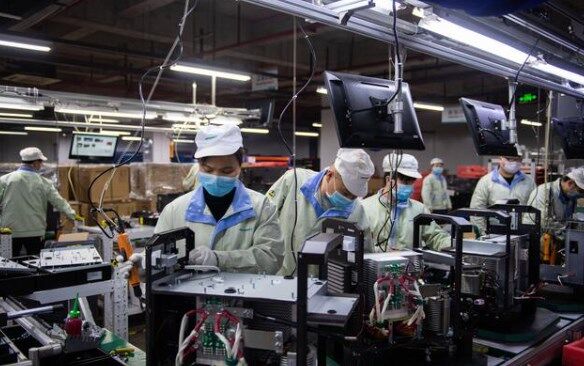
II. How Welding Automation Boosts Quality?
Quality is the cornerstone of any successful fabrication business. A single failed weld can lead to expensive rework, scrapped materials, or, in the worst-case scenario, structural failure in the field.
1. Unmatched Consistency and Repeatability
Human welders, no matter how skilled, are subject to fatigue, Distraction, and physical limitations. An automated system, however, performs the exact same movement with the exact same parameters every single time. This ensures that the first weld of the day is identical to the thousandth, drastically reducing the variance in bead appearance and structural integrity.
2. Precision Parameter Control
Automated systems allow for the precise calibration of travel speed, voltage, wire feed speed, and gas flow. These parameters are locked into the system’s software, ensuring that the heat input remains within the required specifications. This precision minimizes defects such as:
Undercut: Caused by improper travel speed or angles.
Porosity: Often a result of inconsistent shielding gas coverage.
Incomplete Penetration: Controlled by maintaining the perfect arc length and heat.
3. Real-Time Monitoring
Modern automated welding cells are often equipped with advanced vision systems and "through-the-arc" sensing. These technologies allow the machine to track the weld joint in real-time, making micro-adjustments for any slight deviations in the part's fit-up. This level of adaptability ensures high-quality output even when the incoming parts are not 100% perfect.
III. Driving Productivity: The Efficiency Gain
Efficiency in welding is often measured by "arc-on time"—the actual percentage of a shift spent laying a weld bead. In manual welding, arc-on time typically hovers between 20% and 30% due to the time required for part positioning, cleaning, and operator breaks.
1. Dramatic Increase in Throughput
Robotic welding systems can achieve arc-on times of 75% to 85% or higher. Because a robot does not tire and can move between weld points at high speeds, the number of parts produced per hour can double or even triple compared to manual processes.
2. Reduction in Post-Weld Cleanup
Because automated systems optimize the welding parameters so effectively, they produce significantly less spatter than manual welding. This reduces or eliminates the time workers spend grinding and cleaning parts after they leave the welding station, allowing the product to move straight to painting or shipping.
3. Optimized Material Usage
Welding automation: boost efficiency and quality by ensuring that only the necessary amount of filler metal and shielding gas is used. Manual welders often "over-weld" to ensure strength, using more wire than the blueprint requires. A robot uses exactly what is programmed, leading to significant cost savings on consumables over a year of production.
IV. Is Your Shop Ready for Automation? 4 Critical Questions
Deciding to automate is a significant step. To determine if it is the right move for your facility, consider these four questions:
1. Is Your Part Volume Sufficient?
While you don't need millions of parts, you do need enough volume to justify the setup time. However, with the rise of "cobots" (collaborative robots), even low-volume, high-mix shops can now benefit from automation because these machines are incredibly easy to reprogram for different tasks.
2. Is Your Part Fit-Up Consistent?
Automation thrives on consistency. If your upstream processes (cutting, bending, and tacking) produce parts that vary wildly in dimensions, the robot may struggle to find the joint. Improving your pre-weld precision is often the first step toward successful automation.
3. Are You Facing a Skilled Labor Shortage?
The industry is currently facing a massive shortage of certified welders. Automation allows you to move your most skilled human welders away from repetitive, "boring" tasks and into roles that require high-level problem-solving, such as custom fabrication, repair, or managing the automated cells themselves.
4. What is Your Required ROI?
When calculating the Return on Investment (ROI), look beyond just the cost of the machine. Factor in the savings from reduced scrap, lower consumable costs, increased throughput, and the ability to take on larger contracts that were previously impossible to fulfill.
V. Types of Welding Automation Systems
There is no one-size-fits-all solution. Depending on your needs, you might choose:
Fixed (Hard) Automation: Best for circular or straight-line welds on identical parts. These are simple, rugged, and highly efficient for specific tasks.
Robotic Welding Cells: Fully enclosed units where a robot arm performs complex multi-axis welds. These offer the most flexibility for different part shapes.
Collaborative Robots (Cobots): Designed to work alongside humans without the need for massive safety cages. They are easy to "teach" by physically moving the arm and are perfect for smaller shops.
VI. Overcoming the Challenges of Implementation
The transition to automation does come with a learning curve. Common hurdles include:
Initial Capital Investment: While the upfront cost is higher than a manual power source, the long-term savings usually pay for the system within 12 to 24 months.
Technical Training: Your team will need to learn how to program and maintain the equipment. Fortunately, modern software interfaces are much more intuitive than the code-heavy systems of the past.
Maintenance: Automated systems require a disciplined preventative maintenance schedule to ensure the torch, liners, and cables remain in peak condition.
Conclusion
The integration of welding automation: boost efficiency and quality into the manufacturing process is no longer an optional upgrade for those who want to lead the market—it is a necessity. By embracing automation, fabrication shops can deliver superior products with surgical precision while simultaneously maximizing their output.
As technology continues to advance, the barrier to entry will continue to drop. The shops that invest today in high-quality automated systems will be the ones that thrive in the competitive landscape of tomorrow, turning out stronger, cleaner, and more consistent welds than ever before.
Related articles:
1. Robots & Cobots Revolutionizing Welding Automation
2. Pulse TIG welding: Process, Automation and Control
3. How to Choose the Best Automated Welding System for your Application?
4. Integration of automated welding and additive manufacturing
5. The future of welding automation: artificial intelligence and machine learning