Shipbuilding is one of the most demanding sectors of heavy manufacturing. At the center of this industry is shipbuilding welding, a specialized discipline that transforms massive steel plates and complex alloys into vessels capable of withstanding the relentless forces of the open ocean. From the construction of ultra-large container ships to the fabrication of sophisticated naval vessels, the integrity of every weld is a matter of both economic efficiency and human safety.
As global trade continues to expand and maritime regulations tighten, the technology and techniques behind shipbuilding welding are evolving. This guide explores the essential processes, technical challenges, and innovative trends shaping the future of maritime fabrication.
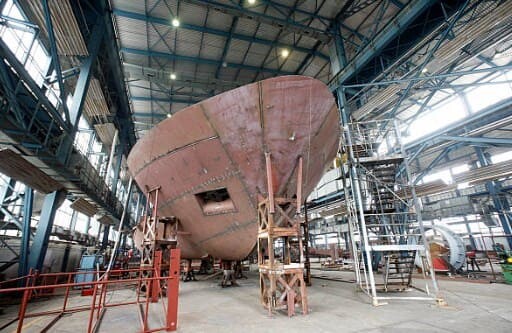
I. The Critical Role of Welding Quality in Maritime Safety
In shipbuilding, a weld is far more than a simple joint; it is a structural component that must endure extreme hydrostatic pressure, corrosive saltwater environments, and the dynamic stresses of wave impact. History has shown that even a minor failure in welding quality can lead to catastrophic structural cracking.
1)Total Quality Management (TQM):
Modern shipyards operate under strict Total Quality Management systems. Drawing from engineering standards established by international bodies, quality control begins long before the arc is struck. This includes rigorous material certification, joint preparation, and the implementation of specific Welding Procedure Specifications (WPS).
2)Compliance with Class Societies:
Every major vessel must adhere to the standards of classification societies such as the American Bureau of Shipping (ABS), DNV, or Lloyd's Register. These organizations dictate the qualifications required for welders and the types of non-destructive testing (NDT) that must be performed to ensure the vessel’s seaworthiness.
II. Core Welding Processes in Modern Shipyards
While many welding techniques exist, shipyards prioritize methods that offer a balance between high deposition rates, metallurgical integrity, and portability.
1. Flux-Cored Arc Welding (FCAW)
FCAW is arguably the most prevalent process in modern ship construction. It is highly favored for hull fabrication due to its versatility and speed.
Why it’s used: It provides high deposition rates, making it ideal for the long, continuous welds required for hull plating. The flux coating offers better protection against the drafts and wind often found in semi-open shipyard environments compared to standard gas-shielded processes.
Advantages: It is effective for all-position welding, which is critical when working on the curved sections of a ship’s bow or stern.
2. Submerged Arc Welding (SAW)
For the massive flat sections of a ship, such as deck plates and bulkheads, SAW is the gold standard for productivity.
Application: SAW is typically used in automated or semi-automated setups on "panel lines."
Process: A granular flux is used to completely submerge the arc, preventing sparks and fumes while allowing for extremely high heat input and deep penetration.
3. Gas Metal Arc Welding (GMAW/MIG)
GMAW is frequently used for internal outfitting, aluminum structures, and thin-gauge components.
4. Laser-Hybrid Welding
One of the most significant technological leaps in recent years is the adoption of laser-hybrid welding. This process combines the deep penetration of a laser with the gap-bridging capabilities of GMAW.
II. Overcoming Technical Challenges in Shipbuilding
The scale of a ship presents unique obstacles that are rarely encountered in shop-based fabrication.
1. Distortion and Shrinkage
When welding kilometers of joints, the cumulative thermal expansion and contraction can cause massive steel plates to warp. Shipbuilders use several strategies to combat this:
Back-step welding: Welding in short sections in the opposite direction of the overall progression.
Pre-heating: Maintaining specific inter-pass temperatures to ensure uniform cooling.
Advanced Fixturing: Using heavy-duty clamps and jigs to hold sections in place during the cooling phase.
2. Out-of-Position Welding
A ship's hull is a three-dimensional puzzle. Technicians must often perform vertical and overhead welds in cramped double-bottom tanks or high up on the exterior of the hull. This requires specialized equipment, such as portable wire feeders, and exceptionally high skill levels from the workforce.
3. Corrosion Resistance and Material Selection
Ships are increasingly built using a variety of materials, including high-tensile steels and aluminum alloys, to reduce weight and increase fuel efficiency. Welding dissimilar metals or high-strength alloys requires precise control over the cooling rate and specialized consumables to ensure the weld doesn't become a site for galvanic corrosion.
III. Innovation: The Future of the Shipyard
As the industry faces labor shortages and the need for faster production cycles, innovation is focusing on automation and digitalization.
1. Robotic Integration and "Cobots"
Automation is no longer restricted to flat panel lines. Collaborative robots (cobots) and specialized "crawling" robots are now being used to weld internal stiffeners and vertical seams. These robots can navigate complex geometries that were previously accessible only to human welders.
2. Digital Twins and IoT
Modern power sources are now connected to the "Internet of Things" (IoT). This allows shipyard managers to monitor welding parameters in real-time. By creating a "digital twin" of the welding process, engineers can predict potential defects and optimize wire and gas consumption across the entire yard.
3. Portability and Ergonomics
Innovation in inverter technology has led to the development of ultra-portable welding machines. These units allow welders to carry high-performance capabilities deep into the structure of the ship, reducing the time spent on cable management and setup.
IV. Non-Destructive Testing (NDT) in Shipbuilding
To ensure that no weld contains hidden flaws like porosity or lack of fusion, shipyards employ rigorous NDT methods:
Ultrasonic Testing (UT): Uses high-frequency sound waves to detect internal discontinuities. It is increasingly preferred over radiography because it does not require clearing the area of workers due to radiation risks.
Magnetic Particle Inspection (MPI): Effective for finding surface and near-surface cracks in ferromagnetic materials like steel.
Visual Inspection (VT): The first and most vital line of defense, performed by certified welding inspectors to ensure the profile and size of the weld meet the design specifications.
Conclusion
Shipbuilding welding remains a pinnacle of industrial engineering. It is a field that demands a unique intersection of manual skill, metallurgical science, and advanced technology. As shipyards transition toward more sustainable and efficient building practices, the focus will continue to shift toward automation, laser technologies, and rigorous digital quality tracking.
For maritime stakeholders, investing in the latest welding techniques and quality protocols is not just about building ships—it is about building a safer, more reliable foundation for the future of global commerce. Whether it is a massive tanker or a high-speed ferry, the strength of the vessel will always begin with the integrity of the weld.
Related articles:
1. 15 Tips for Welding Aluminum in Shipbuilding Industry
2. Improve Shipyard Welding Efficiency with Megmeet Artsen CM500C Welders
3. Megmeet Supporting the 9th China Welding Technology Development Forum of Shipbuilding and Marine Engineering
4. Megmeet Welding Solution—Ship-building Industry
5. Side Panel of Shipping Container Welding - Using Artsen II PM500F Welder