Aluminum is a vital material in modern manufacturing, from aerospace and automotive components to high-end structural fabrication. However, welding it presents a unique and frustrating challenge to beginners and seasoned professionals alike. Unlike steel, aluminum demands a highly specialized process to achieve a clean, strong, and defect-free joint.
The essential technique for achieving this quality is Alternating Current Tungsten Inert Gas (AC TIG) welding.
This comprehensive guide will break down the science behind AC TIG welding for aluminum, explain the critical machine controls you need to master, and outline the proper techniques to ensure your next aluminum project is a success.
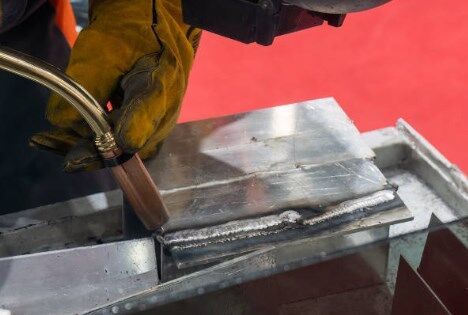
I. The Aluminum Dilemma: Why DC Welding Fails
To understand why Alternating Current (AC) is required, we must first look at the inherent properties of aluminum and why standard Direct Current (DC) welding processes fall short.
1) The Insulating Oxide Layer:
Aluminum metal itself melts at arelatively low temperature, approximately 660°C (1220°F), depending on the alloy. However, when exposed to air, it immediately forms a protective, ceramic-like skin known as aluminum oxide (Al₂O₃). This layer is the primary source of difficulty in welding.
The aluminum oxide layer:
Has an extremely high melting point: Over 2050°C(3722°F)— more than three times that of the base metal.
Is electrically insulating: It can prevent the welding arc from properly establishing or penetrating the base metal.
If you try to weld aluminum with the oxide layer intact, the molten aluminum underneath will run away like liquid, while the high-melting-point oxide will act like a "crust" holding it in place, resulting in an impossible weld puddle. You must destroy or displace this oxide layer for a weld to be successful.
2) The Limits of Direct Current (DC):
Direct Current (DC) is the go-to for welding materials like steel or stainless steel, but it is impractical for aluminum:
| Polarity | Effect on Aluminum | Why it Fails |
| DC Electrode Negative (DCEN) | Maximum heat focused into the workpiece, minimal heat on the tungsten. | Provides excellent penetration but offers no cleaning action to break up the oxide layer. |
| DC Electrode Positive (DCEP) | Maximum heat focused onto the tungsten electrode, minimal penetration into the workpiece. | Provides a cleaning action (known as cathodic etching), but the intense heat destroys the tungsten almost instantly, contaminating the weld. |
Because neither DC polarity can simultaneously provide sufficient heat and proper cleaning without destroying the electrode, an alternative solution is needed: Alternating Current (AC).
II. The AC Solution: Synchronized Cleaning and Penetration
Alternating Current solves the aluminum dilemma by rapidly switching between the two DC polarities. This switching action allows the TIG torch to perform two essential functions in a single process: a high-speed cleaning cycle and an intense penetration cycle.
How the AC Cycle Works:
The AC waveform consists of two half-cycles that repeat many times per second:
1. The Electrode Positive (EP) Half-Cycle (The Cleaning Cycle)
Current Flow: Electrons flow from the aluminum workpiece to the tungsten electrode.
Action: This flow of electrons blasts apart the aluminum oxide layer on the surface, creating a small etched area (the "cleaning zone") around the weld puddle.
Result: The weld area is cleaned, but because the heat is directed at the tungsten, this cycle contributes little to the actual melting or penetration of the base metal.
2. The Electrode Negative (EN) Half-Cycle (The Penetration Cycle)
Current Flow: Electrons flow from the tungsten electrode to the aluminum workpiece.
Action: The electrons flowing into the work generate the intense heat needed for deep penetration and melting of the aluminum base metal.
Result: This cycle provides the heat and penetration, but offers little to no cleaning action.
By oscillating between these two cycles, the AC TIG welder provides continuous cleaning to remove the oxide layer while also driving heat into the base metal to create a strong weld puddle.
III. Fine-Tuning Your Weld: Essential AC TIG Controls
Modern inverter-based AC TIG welding machines, such as the Megmeet MetaTIG ACDC Series, provide advanced controls that allow the welder to precisely tune the alternating current waveform. Mastering these three settings is key to high-quality aluminum welding.
1) AC Balance Control (The Scrubber Dial)
The AC Balance (often called AC Balance E-Ratio or just Balance) is arguably the most critical setting for aluminum. It determines the percentage of time the current spends in the EN (Penetration) half-cycle versus the EP (Cleaning) half-cycle.
| Setting | EN Time (Penetration) | EP Time (Cleaning) | Effect | When to Use |
| High Balance (e.g., 60%–75% EN) | Longer | Shorter | Deeper penetration and faster travel speed. Less heat on the tungsten. | Clean materials, thicker sections, or when a narrow bead is desired. |
| Low Balance (e.g., 30%–50% EN) | Shorter | Longer | Increased cleaning action to break up stubborn or heavily oxidized material. More heat on the tungsten. | Dirty/old aluminum, cast aluminum, or when a wide cleaning zone is needed. |
General Rule: Start around 65%–70% EN (or 30%–35% Cleaning) and adjust based on the appearance of the "cleaning zone"—the light, frosty area next to the weld bead. If the cleaning zone is too wide, increase the EN time; if the puddle looks dirty or sluggish, decrease the EN time (increase cleaning).
2) AC Frequency Control (The Focus Dial)
The AC Frequency determines how quickly the current switches between the EN and EP cycles, measured in Hertz (Hz). This control directly impacts the shape and stability of the arc.
| Setting | Hz (Cycles/Second) | Arc Characteristics | Effect |
| High Frequency (e.g., 200–400 Hz) | Very Fast | Narrow, stiff, and focused arc. | Excellent for intricate work, fillet welds, inside corners, and producing a tighter, narrower weld bead. |
| Low Frequency (e.g., 60–120 Hz) | Slower | Wider, softer arc. | Good for maximizing the width of the cleaning zone or for simple, straight beads on plate material. |
High frequency is generally preferred for its improved arc stability and ability to focus the heat exactly where you need it, particularly on thin materials where heat control is paramount.
3) Waveform Selection/span>
Modern inverter welders offer several waveform options, controlling how the current transitions between positive and negative:
Advanced Square Wave (Preferred): Provides a stable, concentrated arc, maximizes cleaning and penetration efficiency, and generates the least noise.
Sinusoidal Wave: An older, quieter wave that results in a less stable arc.
Triangular Wave: Good for high-speed welding and fast puddle transitions, often used for thin materials.
IV. Consumables and Prep: The Business End
Achieving a perfect aluminum TIG weld is impossible without the right consumables and preparation.
1) Tungsten Electrode Selection
For AC TIG welding aluminum, the most common tungsten types are:
Zirconiated (Brown): Excellent for AC aluminum due to its ability to maintain a stable arc and form a clean ball/cap.
Lanthanated (Gold or Black): Versatile and often the preferred choice for modern inverter machines on both AC and DC.
2) Preparing the Tungsten: The "Cap"
For DC TIG, you want a finely sharpened tungsten. For AC aluminum, however, the intense heat of the EP (Cleaning) cycle requires a modified tip to prevent contamination and ensure a stable arc.
The correct preparation is to create a blunted or balled end (historically called a "cap").
Blunted Tip (Modern Inverters): The preferred method today. Sharpen the tungsten, then grind the very tip flat (blunting the end). This provides arc stability while handling the heat.
Balled Tip (Old-School/Transformer): Achieved by briefly welding on DCEP to cause the tip to melt and form a clean, shiny, hemispherical ball (or "cap"). The ball diameter should not exceed the tungsten diameter.
3) Shielding Gas
100% Argon: This is the standard and most common gas for AC TIG welding aluminum. It provides excellent arc starting and stability.
Argon/Helium Mixes: Adding Helium (e.g., 75% Argon / 25% Helium) increases the overall heat in the arc, which can be beneficial for welding thick sections of aluminum, though it is more expensive and requires higher flow rates.
V. Mastering the Technique and Avoiding Common Mistakes
Aluminum’s high thermal conductivity means the material heats up quickly and conducts heat away rapidly. This requires precise technique and attention to heat management.
1) The Importance of Cleaning
The quality of your weld is a direct result of your pre-weld cleaning. The oxide layer is tenacious and must be removed.
Mechanical Cleaning: Use a dedicated, stainless steel wire brush (never used on other materials like steel) to lightly brush the weld area and remove surface oxide.
Chemical Cleaning: Wipe the area with acetone or a similar solvent to remove oils, dirt, and greases.
Timing: Welding should be done immediately after cleaning, as the oxide layer begins reforming right away.
2) Heat Management and the Foot Pedal
The foot pedal is your primary tool for heat control. As you weld, the aluminum plate will absorb heat, and the puddle will become wider and hotter.
Start Hot: You will likely need to "hammer down" on the foot pedal at the start to quickly overcome the aluminum’s cold thermal mass and establish a clean puddle.
Back Off: As you travel, the material around the puddle will heat up. You must slowly back off the foot pedal to maintain a consistent puddle size and prevent the aluminum from collapsing or "washing out." You'll notice your amperage drop significantly by the end of a long bead.
Consistent Travel: Maintain a steady travel speed and a small torch angle (10 to 15 degrees from vertical) to ensure proper gas coverage and heat distribution.
3) Preventing End-of-Weld Cracking (Crater Fill)
One of the most common defects in aluminum welding is a crack that forms in the crater (the small depression) at the end of the weld. This happens because aluminum shrinks significantly as it cools.
The Solution: Proper Crater Fill
When you reach the end of your weld:
Keep Dabbing: Continue feeding filler rod into the shrinking puddle.
Ease Off: Slowly release the foot pedal to gradually reduce the amperage and cool the puddle.
Maintain Shielding: Keep the TIG torch over the solidified crater until the post-flow gas shuts off. This protects the hot metal from atmospheric contamination (porosity) until it drops below a critical temperature.
VI. Featured Technology: Megmeet AC TIG Welders
Advanced features found on systems like the Megmeet MetaTIG ACDC Series are specifically designed to help welders tackle the challenges of aluminum. Key benefits include precise digital control over the AC Balance and Frequency, which translates directly to higher quality, faster welding, and increased efficiency on complex aluminum jobs.
FAQs of AC TIG Welding Aluminum
Q1: Why is AC TIG so much louder than DC TIG?
The buzzing sound is a result of the rapid cycling of the Alternating Current (AC) arc, especially at lower frequencies. As the electrical polarity flips many times per second, the magnetic field around the arc rapidly collapses and re-forms, causing the audible vibration and noise. Higher AC frequency settings (e.g., 200Hz+) on modern inverter machines can often reduce the audible noise by smoothing out these rapid transitions.
Q2: Can I weld thick aluminum sections with AC TIG?
Yes. While thicker aluminum is more challenging due to its thermal conductivity, it can be welded by:
Increasing Amperage: Set a high maximum amperage and use the foot pedal to control it.
Using High EN Balance: Increase the EN (Penetration) time to 70-75% for maximum heat input.
Adding Helium: Utilizing an Argon/Helium gas mix can significantly boost the overall heat available in the arc.
Pre-heating: For very thick plates, pre-heating the aluminum to around 100℃ will help prevent rapid heat dissipation.
Q3: What is the "cleaning zone" and what should it look like?
The cleaning zone is the etched, frosty-white area immediately surrounding your weld bead. This is the area where the EP (Cleaning) cycle has successfully blasted away the aluminum oxide layer. A good cleaning zone should be narrow and even—just wide enough to surround the bead. If the zone is too wide, you are wasting energy on cleaning; if it’s non-existent or patchy, you are not cleaning enough. Adjust your AC Balance to control its size.
Q4: How do I choose the right filler rod for aluminum?
The two most common aluminum filler rods are:
4043 (Silicon): The most common choice. Provides excellent flowability, good aesthetics, and is generally crack-resistant. Best for 6061 and 3003 base metals.
5356 (Magnesium): Offers higher tensile strength and is preferred when color match after anodizing is important. More sensitive to cracking and can be used on 5000 and 6000 series base metals. Always match your filler to your base metal alloy and application requirements.
Related articles
1. Welding Aluminum vs. Welding Steel: A Complete Comparison
2. MIG and TIG Guidelines for Aluminum Welding
3. Pulsed MIG Welding Aluminum and Stainless Steel
4. Advantages of Utilizing Pulsed MIG Welding for Aluminum
5. Why is AC current preferred in aluminum welding?